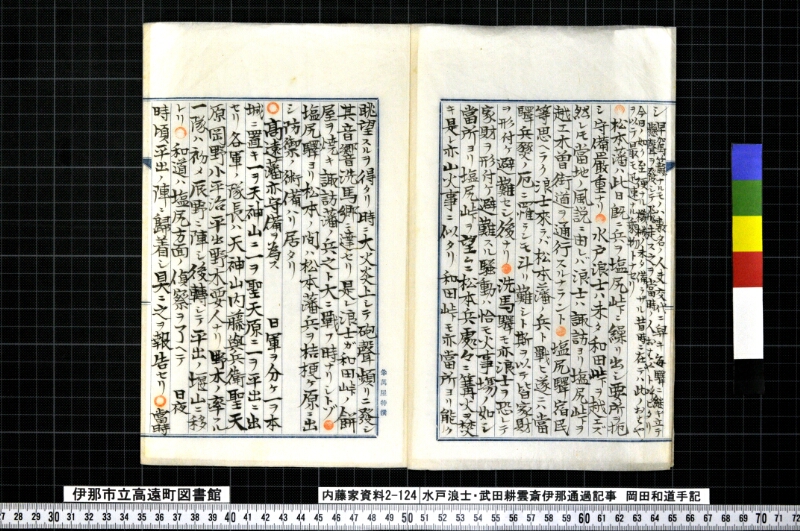
翻刻
シ《割書:早駕籠ナルモノハ数名ノ人夫交代ニ舁キ毎駅ニ継ギ立テ|懸声ヲ発シテ飛走ス之ヲ当時ノ人おはやト呼ビタリ》《割書:今日ノ如ク至便ナル機械ノ未タ備ラザル昔時ニ在テハ此ノおはや|ヲ以テ最モ迅速ナル乗物トナセリ》
●松本藩ハ此日既ニ兵ヲ塩尻峠ニ繰リ出シ要所ヲ扼
シ守備厳重ナリ●水戸浪士ハ未タ和田峠ヲ越エズ
然レトモ当地ノ風説ニ由レバ浪士ハ諏訪ヨリ塩尻峠ヲ
越エキソ木曾街道ヲ通行スルナラント●塩尻駅宿民
等思ヘラク浪士来ラバ松本藩ノ兵ト戦ヒ遂ニハ当
駅兵燹ノ厄ニ罹ランモ斗リ難シト斯ヲ以テ皆家財
ヲ形付ケ避難セシ後ナリ●洗馬駅モ亦浪士ヲ恐レテ家財
ヲ形付ケ避難スル騒動ハ恰モ火事場ノ如シ
当所ヨリ塩尻峠ヲ望ムニ松本兵処々ニ篝火ヲ焚
キ是レ股は亦山火事ニ似タリワダト和田峠モ亦当所ヨリ能ク眺望スルヲ得タリ時ニ大火炎上シテ砲声頻リニ発シ
其音響洗馬駅郷ニ達セリ是レ浪士ガ和田峠ノ餅
屋ヲ焼キ諏訪藩ノ兵之ト大ニ戦フ時ナリシトゾ●
塩尻駅ヨリ松本ノ間ハ松本藩兵ヲ桔梗ヶ原ニ出
シ防禦ノ術備ハリ居タリ
〇高遠藩亦守備ヲ為ス 日軍ヲ分ケ一ヲ本
城ニ置キ一ヲ天神山ニ一ヲ聖天原ニ一ヲ平出ニ出
セリ各軍ノ隊長ハ天神山内藤与兵衛聖天
原岡野小平治平出野木要人ナリ野木ノ率フル
一隊ハ初メ辰野ニ陣シ後転シテ平出ノ堰山ニ移
レリ●和道ハ塩尻方面ノ偵察ヲ了ヘテ 日夜
時頃平出ノ陣ニ帰着シ具ニ之ヲ報告セリ〇当時
現代語訳
《割注:早駕籠というのは、数名の人夫が交代で担ぎ、毎駅で継ぎ立てをして、掛け声を発しながら走り行くものである。これを当時の人々は「おはや」と呼んでいた。》《割注:今日のように便利な乗り物(機械)がまだ整っていなかった昔においては、この「おはや」が最も迅速な乗り物とされていた。》
●松本藩はこの日すでに兵を塩尻峠に繰り出し、要所を押さえて守備を厳重にしていた。●水戸浪士はまだ和田峠を越えていなかった。しかしながら、当地の風説によれば、浪士たちは諏訪から塩尻峠を越え、木曾街道を通行するだろうとのことであった。●塩尻駅の宿民らは思うには、浪士が来れば松本藩の兵と戦い、ついには当駅も兵火の災難に遭わないとも限らないと。そのため皆、家財を荷造りして避難した後であった。●洗馬駅もまた浪士を恐れて家財を荷造りして避難する騒動は、まるで火事場のようであった。
当所より塩尻峠を望むと、松本藩の兵があちこちに篝火を焚いており、それはまるで山火事のようでもあった。また和田峠も当所よりよく眺望することができた。その時、大きな火炎が上がり、砲声が頻りに発せられ、その音響は洗馬駅の郷にまで届いた。これは浪士たちが和田峠の餅屋を焼き、諏訪藩の兵とそこで大いに戦っていた時であったという。●塩尻駅から松本の間は、松本藩の兵を桔梗ヶ原に出して防御の態勢が整えられていた。
〇高遠藩もまた守備を行った。某日、軍を分けて、一隊を本城に置き、一隊を天神山に、一隊を聖天原に、一隊を平出に出した。各軍の隊長は、天神山が内藤与兵衛、聖天原が岡野小平治、平出が野木要人であった。野木の率いる一隊は最初辰野に陣を張り、後に転じて平出の堰山に移った。●和道は塩尻方面の偵察を終えて、某日夜某時頃、平出の陣に帰着し、詳細に報告した。〇当時――
英語訳
《Marginal note: An express palanquin (ohaya) is one in which several bearers take turns carrying it, with relays arranged at each post station, the bearers calling out as they run. People of the time called this an "ohaya."》 《Marginal note: In former times, when convenient modes of transportation such as those of today were not yet available, this "ohaya" was considered the swiftest means of travel.》
● The Matsumoto domain had already, on this day, dispatched troops to Shiojiri Pass, secured the key positions, and maintained strict defense. ● The Mito rōshi had not yet crossed Wada Pass. Nevertheless, according to local rumor, it was said that the rōshi would cross Shiojiri Pass from Suwa and travel along the Kiso highway. ● The residents of Shiojiri post station thought to themselves: if the rōshi came and fought with the Matsumoto domain troops, it was not impossible that their station would ultimately suffer the calamity of being burned in the flames of war. For this reason, all had already packed up their household belongings and evacuated. ● Seba post station likewise was in an uproar with people fearing the rōshi and packing up their belongings to flee — the scene was just like that of a fire.
Looking toward Shiojiri Pass from this location, Matsumoto domain troops had lit bonfires here and there, which also resembled a mountain fire. Wada Pass too could be clearly viewed from this location. At that time, great flames rose up and the sound of cannon fire was discharged frequently, the reverberations reaching as far as the village of Seba post station. This was the moment when the rōshi set fire to the rice-cake shop at Wada Pass and the Suwa domain troops were fighting a great battle with them there. ● Between Shiojiri post station and Matsumoto, the Matsumoto domain had deployed troops to the Kikyōgahara plain, and defensive preparations were fully in place.
〇 The Takatō domain also established its defenses. On a certain day, the army was divided: one unit was kept at the main castle, one was sent to Tenjinyama, one to Shōten'hara, and one to Hiraide. The commanders of each unit were: Naitō Yohei at Tenjinyama, Okano Koheiji at Shōten'hara, and Nogi Kanato at Hiraide. The unit led by Nogi initially encamped at Tatsuno, and later shifted to Seizan (the embankment mountain) at Hiraide. ● Kazumichi, having completed his reconnaissance of the Shiojiri area, returned to the Hiraide encampment at a certain hour on a certain night, and gave a detailed report. 〇 At that time——