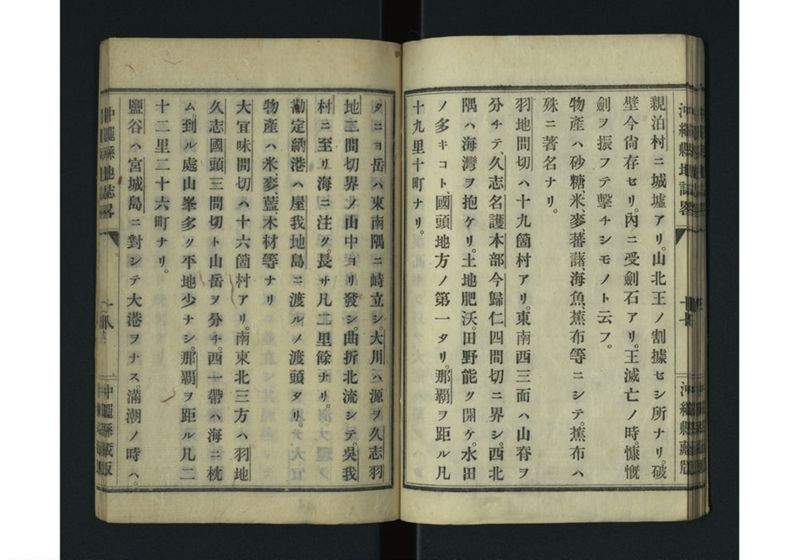
翻刻
親泊村ニ城墟アリ。山北王ノ割據セシ所ナリ。破
壁今尚存セリ。内ニ受劍石アリ。王滅亡ノ時。慷慨
劍ヲ振フテ擊チシモノト云フ。
物產ハ砂糖、米、麥、蕃藷、海魚、蕉布等ニシテ。蕉布ハ
殊ニ著名ナリ。
羽地間切ハ十九箇村アリ。東南西三面ハ山脊ヲ
分チテ、久志名護本部今歸仁四間切ニ界シ。西北
隅ハ海灣ヲ抱ケリ。土地肥沃。田野能ク開ケ。水田
ノ多キコト、國頭地方ノ第一タリ。那覇ヲ距ル凡
十九里十町ナリ。
タニヨ岳ハ東南隅ニ峙立シ。大川ハ源ヲ久志羽
地二間切界ノ山中ヨリ發シ。曲折北流シテ。吳我
村ニ至リ海ニ注ク。長サ凡二里餘ナリ。
勘定納港ハ屋我地島ニ渡ルノ渡頭タリ。
物產ハ米、麥、藍、木材等ナリ
大冝味間切ハ十六箇村アリ。南東北三方ハ羽地
久志國頭三間切ト山岳ヲ分チ。西一帶ハ海ニ枕
ム。到ル處山峯多ク平地少ナシ。那覇ヲ距ル凡二
十二里二十六町ナリ。
鹽谷ハ宮城島ニ對シテ大港ヲナス。滿潮ノ時ハ。
現代語訳
親泊村に城跡がある。山北王が割拠した所である。破れた城壁が今なお残っている。内部に受剣石がある。王が滅亡の時、憤慨して剣を振るって撃ったものと言われる。
物産は砂糖、米、麦、番藷、海魚、蕉布などで、蕉布は特に有名である。
羽地間切は十九箇村がある。東南西の三面は山脊を分けて、久志・名護・本部・今帰仁の四間切と境を接している。西北隅は海湾を抱いている。土地は肥沃で、田野がよく開けており、水田の多いことは、国頭地方で第一である。那覇から約十九里十町の距離である。
タニヨ岳は東南隅に聳え立つ。大川は久志・羽地二間切の境界の山中より源を発し、曲がりくねって北に流れ、呉我村に至って海に注ぐ。長さは約二里余りである。
勘定納港は屋我地島に渡る渡し場である。
物産は米、麦、藍、木材などである。
大宜味間切は十六箇村がある。南東北の三方は羽地・久志・国頭の三間切と山岳を分け、西一帯は海に面している。至る所山峰が多く平地が少ない。那覇から約二十二里二十六町の距離である。
塩谷は宮城島に対して大港をなしている。満潮の時は
英語訳
There are castle ruins in Oyadomari Village. This was the place where the King of Sanhoku held his territory. The broken walls still remain today. Inside there is the Juken Stone (Sword-receiving Stone). It is said that when the king met his downfall, he struck it in indignation with his sword.
The products include sugar, rice, wheat, sweet potatoes, sea fish, banana fiber cloth, etc. The banana fiber cloth is particularly famous.
Haneshi magiri has nineteen villages. Its eastern, southern, and western sides are divided by mountain ridges, bordering the four magiri of Kushi, Nago, Motobu, and Nakijin. The northwestern corner embraces a bay. The land is fertile, the fields are well developed, and it has the most rice paddies in the Kunigami region. It is about nineteen ri and ten chō from Naha.
Mount Taniyo stands towering in the southeastern corner. The Ōkawa River originates in the mountains at the border between Kushi and Haneshi magiri, flows north in meandering curves, reaches Goga Village and empties into the sea. Its length is about two ri and more.
Kanteino Port serves as the ferry landing for crossing to Yagaji Island.
The products are rice, wheat, indigo, timber, etc.
Ōgimi magiri has sixteen villages. Its southern, eastern, and northern sides are divided by mountains with the three magiri of Haneshi, Kushi, and Kunigami, while the western belt faces the sea. There are many mountain peaks everywhere and little flat land. It is about twenty-two ri and twenty-six chō from Naha.
Shioya forms a large harbor facing Miyagi Island. At high tide...