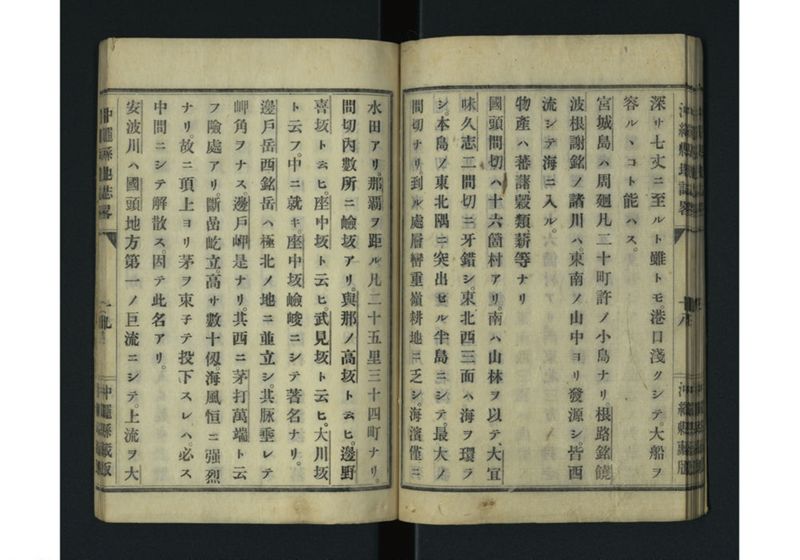
翻刻
深サ七丈ニ至ルト雖トモ。港口淺クシテ。大船ヲ
容ルヽコト能ハス。
宮城島ハ周廻凡二十町許ノ小島ナリ。根呂銘饒
波根謝銘ノ諸川ハ。東南ノ山中ヨリ發源シ。皆西
流シテ海ニ入ル。
物產ハ蕃藷、穀類、薪等ナリ
國頭間切ハ十六箇村アリ。南ハ山林ヲ以テ、大冝
味久志二間切ニ牙錯シ。東北西三面ハ海ヲ環ラ
シ。本島ノ東北隅ニ突出セル半島ニシテ。最大ノ
間切ナリ。到ル處層巒重嶺耕地ニ乏シ。海濱僅ニ
水田アリ。那覇ヲ距ル凡二十五里三十四町ナリ。
間切内數所ニ嶮坂アリ。與那ノ高坂ト云ヒ。邊野
喜坂ト云ヒ。座中坂ト云ヒ。武見坂ト云ヒ。大川坂
ト云フ。中ニ就キ。座中坂嶮峻ニシテ著名ナリ。
邊戸岳西銘岳ハ極北ノ地ニ並立シ。其脉埀レテ
岬角ヲナス。邊戸岬是ナリ。其西ニ茅打萬端ト云
フ險處アリ。斷嵒屹立高サ數十仭。海風恒ニ强烈
ナリ。故ニ頂上ヨリ茅ヲ束ネテ投下スレハ。必ス
中間ニシテ解散ス。因テ此名アリ。
安波川ハ國頭地方第一ノ巨流ニシテ。上流ヲ大
現代語訳
深さは七丈に達するものの、港口が浅くて大船を収容することができない。
宮城島は周囲約二十町ほどの小島である。根呂銘、饒波、根謝銘の諸川は、東南の山中より源を発し、皆西に流れて海に入る。
物産は番薯、穀類、薪などである。
国頭間切は十六箇村がある。南は山林をもって大宜味・久志の二間切と入り組んで境を接し、東北西の三面は海に囲まれている。本島の東北隅に突出した半島で、最大の間切である。至る所に連なる山々が重なり合い、耕地に乏しい。海浜にわずかに水田がある。那覇から約二十五里三十四町の距離である。
間切内の数箇所に険しい坂がある。与那の高坂といい、辺野喜坂といい、座中坂といい、武見坂といい、大川坂という。その中でも座中坂は険峻で有名である。
辺戸岳と西銘岳は最北の地に並び立ち、その山脈が垂れて岬角をなしている。辺戸岬がこれである。その西に茅打万端という険しい場所がある。断崖が屹立して高さ数十仞、海風が常に強烈である。そのため頂上より茅を束ねて投げ下ろすと、必ず中間で散らばってしまう。この名前の由来である。
安波川は国頭地方第一の大河で、上流を大
英語訳
Although it reaches a depth of seven fathoms, the harbor entrance is shallow and cannot accommodate large ships.
Miyagi Island is a small island with a circumference of about twenty chō. The various rivers of Nerumei, Nōha, and Neshyamei originate in the southeastern mountains and all flow westward into the sea.
The products are sweet potatoes, grains, firewood, etc.
Kunigami magiri has sixteen villages. To the south, it borders intricately with the two magiri of Ōgimi and Kushi through mountain forests, and is surrounded by the sea on three sides - east, north, and west. It is a peninsula protruding from the northeastern corner of the main island and is the largest magiri. Everywhere there are layered peaks and ridges with scarce arable land. There are only a few rice paddies along the seashore. It is about twenty-five ri and thirty-four chō from Naha.
There are several steep slopes within the magiri: Yona-no-takasaka, Henoki-saka, Zanaka-saka, Bumi-saka, and Ōkawa-saka. Among these, Zanaka-saka is particularly famous for being precipitous.
Mount Hedo and Mount Nishime stand side by side in the northernmost land, their ridges extending down to form a cape point - this is Cape Hedo. To its west lies a treacherous place called Kayauchi-bantan. Cliffs rise precipitously to a height of several dozen fathoms, with constantly fierce sea winds. Therefore, when bundles of thatch grass are thrown down from the summit, they inevitably scatter apart midway. This is the origin of the name.
The Aha River is the largest waterway in the Kunigami region, with its upper reaches called Ō-