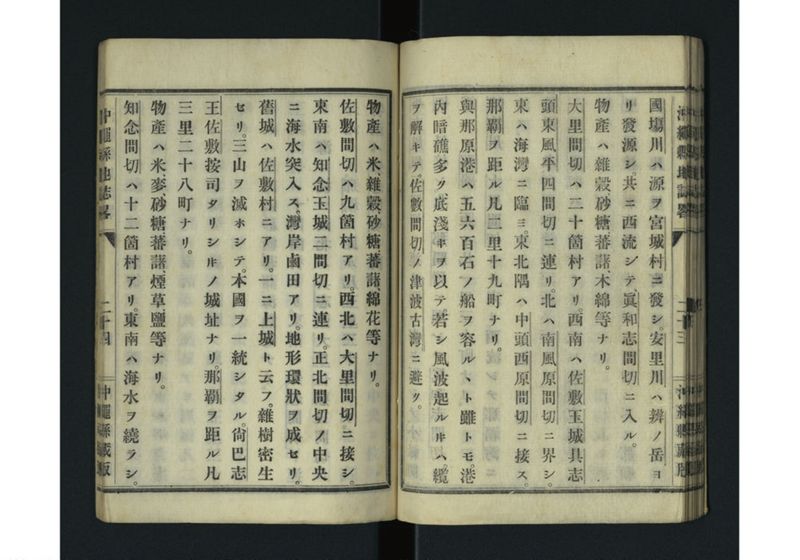
翻刻
國塲川ハ源ヲ宮城村ニ發シ。安里川ハ辨ノ岳ヨ
リ發源シ。共ニ西流シテ、眞和志間切ニ入ル。
物產ハ雜穀、砂糖、蕃藷、木綿等ナリ。
大里間切ハ二十箇村アリ。西南ハ佐敷玉城具志
頭東風平四間切ニ連リ。北ハ南風原間切ニ界シ。
東ハ海灣ニ臨ミ。東北隅ハ中頭西原間切ニ接ス。
那覇ヲ距ル凡二里十九町ナリ。
與那原港ハ五六百石ノ船ヲ容ルヽト雖トモ。港
内暗礁多ク、底淺キヲ以テ。若シ風波起ルトキハ。䌫
ヲ解キテ。佐數間切ノ津波古灣ニ避ク。
物產ハ米、雜穀、砂糖、蕃藷、綿花等ナリ。
佐敷間切ハ九箇村アリ。西北ハ大里間切ニ接シ。
東南ハ知念玉城二間切ニ連リ。正北間切ノ中央
ニ海水突入ス。灣岸鹵田アリ。地形環狀ヲ成セリ。
舊城ハ佐敷村ニアリ。一ニ上城ト云フ。雜樹密生
セリ。三山ヲ滅ホシテ。本國ヲ一統シタル。尚巴志
王佐敷按司タリシトキノ城址ナリ。那覇ヲ距ル凡
三里二十八町ナリ。
物產ハ米、麥、砂糖、蕃藷、煙草、鹽等ナリ。
知念間切ハ十二箇村アリ。東南ハ海水ヲ繞ラシ。
現代語訳
国場川は源を宮城村に発し、安里川は弁ヶ岳より発源し、共に西流して真和志間切に入る。
物産は雑穀、砂糖、番薯、木綿などである。
大里間切は二十箇村がある。西南は佐敷・玉城・具志頭・東風平の四間切に連なり、北は南風原間切に境を接し、東は海湾に臨み、東北隅は中頭の西原間切に接している。那覇から約二里十九町の距離である。
与那原港は五、六百石の船を収容できるとはいえ、港内に暗礁が多く、底が浅いため、もし風波が起こるときは、係留綱を解いて、佐敷間切の津波古湾に避難する。
物産は米、雑穀、砂糖、番薯、綿花などである。
佐敷間切は九箇村がある。西北は大里間切に接し、東南は知念・玉城の二間切に連なる。間切の中央部に海水が突入している。湾岸には塩田があり、地形は環状を成している。
旧城は佐敷村にあり、別名上城という。雑木が密生している。三山を滅ぼして本国を統一した尚巴志王が佐敷按司であった時の城址である。那覇から約三里二十八町の距離である。
物産は米、麦、砂糖、番薯、煙草、塩などである。
知念間切は十二箇村がある。東南は海に囲まれ、
英語訳
The Kokuba River has its source in Miyagi village, and the Asato River originates from Ben-no-take (Mount Ben), both flowing west into Mawashi magiri.
The products are miscellaneous grains, sugar, sweet potatoes, cotton, etc.
Ōzato magiri has twenty villages. To the southwest it connects to the four magiri of Sashiki, Tamagusuku, Gushikami, and Kochinda; to the north it borders Haebaru magiri; to the east it faces the bay; and the northeast corner adjoins Nishihara magiri in Nakagami. It is about two ri and nineteen chō from Naha.
Although Yonabaru Port can accommodate ships of five to six hundred koku capacity, because there are many reefs in the harbor and the bottom is shallow, when wind and waves arise, ships cast off their mooring lines and take shelter in Tsuha-ko Bay in Sashiki magiri.
The products are rice, miscellaneous grains, sugar, sweet potatoes, cotton, etc.
Sashiki magiri has nine villages. To the northwest it adjoins Ōzato magiri, and to the southeast it connects to the two magiri of Chinen and Tamagusuku. Seawater penetrates into the center of the magiri. There are salt fields along the bay shore, and the topography forms a ring shape.
The old castle is in Sashiki village, also called Ue-gusuku. Various trees grow densely there. This is the castle site from when King Shō Hashi, who destroyed the three kingdoms and unified the main island, was the Sashiki aji. It is about three ri and twenty-eight chō from Naha.
The products are rice, wheat, sugar, sweet potatoes, tobacco, salt, etc.
Chinen magiri has twelve villages. To the southeast it is surrounded by seawater,