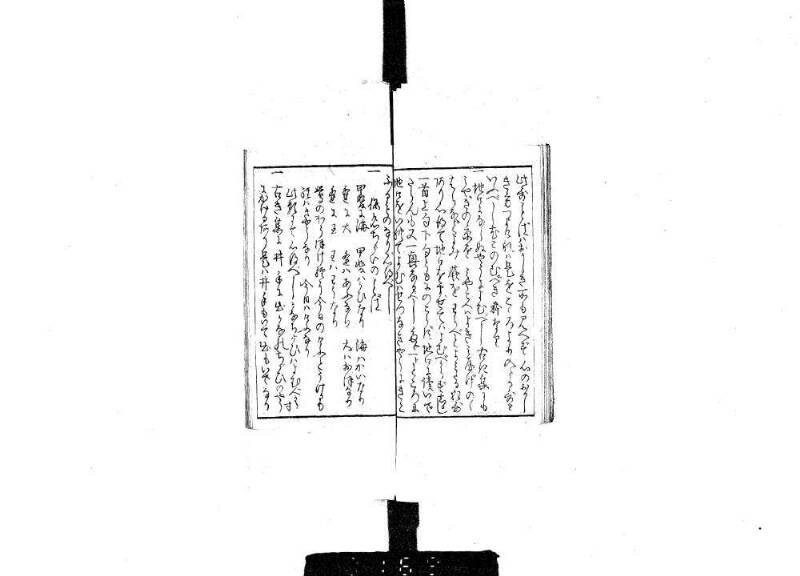
翻刻
【右丁】
此哥のことばはおかしき所の見へず 心のおかし
き方つよけれは是をこゝろより入たるひのと
いふべし尤このむべき躰なり
一地口にならぬやうによむべし古き集にも
みやぎの京をみやこ人はよきみやけのゝ
はらなどよみ蕨をわらべとよみたる狂哥
あり心得て地 をまぜてはよむべからずしるし
一首上句下句ともにのこらず地口に讀いで
たらんも又一興なるべしたゞ一とところに
地口をいれてよむはせつなきやうにきと
【左丁】
ふるものなり心得べし
一 仮名ちがひのことば
甲斐に海 甲斐はかひなり 海はかいなり
逢に大 逢はあふなり 大はおほなり
逢に王 王はわうなり
鶯のほうほけ経に今日のけふとかけるも
経はきやうなり 今日はけふなり
此類にて心得べしかなちかひはよむべからす
一古き集に井手に出かなのちがひのやう
にかけるあり是は井手もいて出もいでなり
現代語訳
【右丁】
この歌の言葉は面白い所が見えない。心の面白い方が強いので、これを心より入ったものというべきである。もっとも、このましい体である。
一、地口にならないように詠むべきである。古い歌集にも「都の京を都人は良き都家の野原など」と詠み、「蕨」を「童」と詠んだ狂歌がある。心得て地口を混ぜては詠むべからず。
一、首句上句下句ともに残らず地口に読んだとしても、また一興であろう。ただ一箇所に地口を入れて詠むのは、切ないように聞こえる
【左丁】
ものである。心得るべきである。
一、仮名違いの言葉
甲斐に海 甲斐は「かひ」である 海は「かい」である
逢に大 逢は「あふ」である 大は「おほ」である
逢に王 王は「わう」である
鶯のほうほけ経に今日の「けふ」とかけるのも、経は「きやう」である、今日は「けふ」である。
この類で心得るべきである。仮名違いは詠むべからず。
一、古い歌集に井手に出で、仮名違いのようにかけるのがある。これは井手も「いて」、出も「いで」である。
英語訳
[Right page]
This poem's language shows no amusing parts. Since the amusing aspect of the heart is strong, this should be called something that enters from the heart. This is indeed a desirable form.
One should compose without making it into a dajare (pun). Even in old collections, there are kyōka that read "the capital of Miyagi as good Miyake fields by people of the capital" and read "warabi" (bracken) as "warabe" (child). One should understand this and not mix in wordplay when composing.
Even if the entire poem - first, upper, and lower verses - were all read as puns, that would also be amusing. However, inserting wordplay in just one place makes it sound
[Left page]
painful. This should be understood.
One: Words with different kana
Kai (province) and kai (sea) - Kai is "kahi," sea is "kai"
Au (meet) and ō (big) - Au is "afu," big is "oho"
Au (meet) and ō (king) - King is "wau"
The nightingale's "hōhoke" with kyō (sutra) and today's "kyō" - sutra is "kyau," today is "kefu"
One should understand through this type. Different kana should not be used in composition.
In old collections, there are cases where "Ide" and "ide" (coming out) are used as if they were different kana. This is because both Ide (place name) is "ite" and "coming out" is "ide."