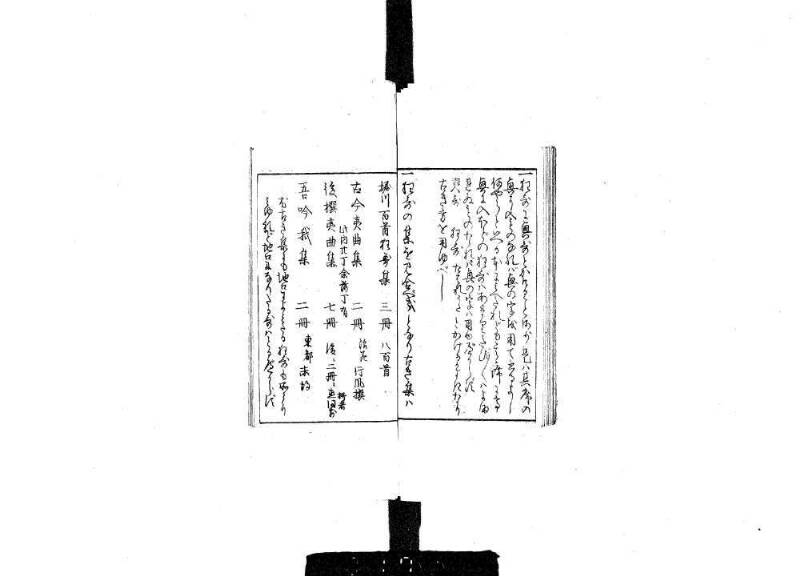
翻刻
【右丁】
一狂哥に興哥とかけることあり是は其席の
興に入ことのなれば興の字を用て書るよし
何やらといへる本にみへたれども其席に高
興に入ほどの狂哥はあまりたび〳〵とよま
れぬことのなれば興の字は用ゆべからず
夷哥 狂哥 たはれうたとかけるかよきなり
古き方を用ゆべし
一狂哥の集を見合いべ となり古き集は
【左丁】
堀川八百首狂哥集 三冊 八百首
古今夷曲集 二冊 《割書:浪花|》行風撰
此の内廾丁余落丁有
後撰夷曲集 七冊 後に二冊《割書:撰考|》直門
吾吟我集 二冊 《割書:東都|》末
尤古き集にも地口によみたる狂哥も所々
みゆれど地口なりたる哥はとるべからず
現代語訳
【右丁】
一、狂歌に「興歌」と書くことがある。これはその座の興に入ることであるから「興」の字を用いて書くのだという理由が、何やらという本に見えているけれども、その座で高興に入るほどの狂歌はあまりたびたびとは詠まれないことであるから、「興」の字は用いるべきではない。「夷歌」「狂歌」「たはれ歌」と書くのがよい。古い方を用いるべきである。
一、狂歌の歌集を見合わせるべきである。古い歌集は
【左丁】
堀川八百首狂歌集 三冊 八百首
古今夷曲集 二冊 浪花行風撰
この内二十丁余り落丁有り
後撰夷曲集 七冊 後に二冊 撰者直門
吾吟我集 二冊 東都末
もっとも古い歌集にも地口によって詠んだ狂歌も所々に見えるけれど、地口になった歌は取るべきではない。
英語訳
[Right page]
One: Sometimes kyōka (comic poetry) is written as "kyōka" (興歌, excitement poetry). The reason given is that this is because it brings excitement to the gathering, so the character for "excitement" is used, as seen in some book called "Nanyara." However, since kyōka that brings such high excitement to a gathering is not composed very frequently, the character for "excitement" should not be used. It is better to write it as "ebisu-uta" (夷歌), "kyōka" (狂歌), or "tahare-uta" (comic songs). The older forms should be used.
One: Collections of kyōka should be consulted. The old collections are:
[Left page]
Horikawa Eight Hundred Kyōka Collection - 3 volumes, 800 poems
Kokin Ebi-kyoku Collection - 2 volumes, compiled by Naniwa Gyōfū
More than 20 pages missing from this collection
Gosen Ebi-kyoku Collection - 7 volumes, later 2 volumes, compiled by a direct disciple
Agin-ga Collection - 2 volumes, from Edo, by Sue
Even in the oldest collections, kyōka composed using puns (jiguchi) can be seen here and there, but poems that have become mere puns should not be adopted.