翻刻
ゑんしうさい
五さいにて手
ならいをした
がりしがから
やうの王ぎし
流#1や丈てうめい【?】
のしよさつむきは【?】
おもしろからず
とゑんしやうが
思ひつきにて
きしとくのとう【?】
かいせんせいの和【?】
やうをならはせける
ものずきのこらず
わぶつ【和物】にしてすゞり
はたかしま#3あめばた#4
すみはだるまむさ
ずみのるい#2
ふでは小ぼう
したくほう
くわつもう
けんにて大
奉書小奉
書#6大たか小
たかのかみ#5へいろ
はのさうしよを
せきがき#7するいん
はこみやまぼり水
牛のよくちなり【にくち?】
しよじやくはみやう【?】
じうのつへたのみ【?】
おきてにほんぎ#8
今川#9万やうしう#10
げんじへいけの
物がたり#11しん
このゑざうし#12
かほみせ評
ばん記#13まだ
ふうのきら
ぬをとり
よせる
ふだんてがみ
の半切も中〳〵
とうし#14などは
つかはずひうが
半切#15ねづみ半切#16な
どを
おも
しろ
いとて
つかふ
【塩屋塩商(父親)】
見事
〳〵
【左側の唐人(書の先生か)】
にづら【?】
はつぼや【?】
がひつい【?】
大つゑ
はとさ
とみへ
ま
す#17
とう
ゑと【唐絵】
ちが
つて
又わ
ゑは【和絵】
かくべつ
なもの
【床の間の置物】
あまのうきはしの
せきれいのはね
せと物
のほて
いの水
いれ
【床の間の前にある四角い盆】
しよく
下にう
みほう
づき
【書物の入った箱に書いてある文字】
「い」 日本書紀 今川状
卯顔見世評判記
万葉集 万載集
「ろ」 東鑑
百人一首 ちゝぶ流詠哥
「は」 絵草紙《割書:百二十|八巻》
「に」 源氏物語 平家物語
早引節用 七ついろは
【床の間の掛け軸の署名】
英一蝶書
現代語訳
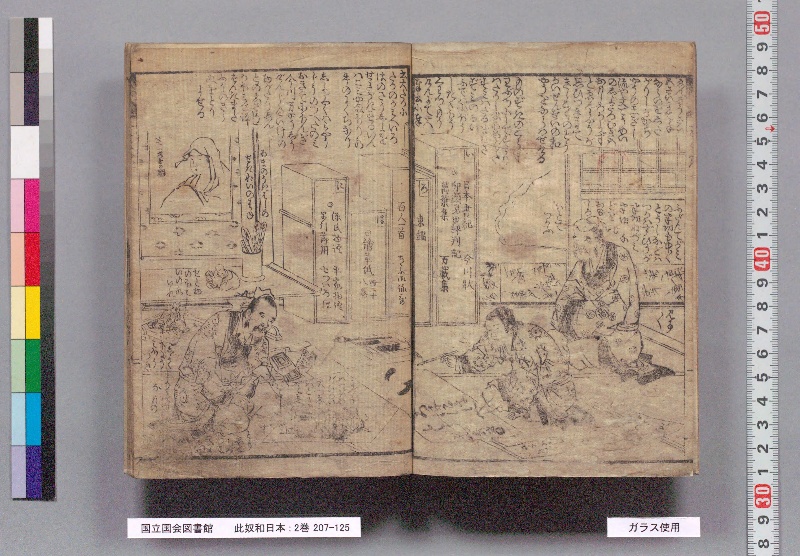
塩秀斎は五歳で手習いを習いたがったが、中国風の王羲之流や張朝明の書法は面白くないと、塩商(父親)が思いついて、橘千蔭(きしとく)先生の和風の書き方を習わせることにした。
物好きなことに全て和物にして、硯は高島、墨は達磨武蔵墨の類、筆は小坊主、下竹法、活毛、堅筆で、紙は大奉書、小奉書、大高、小高の紙。平仮名の草書を関ヶ関(せきがき)で書く印は、駒山彫りの水牛の肉池である。
書物は名著の杖頼み、置いて日本の義、今川、万葉集、源氏平家の物語、新古絵草子、顔見世評判記などまだ風流を嫌わぬものを取り寄せる。
普段の手紙の半切も、なかなか唐紙などは使わず、日向半切、鼠半切などを面白いといって使う。
【塩屋塩商(父親)】
見事、見事。
【左側の唐人(書の先生か)】
これは坪屋が筆一本、大きな杖は十三と見えます。唐絵とは違って、また和絵は格別なものです。
【床の間の置物】
天の浮橋の鶺鴒の羽根
瀬戸物の布袋の水入れ
【床の間の前にある四角い盆】
食べ物の下に海宝月
【書物の入った箱に書いてある文字】
「い」日本書紀、今川状、卯顔見世評判記、万葉集、万載集
「ろ」東鑑、百人一首、千筋流詠歌
「は」絵草子(百二十八巻)
「に」源氏物語、平家物語、早引節用、七ついろは
【床の間の掛け軸の署名】
英一蝶書
英語訳
Enshusai wanted to learn calligraphy at age five, but his father Ensho thought that Chinese-style Wang Xizhi school and Zhang Chaoming calligraphy would not be interesting, so he decided to have him learn Japanese-style writing from Master Kishi Tokuin.
As an eccentric preference, everything was made Japanese: the inkstone was from Takashima, the ink was Daruma Musashi ink and similar types, the brushes were kobozu, shitakuho, katsumo, and ken brushes, and the paper was large and small hosho paper, large and small taka paper. For writing hiragana cursive script, he used a seal carved by Komayama from water buffalo horn.
For books, he collected masterworks like the staff of reliability, Japanese righteousness texts, Imagawa, Man'yoshu, Tales of Genji and Heike, new and old picture books, kabuki theater reviews, and other things that don't shun elegance.
Even for everyday letter paper, rather than using Chinese paper, he preferred to use Hyuga halfsheets and mouse-colored halfsheets, finding them interesting.
【Salt merchant Ensho (father)】
Splendid, splendid!
【Chinese person on the left (calligraphy teacher?)】
This is Tsuboya with one brush, the large staff appears to be thirteen. Unlike Chinese paintings, Japanese paintings are something quite special.
【Objects in the tokonoma alcove】
Wagtail feathers from the Floating Bridge of Heaven
Celadon Hotei water vessel
【Square tray in front of the tokonoma】
Sea treasure moon under food
【Text on boxes containing books】
"I" - Nihon Shoki, Imagawa Letters, New Year Kabuki Reviews, Man'yoshu, Man'zaishu
"Ro" - Azuma Kagami, Hundred Poets, Chichibu School Poetry
"Ha" - Picture Books (128 volumes)
"Ni" - Tale of Genji, Tale of Heike, Quick Reference Dictionary, Seven Iroha
【Signature on hanging scroll】
Written by Ei Icho