翻刻
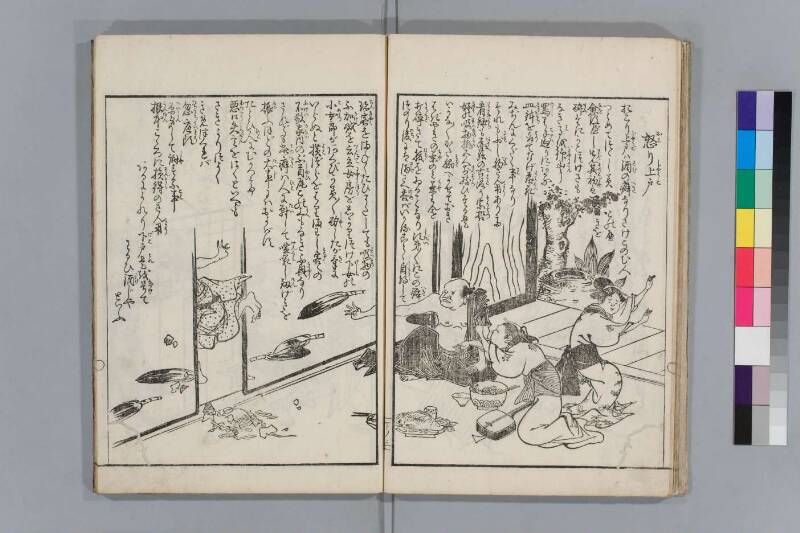
怒(おこ)り上戸(じやうこ)
おこり上戸(じやうご)は酒(さけ)の癖(へき)なりさけこのむ人
つとめてつゝしみ このへ
きを
愈(なを)すべし先(まづ)其(その)初(はじめ)は
酔(よふ)たにかこつけさも
なき事(こと)を仰山(ぎやうさん)に
罵(のゝし)り手廻(てまは)りにある
皿(さら)鉢(はち)を取(とり)てなげ落花(らくくは)
みぢんにくだく事(こと)なり
それも少(すこ)し胸(むな)さん用(よう)ありて
肴鉢(さかなはち)も赤絵(あかへ)の古渡(こわた)り宗哲(そうてつ)
好(このみ)の吸物椀(すいものわん)五人 前(まへ)揃(そろ)ひたる是
いかな〳〵かた脇(わき)へよせておき
はぎやきの茶(ちや)のみ茶(ちや)わんを
打砕(うちくだ)きて腹(はら)をゐることなり次第(しだい)〳〵にこの癖(へき)
つのり後(のち)には酒(さけ)さへ吞(のめ)ばいかることく自得(しとく)して
珍客(きんきやく)をまねくたひまたしても吸物(すいもの)の
ふ加減(かけん)を云立(いゝたて)女房(にやうほう)をしかりつけ下女(けしよ)の
小女郎(こめろ)があくびかみ〳〵酌(しやく)したが気(き)に
いらぬと横(よこ)づらをはりまわし客(きやく)への
不敬(ふけい)家内(かない)のぶ首尾(しゆひ)この上(うへ)もなきふ興(きやう)なり
されども此癖(このへき)は人(ひと)に対(たい)して喧嘩(けんくわ)し釼(けん)げきを
振(ふる)ふほどの大事(だいじ)にはおよばす
たとひ人(ひと)にむかつて
悪口(あつかう)失言(しつげん)をはくといへども
さきよりつよく
きめつくれば
忽(たちまち)底頭(ていとう)
平身(へいしん)して謝(しや)する事(こと)
根本(こんほん)こゝろに損得(そんとく)のさん用(よう)
あるによれり下戸(げこ)是(これ)を号(なづけ)て
わるひ酒(さけ)じや
といふ
【赤絵の古渡 : 中国明時代頃作られた彩色の磁器】
【宗哲好み : 京の塗師の中村宗哲風】
現代語訳
怒り上戸
怒り上戸は酒の悪い癖である。酒を好む人は努めて慎み、この癖を直すべきである。まずその初めは、酔ったことを口実にして、何でもないことを大げさに罵り、手の回りにある皿や鉢を取って投げ、粉々に砕くのである。
それも少し腹立たしいことがあって、料理の鉢も赤絵の古渡りや宗哲好みの吸物椀五人前揃いなど、どんなに高価なものでも脇へ寄せておき、萩焼の茶飲み茶碗を打ち砕いて腹いせをするのである。次第次第にこの癖が募り、後には酒さえ飲めば怒ることが当然のこととなってしまう。
貴重な客を招いた時でも、吸物の味加減を言い立てて女房を叱りつけ、下女の小女郎があくびをしながら酌をしたのが気に入らないと横面を張り回し、客への不敬、家内の不始末、この上もない興ざめである。しかしながらこの癖は、人に対して喧嘩をし、剣撃を振るうほどの大事には及ばない。
たとえ人に向かって悪口や失言を吐いたとしても、相手からより強く決めつけられれば、たちまち平身低頭して謝罪する。根本的に心に損得の計算があるためである。下戸はこれを「悪い酒だ」と呼ぶ。
英語訳
The Angry Drinker
The angry drinker represents a bad habit with alcohol. Those who enjoy drinking should make every effort to exercise restraint and correct this tendency. First, it begins with using drunkenness as an excuse to rage excessively over trivial matters, grabbing plates and bowls within reach to throw and smash to pieces.
Even when there's just a slight annoyance, whether it's food bowls of fine akae old imported porcelain or complete five-piece sets of Sōtetsu-style soup bowls, no matter how valuable, they push them aside and smash Hagi-ware tea drinking bowls to vent their anger. Gradually this habit intensifies, and eventually just drinking alcohol makes anger seem natural.
Even when entertaining precious guests, they will berate their wives over the seasoning of the soup, and when displeased that the maid Komerō served sake while yawning, they slap her across the face. This shows disrespect to guests and poor household management - utterly dampening the mood. However, this tendency doesn't escalate to the serious level of fighting people or wielding swords.
Even when hurling insults or making offensive remarks at others, if the other party pushes back more forcefully, they immediately bow deeply and apologize. This is fundamentally because their hearts harbor calculations of profit and loss. Teetotalers call this "bad drinking."