翻刻
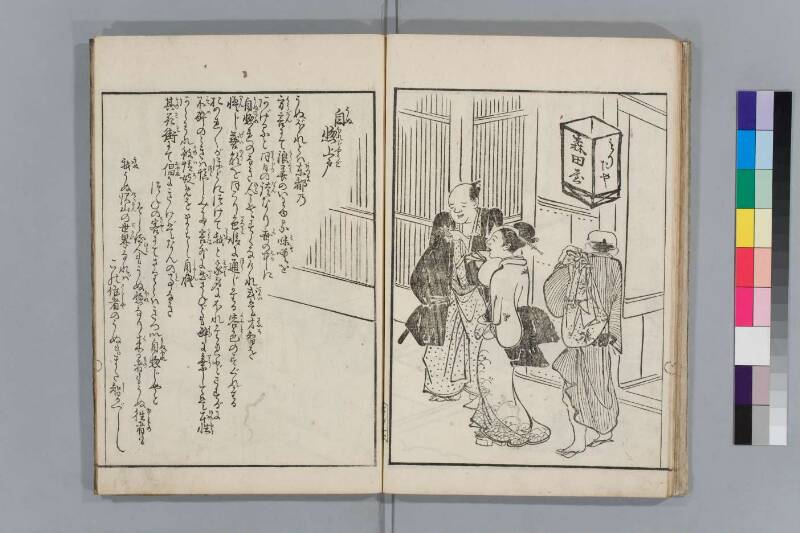
自惚(うぬほれ)上戸(じやうご)
うぬぼれとは東都(あつま)の
方言(はうげん)にて浪華(らうくわ)のいわゆる味噌(みそ)を
あげると同日(とうじつ)の談(だん)なり世(よ)の中(なか)に
自惚(うぬほれ)れのなき人(ひと)こそすくなけれ或(あるい)は才智(さいち)を
慢(まん)じ芸能(げいのう)をほこり色情(いろごと)に通(つう)じたる容色(よふしよく)のすぐれたる
おのれ〳〵がほどにつけて我(われ)と我身(わがみ)にほれたれどさすがに
不酔(すめ)のときは慎(つゝ)しみて言外(ことは )に出(いた)さねども酔(よひ)に乗(せう)じては本性(ほんしやう)
あらわれ彼(かの)情妓(いろ)めをまわし自慢(しまん)
其(その)花街(さと)にて倡(おやま)にきけばなんの事(こと)なき
つねの客(きやく)にてさりとはきつい自惚(うぬぼれ)じやと
そしる人(ひと)もうぬ惚(ほれ)なり来(く)る者(もの)もうぬ往者(ゆくもの)も
我(うぬ)うぬ沢山(たくさん)の世界(せかひ)なれば
この作者(さくしや)のうぬもまた智(し)るべし
【味噌を上げる : 自慢する。手前味噌を並べる。 デジタル大辞泉より】
現代語訳
自惚れ上戸
うぬぼれとは江戸の方言で、大阪でいう「味噌を上げる」と同じ意味である。世の中に自惚れのない人こそ少ないものだ。ある者は才知を鼻にかけ、ある者は芸能を誇り、色事に通じているとか、容色が優れているとか、おのおのが自分の身分に応じて、我と我が身に惚れ込んでいる。しかしさすがに素面の時は慎んで言葉に出さないが、酔いに乗じては本性が現れ、あの遊女に色目を使われて自慢する。
ところがその花街で遊女に聞いてみれば、何の事はない、ごく普通の客に過ぎないのに、「さりとてはひどい自惚れだ」と批判する人もうぬぼれ者、やって来る者もうぬぼれ者、去っていく者もうぬぼれ者。皆がうぬぼれだらけの世の中なので、この作者のうぬぼれもまた推して知るべしである。
英語訳
The Conceited Drinker
"Unubore" (conceit) is an Edo dialect term that means the same as what Osaka people call "miso wo ageru" (showing off). There are few people in this world without conceit. Some take pride in their wit, others boast of their artistic talents, claim expertise in matters of love, or believe themselves superior in appearance - each person, according to their station, falls in love with themselves. Yet when sober, they exercise restraint and don't voice such thoughts, but when intoxicated, their true nature emerges as they brag about how courtesans supposedly flirted with them.
However, when you actually ask the courtesans in the pleasure quarters, these men are nothing more than ordinary customers. Yet the person who criticizes them saying "What terrible conceit!" is also conceited, those who come are conceited, and those who leave are conceited. Since we live in a world overflowing with conceit, you can well imagine that this author's conceit should also be understood.