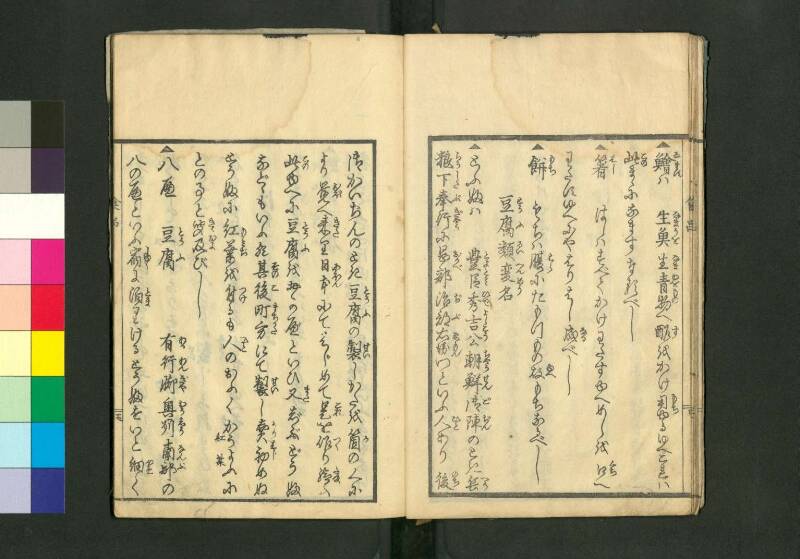
翻刻
【右丁】
▲膾(なます)【鱠】は 生魚(なまうを) 生青物(なまあをもの)へ酢(す)をかけ用(もち)ゆるゆへこれは
此(この)まゝになますなるべし
▲箸(はし) はしはすべてかけわたすゆへめしを口(くち)へ
わたすゆへにやはりはし成(なる)べし
▲餅(もち) もちは腹(はら)にたもつもの故(ゆへ)もちなるべし
豆腐類(とうふるい)変名(へんめう)
▲とふふは 豊臣秀吉公(とよとみひでよしこう)朝鮮(ちやうせん)御陣(ごぢん)のとき兵(へう)
粮(らう)下奉行(したぶぎやう)に岡部(おかべ)治部衛門(ぢぶゑもん)といふ人(ひと)あり 後(のち)
【左丁】
御かいぢんのとき豆腐(とうふ)の製(せい)しかたを箇(か)のくに
より覚(おぼ)へ来(きた)り日本(にほん)にてはじめて是(これ)を作(つく)り給(たま)へ
此(この)ゆへに豆腐(とうふ)をおかべといひ又(また)じぶどうふ
などゝもいふ歟 其後(そのこ)町方(まちかた)にて製(せい)し売初(うりはじ)めぬ
とうふに紅葉(もみぢ)を付(つけ)るも人(ひと)のおふくかうよふ【左に「紅葉」と傍記】に
との事と聞及(きゝおよ)びし
▲八へ 豆腐(とうふ) 有行脚(あるあんぎや) 奥州(おうしう)南部(なんぶ)の
八のへといふ宿(しゆく)に泊(とま)りけるとうふをいと細(ほそ)く
現代語訳
【右丁】
▲膾(なます)は 生魚や生野菜に酢をかけて用いるゆえ、これはこのまま「なます」なるべし
▲箸 箸はすべて架け渡すゆえ、飯を口へ渡すゆえに、やはり「はし」なるべし
▲餅 餅は腹に保つものゆえ「もち」なるべし
豆腐類変名
▲豆腐は 豊臣秀吉公朝鮮御陣のとき、兵糧下奉行に岡部治部衛門という人があり。後に
【左丁】
御帰陣のとき、豆腐の製法をかの国より覚え来たり、日本にて初めてこれを作り給えり。このゆえに豆腐を「おかべ」といい、また「じぶどうふ」などともいうか。その後町方にて製し売り始めた。豆腐に紅葉を付けるのも、人の「おふく(お福)」、「こうよう(紅葉)」とのことと聞き及んだ。
▲八戸 豆腐 ある行脚僧が奥州南部の八戸という宿に泊まったとき、豆腐をとても細く
英語訳
【Right Page】
▲Namasu (vinegared salad) - Since raw fish and raw vegetables are used with vinegar, this should remain "namasu" as is
▲Chopsticks (hashi) - Since chopsticks bridge everything and convey rice to the mouth, they should indeed be called "hashi"
▲Mochi (rice cake) - Since mochi is something that sustains (tamotsu) the stomach, it should be called "mochi"
Alternative Names for Tofu Types
▲Tofu - During Toyotomi Hideyoshi's Korean campaign, there was a person named Okabe Jibuemon who served as assistant magistrate for military provisions. Later
【Left Page】
when returning from the campaign, he learned the method of making tofu from that country and was the first to make it in Japan. For this reason, tofu is called "okabe," and also sometimes called "jibu-dofu." Later, townspeople began manufacturing and selling it. The practice of decorating tofu with maple leaves also comes from people saying "ofuku (good fortune)" and "kōyō (maple leaves)," as I have heard.
▲Hachinohe tofu - A wandering monk staying at an inn called Hachinohe in Nanbu, Ōshū, had tofu cut very thinly