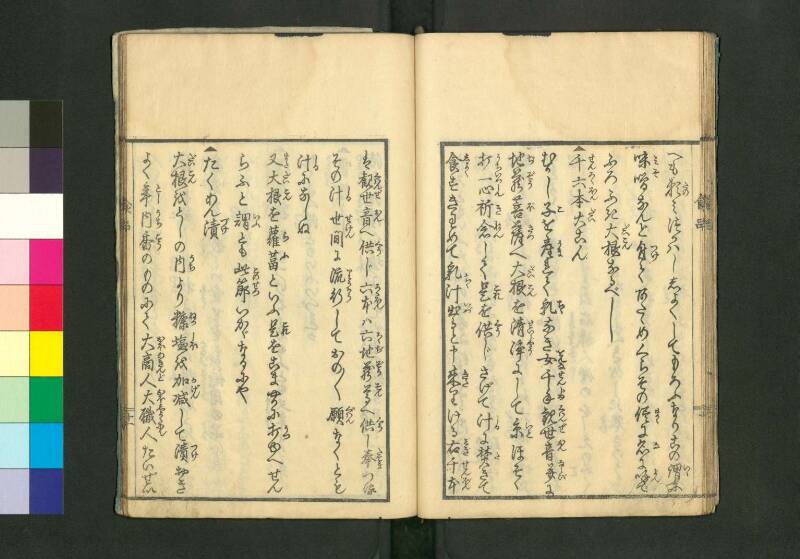
翻刻
【右丁】
へも頼(たの)みつかはししよくしてもろふなりこの謂(いゝ)に
味噌(みそ)なんど付(つけ)てあたゝめくらその侭(まゝ)に名(な)に呼(よん)で
ふろふき大根(だいこん)なるべし
▲千六本(せんろくほん)大(だい)こん
むかし子(こ)を産(うま)れて乳(ちゝ)なき女(をんな)千手観世音(せんじゆくはんぜおん)并(ならび)に
地蔵菩薩(ぢぞうぼさつ)へ大根(だいこん)を清浄(せいじやう)にして糸(いと)ほそく
打(うち)一心(いつしん)祈念(きねん)して是(これ)を供(くう)じさげて汁(しる)に焚(た)きて
食(しよく)すきわめて乳汁(ちゝ)出(いづ)ると申 来(きた)りける右(みぎ)千本(せんぼん)
【左丁】
は観世音(くはんぜおん)へ供(くう)じ六本(ろくほん)は六地蔵尊(ろくぢぞうそん)へ供(くう)し奉(たてま)つる
その汁(しる)世間(せけん)に流行(りうかう)しておの〳〵願(ぐはん)なくとも
汁(しる)になしぬ
又(また)大根(だいこん)を蘿葍(らふ)といふ是(これ)をこまやかに打つ(うつ)ゆへせん
らふと謂(いふ)とも此節(このせつ)いかゞなるにや
▲たくあん漬(づけ)
大根(だいこん)をとしの内(うち)より糠(ぬか)塩(しほ)を加減(かげん)して漬(つけ)おき
よく年内(としうち)香(こう)のものにて大商人(おほあきんど)大職人(おほしよくにん)たいぜい
現代語訳
【右丁】
へも頼んで使わし、食してもらうのである。この言われによって、味噌などを付けて温めて食らう。そのまま名前に呼んで「風呂吹き大根」なのであろう。
▲千六本大根
昔、子を産んで乳の出ない女性が、千手観世音並びに地蔵菩薩へ大根を清浄にして糸のように細く切り、一心に祈念してこれを供え、お下がりを汁に炊いて食すと、極めて乳汁が出ると申し伝えられてきた。右の千本
【左丁】
は観世音へ供え、六本は六地蔵尊へ供え奉る。その汁が世間に流行して、おのおの願がなくとも汁にして食べるようになった。
また大根を蘿葍(らふ)という。これを細やかに打つゆえ「せんらふ」と言うとも、この節はいかがなものか。
▲沢庵漬け
大根を年の内より糠と塩を加減して漬けおき、良く年内の香の物にて、大商人や大職人など大勢
英語訳
【Right Page】
would also ask for them and have them to eat. According to this account, they would add miso and such, warm them up and eat them. They came to be called "furofuki daikon" (bath-heated radish) directly from this origin.
▲Thousand-Six Radish
In ancient times, women who had given birth but had no breast milk would cleanly prepare radishes, cut them thin as thread, offer them to Thousand-Armed Kannon and Jizo Bodhisattva with sincere prayer, then take the blessed offerings, cook them in soup and eat them - it was said that breast milk would flow abundantly. The aforementioned thousand pieces
【Left Page】
are offered to Kannon, and six pieces are offered to the Six Jizo Bodhisattvas. This soup became popular in society, and people began making the soup even without specific prayers or wishes.
Also, radish is called "rafu." Since this is finely chopped, it might be called "senrafu," though I'm not certain about this nowadays.
▲Takuan Pickles
Radishes are pickled from within the year with carefully measured rice bran and salt, making good pickled vegetables for the year-end. Great merchants and master craftsmen in large numbers