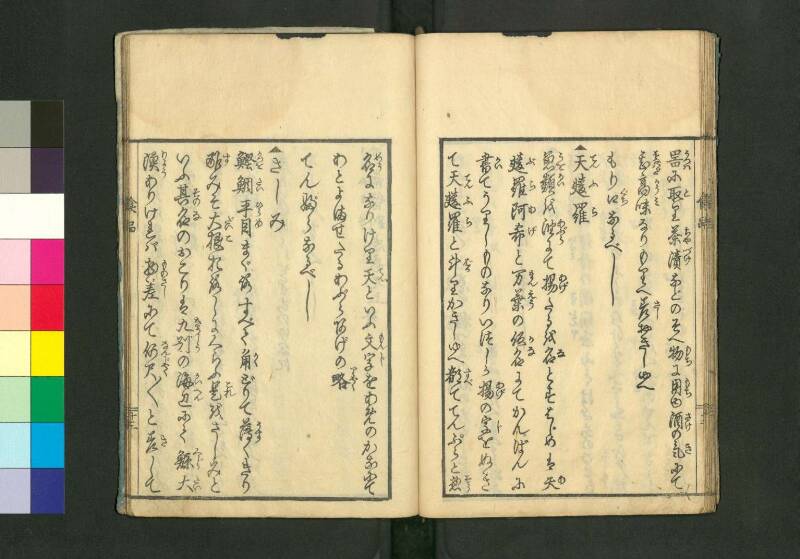
翻刻
【右丁】
器(うつは)に取(と)り茶漬(ちやづけ)などのそへ物(もち)に用(もち)ゆ酒(さけ)の気(き)にて
甚(はなはだ)高味(かうみ)なりもりへ差(さし)おきしゆへ
もり口(ぐち)なるべし
▲天麩羅(てんふら)
魚(うを)類(るい)を油(あぶら)にて揚(あげ)たるを名(な)とすはじめは天(あ)
麩羅阿希(ぶらあげ)と万葉(まんえう)の仮名(かな)にてかんばんに
書(かい)てうりしものなりいつしか揚(あげ)の字(じ)をぬき
て天麩羅(てんふら)と計(ばか)りかきしゆへ都(すべ)ててんぷらと総(そう)【惣】
【左丁】
名(めう)になりけり天(てん)といふ文字(もんじ)をあめのかなにて
あとよませたるあぶらあげの略(りやく)
てんぷらなるべし
▲さしみ
鰹(かつを)鯛(たい)平目(ひらめ)まぐろすべて角(かく)どりて薄(うす)くきり
酢(す)みそ大根(だいこ)おろしにくらふ是(これ)をさしみと
いふ其名(そのな)のおこりは九州(きうしう)の海辺(かいへん)にて鯨(くじら)大(たい)
漁(りよう)ありければ物差(ものさし)にて何尺(なんじやく)〳〵と差(さ)して
現代語訳
【右丁】
器に取り、茶漬けなどの添え物に用いる。酒の気(アルコール分)によって非常に風味が良い。樽に差しておいたゆえに「守口」なのであろう。
▲天麩羅
魚類を油で揚げたものの名前である。初めは「天麩羅揚げ」と万葉仮名で看板に書いて売っていたものである。いつしか「揚げ」の字を抜いて「天麩羅」とだけ書いたゆえ、すべて「てんぷら」と総称
【左丁】
になったのである。「天」という文字を「あめ」の仮名として後に読ませた「油揚げ」の略で「てんぷら」なのであろう。
▲刺身
鰹、鯛、平目、鮪、すべて角に切って薄く切り、酢味噌や大根おろしで食べる。これを「刺身」という。その名前の起こりは、九州の海辺で鯨の大漁があったので、物差しで何尺何尺と測って
英語訳
【Right Page】
are taken in vessels and used as accompaniments to tea-poured rice and such. Due to the alcohol content, they have excellent flavor. Since they were inserted into the barrels, they're probably called "Moriguchi."
▲Tempura
This is the name for fish and seafood fried in oil. Originally, it was written as "tenpura-age" using man'yōgana characters on shop signs when sold. Eventually, the character for "age" (fried) was dropped and only "tempura" was written, so everything came to be called "tempura" as a general
【Left Page】
term. The character "ten" was later read with the phonetic reading "ame," making it an abbreviation of "abura-age" (oil-fried), hence "tempura."
▲Sashimi
Bonito, sea bream, flounder, tuna - all are cut into rectangular pieces, sliced thin, and eaten with vinegar miso or grated daikon radish. This is called "sashimi." The origin of this name comes from the seashore of Kyushu, where there were great whale catches, so they would measure with rulers, saying "how many shaku, how many shaku," and