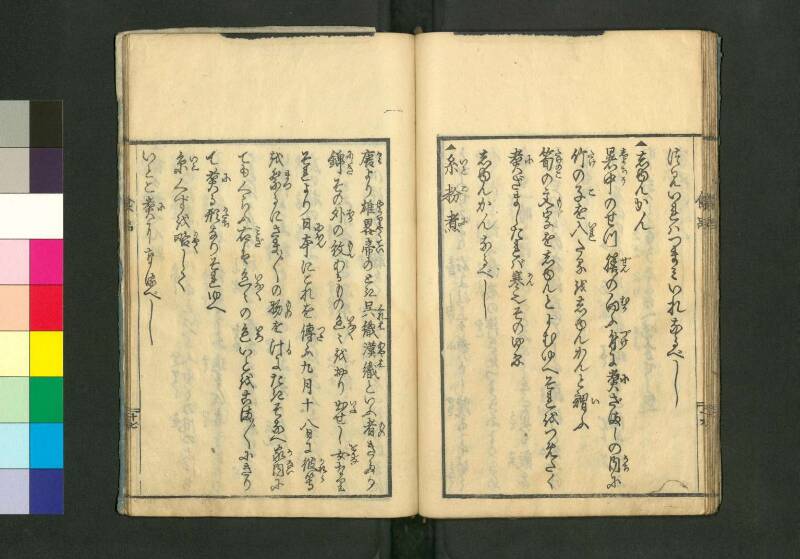
翻刻
ゝ右丁】
つみいれ【注】はつまみいれなるべし
▲しゆんかん
暑中(しよちう)のせつ膳(ぜん)の向(むか)ふ付(づけ)に煮(に)ざましの内(うち)に
竹(たけ)の子(こ)を入(いれ)たるをしゆんかんと謂(い)ふ
筍(たけのこ)の文字(もじ)をしゆんとよむゆへそれをつめたく
煮(に)ざましたれば寒(かん)也そのゆゑ
しゆんかんなるべし
▲糸粉煮(いとこに)
【料理の一種。「摘みい入れはんぺん。】
【左丁】
唐(から)より雄略帝(ゆうりやくてい)のとき呉織(くれは)漢織(あやは)といふ者(もの)きたり
錦(にしき)その外(ほか)の紋(もん)あるもの色々(いろ〳〵)をおり出(いた)せし女なり
それより日本(にほん)にこれを伝(つた)ふ九月十八日に彼等(かれら)
を祭(まつ)るにさま〴〵の物(もの)を汁(しる)にたきそなへ家内(かない)に
てもくらふ右(みぎ)は色々(いろ〳〵)の色(いろ)いとをこま〴〵にきり
て煮(に)る形(かたち)なりそれゆへ
糸(いと)くずを略(りやく)して
いとこ煮(に)なるべし
現代語訳
【右丁】
つみいれ【注:料理の一種。「摘み入れ」はんぺん。】はつまみいれなるべし
▲しゅんかん
暑中の節、膳の向付に煮冷ましの中に竹の子を入れたものを「しゅんかん」と言う。
筍の文字を「しゅん」と読むゆえ、それを冷たく煮冷ましたれば「寒」也。そのゆえ「しゅんかん」なるべし。
▲いとこ煮
【左丁】
唐より雄略帝の時、呉織・漢織という者が来た。錦その外の紋あるものを色々織り出した女である。それより日本にこれを伝える。九月十八日に彼等を祭るに様々なものを汁に炊いて供え、家内にても食らう。右は色々の色糸を細々に切って煮る形なり。それゆえ糸屑を略して「いとこ煮」なるべし。
英語訳
【Right Page】
Tsumii-ire [Note: A type of dish. "Picking and putting in" hanpen.] should be "tsumami-ire" (picked and put in).
▲Shunkan
During the hot summer season, a dish served as mukōzuke (side dish) for meals, where bamboo shoots are put in chilled broth, is called "shunkan."
Since the character for bamboo shoot (筍) is read as "shun," and because it is served cold as chilled broth, it becomes "kan" (cold). Therefore, it should be "shunkan."
▲Itokoni (Cousin Stew)
【Left Page】
From Tang China, during the time of Emperor Yūryaku, women named Kureha (Weaver from Wu) and Ayaha (Weaver from Han) came. These were women who wove brocade and various other patterned items in different colors. From then on, this was transmitted to Japan. On September 18th, when they worship these women, they cook various things in broth as offerings and eat them at home as well. The dish consists of various colored threads cut finely and boiled. Therefore, abbreviating "thread scraps," it should be "itokoni."