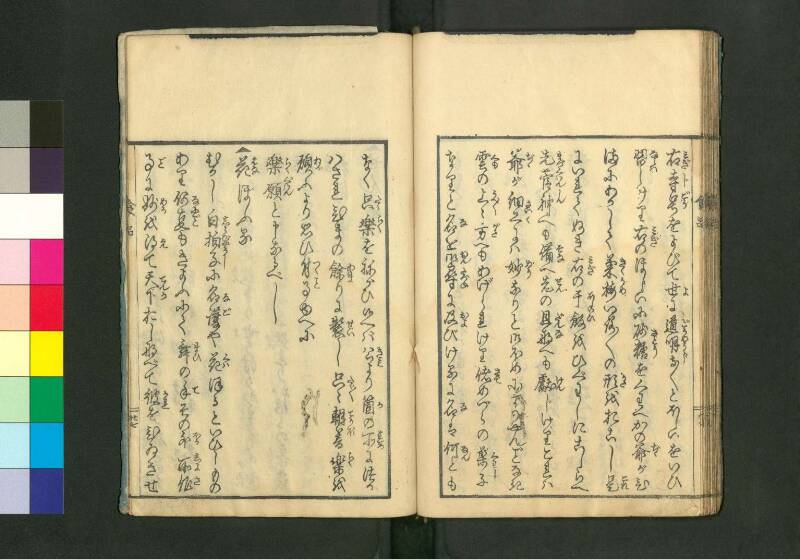
翻刻
【右丁】
右(みぎ)寺号(じごう)をよびて世(よ)に道明寺(どうめうじ)〳〵とほしいをいひ
習(ならは)しけり右(みぎ)のほしいに砂糖(さとう)をくわへかの爺(ぢゝ)がひ
まにあかして菊(きく)梅(うめ)いろ〳〵の形(かた)をおこし是(これ)
にいれてぬき右(みぎ)の干飯(ほしいひ)をひぐわしにこしらへ
先(まづ)菅神(くはんしん)へも備(そな)へ先(せん)の旦那(だんな)へも献(けん)じけりこれは
爺(ぢゝ)が細工(さいく)には妙(めう)なりと御ほめに□【与ヵ】りやんごとなき
雲(くも)の上々(うへ〳〵)方(がた)へもあげられけり偖(さて)めづらの菓子(くわし)
なりと名(な)を御尋(おんたづね)に及(およ)びけるに名(な)は何(なん)とも
【左丁】
なく只(たゝ)楽(らく)をねがひ候へば公(きみ)より箇(か)の所(ところ)につか
はされひまの余(あま)りに製(せい)し只々(たゞ〳〵)朝暮(てうぼ)楽(らく)を
願(ねが)ふより思ひ付(つく)事(こと)ゆへに
楽願(らくぐはん)と申なるべし
▲花(はな)ぼふる
むかし白拍子(しらびやうし)に名護や花(くは)ほるといひしもの
あり何事(なにごと)もきよふにて舞(まひ)の手(て)その外(ほか)所作(しよさ)
事(ごと)に妙(めう)を得(え)て天下(てんか)おしなべて彼(かれ)をひゐきせ
現代語訳
【右丁】
この寺の名前にちなんで、世間では道明寺の干飯と呼び習わすようになった。その干飯に砂糖を加え、かの爺が暇な時間に、菊や梅などいろいろな形の型を作ってそれに入れて抜き、干飯を日菓子に仕立てた。まず菅原道真公にもお供えし、先の主君にも献上した。これは爺の細工が見事だとお褒めにあずかり、身分の高い雲上人の方々にも献上された。さてこれは珍しい菓子だということで、お名前をお尋ねになったところ、名前は何ともなく、ただ楽を願っておりますので主君よりあの場所に遣わされ、暇の余りに作ったもの、ただただ朝夕に楽を
【左丁】
願うより思いついたことゆえに「落雁(らくがん)」と申すのでしょう。
▲花ぼうろ
昔、白拍子に名護屋花ほると言った者がいた。何事も器用で、舞の手その他の所作ごとに妙技を得て、天下がこぞって彼をひいきし
英語訳
【Right Page】
Taking the name from this temple, the world came to call this dried rice "Dōmyōji dried rice." Adding sugar to that dried rice, the old man would spend his free time making various molds in the shapes of chrysanthemums, plums, and other forms, pressing the mixture into them to create confections from the dried rice. He first offered them to the deity Sugawara no Michizane, and also presented them to his former lord. His craftsmanship was praised as excellent, and the confections were even presented to the highest nobility at court. When they inquired about the name of this rare confection, saying it had no particular name, just that he wished for comfort, and since his lord had sent him to that place where he made these in his spare time, thinking only of wishing for ease morning and
【Left Page】
evening, he said it should be called "rakugan" (falling geese).
▲Hanabōro
Long ago, there was a shirabyōshi dancer called Nagoya Hanabōru. She was skilled in everything, mastering the art of dance steps and other performances, and all under heaven favored her.