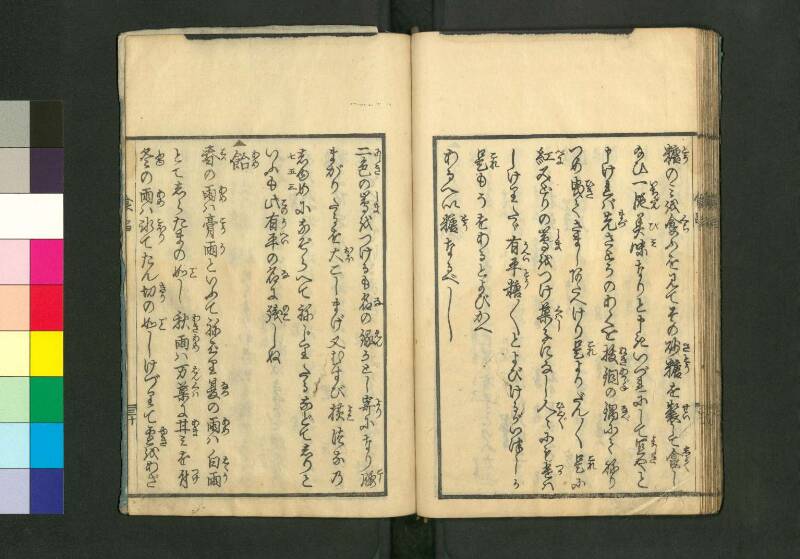
翻刻
【右丁】
糖(とう)のみを食(くら)ふを見てその砂糖(さとう)を製(せい)して食(しよく)し
給ひ一段(いちだん)美味(びみ)なりと申きいづれにして宜(よろしき)やと
申ければ先(まづ)さとうのあくを抜(ぬき)銅(あかゞね)の鍋(なべ)にてねり
つめ曳(ひき)てさましあたへけり是(これ)よりだん〳〵是(これ)に
紅(べに)みどりの島(しま)をつけ菓子(くはし)になし人々(ひと〴〵)にも遣(つか)は
しけりたゞ有平糖(うへいとう)〳〵とよびけるがいつしか
是(これ)もうをあるとよびかへ
あるへい糖(とう)なるべし
【左丁】
二色(にしき)の島(しま)をつけるも名(な)の縁(えん)かとし寄(より)になり腰(こし)
まがりたるを大(おほ)こしまげ又むすび横(よこ)つなの
しゆめ【左に「七五三」と傍記】になぞらへてねじりたるなどてしりと
いふも此(この)有平(うへい)の名(な)に残(のこ)しぬ
▲飴(あめ)
春(はる)の雨(あめ)は膏雨(こうう)といふてねばり夏(なつ)の雨(あめ)は白雨(はくう)
とてしらたまの如(ごと)し秋雨(あきあめ)は万菓(ばんくは)に甘(あま)みを付(つけ)
冬(ふゆ)の雨(あめ)は氷(こほり)てたん切(きり)の如(ごと)しけづりて雪(ゆき)をあざ
現代語訳
【右丁】
糖ばかりを食べているのを見て、その砂糖を加工して食べ物を作り
差し上げたところ、たいへん美味であると申した。どのようにして作るのが良いかと
尋ねられたので、まず砂糖のあくを抜き、銅の鍋で練り
詰めて引き延ばして冷まして与えた。これよりだんだんこれに
紅や緑の縞模様をつけて菓子にして人々にも使わせた。ただ「有平糖」と呼んでいたが、いつの間にか
これも「う」を「ある」と呼び変えて
「あるへい糖」となったのであろう。
【左丁】
二色の縞をつけるのも名前の縁であろうかと、年寄になって腰が
曲がったのを「大腰曲げ」、また結び横綱の
注連縄になぞらえて捻ったものなど、手練というのも
この有平の名前に残している。
▲飴
春の雨は膏雨といって粘り気があり、夏の雨は白雨
といって白玉のようである。秋雨は万の果実に甘味をつけ、
冬の雨は氷って短冊のようになる。削って雪を模
英語訳
【Right Page】
Seeing that he ate only sugar, [the Dutch resident] processed that sugar to make food and
offered it to him, whereupon [Uhei] said it was extremely delicious. When asked how best to make it,
[the resident] first removed the impurities from the sugar, kneaded it
in a copper pot until thick, stretched it out, and let it cool before giving it to him. From this point, gradually
red and green stripes were added to make it into confections that were also given to other people. It was simply called "uhei-tō," but eventually
the "u" was changed to be pronounced "aru,"
thus becoming "aruheii-tō."
【Left Page】
Adding two-colored stripes may also be connected to the name's origin. As [Uhei] became an elder and his back
became bent, this was called "ōkoshimage" (great back-bending), and twisting it to resemble the tied yokozuna's
shimenawa rope, among other techniques—
these remain in the name of this uhei [candy].
▲Ame (candy/syrup)
Spring rain is called kōu (nourishing rain) because it is sticky; summer rain is called hakuu (white rain)
because it is like white gems. Autumn rain adds sweetness to all fruits;
winter rain freezes and becomes like tanzaku (paper strips). When shaved, it imitates snow