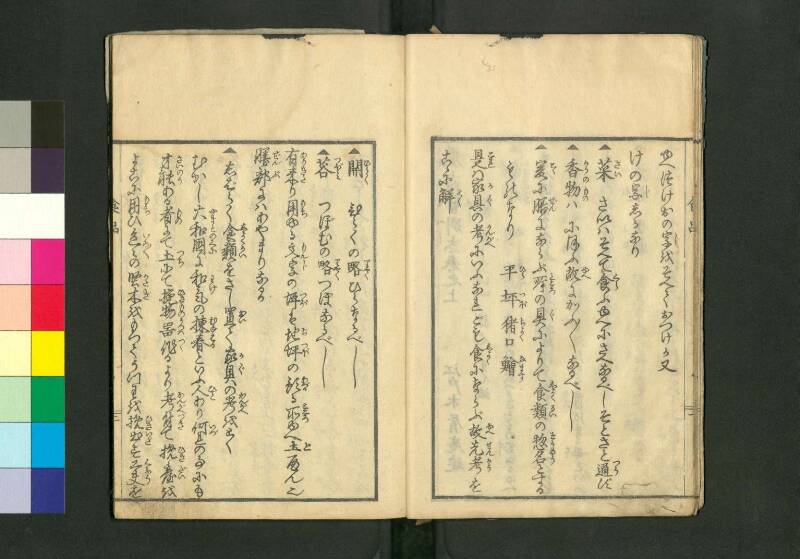
翻刻
【右丁】
ゆへつけおの字(じ)をそへておつけか又
けの字(じ)しるなり
▲菜(さい) さいはそへて食(くら)ふゆへにさへなるべしそとさと通(つう)ず
▲香物(かうのもの)は にほふ故(ゆへ)にかふ〳〵なるべし
▲爰(こゝ)に膳(ぜん)にならぶ所(ところ)の具(ぐ)によりて食類(しよくるい)の惣名(そうめう)とする
ものなり 平(ひら) 坪(つぼ) 猪口(ちよく) 鱠(なます)
是(これ)は家具(かぐ)の考(かんがへ)にいふなれども食(しよく)にならぶ故(ゆへ)先考(せんかう)を
こゝに解(とく)
【左丁】
▲開(ひらく) ひらくの略(りやく)ひらなるべし
▲莟(つぼみ) つぼむの略つぼなるべし
有来(ありきた)り用(もち)ゆる文字(もんじ)の坪(つぼ)は地坪(ぢつぼ)の預(あづか)る所(ところ)ゆへ土(ど)へん也
膳部(ぜんぶ)にはあやまりなるか
▲しばらく食類(しよくるい)をさし置(おい)て家具(かぐ)の考(かんがへ)をとく
むかし大和国(やまとのくに)に和気(わけ)の棟春(むねはる)といふ人(ひと)あり何(いづ)れの事にも
才能(さいのう)ある者(もの)にて土(つち)にて挽物(ひきもの)器(うつは)作(つく)るより考(かんがへ)付(つき)て挽台(ひきだい)を
よこに用(もち)ひ色々(いろ〳〵)の堅木(かたぎ)をもつてうつわを挽出(ひきいだ)す工夫(くふう)を
現代語訳
【右丁】
ゆえに「つけ」に「お」の字を添えて「おつけ」か、また「け」の字が「しる」なり。
▲菜(さい) 菜は添えて食らうゆえに「さへ」なるべし。「そ」と「さ」は通ずる。
▲香の物(こうのもの)は 匂うゆえに「かう かう」なるべし。
▲ここに膳に並ぶところの道具によって食類の総名とするものなり。平(ひら)、坪(つぼ)、猪口(ちょく)、膾(なます)
これは家具の考察で言うのだが、食に並ぶゆえ、先の考察をここに解く。
【左丁】
▲開(ひらく) 「ひらく」の略で「ひら」なるべし。
▲蕾(つぼみ) 「つぼむ」の略で「つぼ」なるべし。
普通に用いる文字の「坪(つぼ)」は地坪を預かるところゆえ土偏である。
膳部には誤りなるか。
▲しばらく食類をさし置いて家具の考察を解く。
昔、大和国に和気の棟春という人があった。いずれのことにも才能ある者にて、土にて轆轤物の器を作ることより考え付いて、轆轤台を横に用い、色々の堅木をもって器を轆轤で挽き出す工夫を
英語訳
【Right Page】
Therefore, adding the character "o" to "tsuke" makes "otsuke" (miso soup), or the character "ke" becomes "shiru" (soup).
▲Vegetable (sai) Vegetables are eaten as accompaniments, therefore it must be "sahe" (accompaniment). "So" and "sa" are interchangeable.
▲Pickled vegetables (kōno-mono) Because they are fragrant, it must be "kau-kau" (fragrant-fragrant).
▲Here are things that serve as general names for food categories based on the utensils arranged on the dining tray: flat dishes (hira), bowls (tsubo), small cups (choku), vinegared dishes (namasu)
Though this is discussed in the consideration of household furnishings, since they are arranged with food, I will explain the previous consideration here.
【Left Page】
▲To open (hiraku) An abbreviation of "hiraku," it must be "hira."
▲Bud (tsubomi) An abbreviation of "tsubomu," it must be "tsubo."
The commonly used character "tsubo" (unit of area) has the earth radical because it relates to measuring land area.
Is this an error for dining utensils?
▲Setting aside food categories for now, let me explain the consideration of household furnishings.
Long ago, in Yamato Province, there was a person called Wake no Muneharu. Being talented in all matters, from making pottery vessels with clay on a potter's wheel, he conceived the idea of using the lathe horizontally and devised a method to turn out vessels from various hard woods on the lathe...