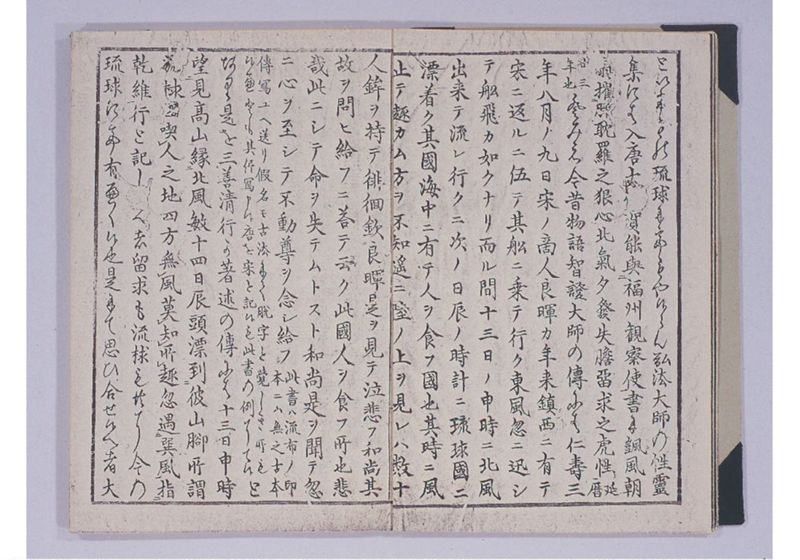
翻刻
といふもの琉球にてもや候らん弘法大師の性霊
集には入唐□□賀能与_二福州観察使_一書に凱風朝
□摧_二□耽羅之狠心_一北気夕発失胆留求之虎性_一《割書:延|暦》
《割書:廿三|年也》とみえ今昔物語智証大師の伝には仁寿三
年八月ノ九日宋ノ商人良暉カ年来鎮西ニ有テ
宋ニ返ルニ伍テ其船ニ乗テ行ク東風忽ニ迅シ
テ船飛カ如クナリ而ル間十三日ノ申時ニ北風
出来テ流レ行クニ次ノ日辰ノ時計ニ琉球国ニ
漂着ク其国海中ニ有テ人ヲ食フ国也其時ニ風
止テ趣カム方ヲ不知遥ニ陸ノ上ヲ見レハ数十
人鉾ヲ持テ徘徊欽良暉是ヲ見テ泣悲フ和尚其
故ヲ問ヒ給フニ答テ云ク此国人ヲ食フ所也悲
哉此ニシテ命ヲ失テムトスト和尚是ヲ聞テ忽
ニ心ヲ至シテ不動尊ヲ念シ給フ《割書:此書は流布の印|本には無之古本》
《割書:伝写ゆへ送り仮名も古法にて脱字と覚しき所も|候へとも其儘写申候唐を宋と記候も此書の例にて候》と
あり是を三善清行か著述の伝には十三日申時
望_二見高山_一縁_二北風敏_一 十四日辰頭漂到_二彼山脚_一所謂
流梂□喫_レ 人之地四方無_レ風莫_レ知_レ所_レ趣忽遇_二巽風_一指_二
乾維_一行と記し□□は留求も流梂も共に今の
琉球にて有へく候也是にて思ひ合せ候へは大
現代語訳
というものも琉球においてでしょうか。弘法大師の『性霊集』には、入唐の際に福州観察使に与えた書に「凱風朝に起こり、耽羅の狠心を摧く。北気夕に発し、胆を失う留求の虎性」(延暦二十三年のことです)と見えます。
『今昔物語』智証大師の伝には、「仁寿三年八月九日、宋の商人良暉が年来鎮西にあって宋に返るのに同行して、その船に乗って行く。東風忽ちに激しくて船が飛ぶが如くなり。そうしている間に十三日の申の時に北風が出来して流れ行くに、次の日辰の時頃に琉球国に漂着す。その国は海中にあって人を食う国なり。その時に風止みて趣く方を知らず。遥かに陸の上を見れば数十人が鉾を持って徘徊す。良暉これを見て泣き悲しむ。和尚がその故を問い給うに答えて云う。この国は人を食う所なり。悲しいかな、ここにして命を失わんとすると。和尚これを聞いて忽ちに心を至して不動尊を念じ給う」(この書は流布の印本にはなく、古本の伝写ゆえ送り仮名も古法で、脱字と覚しき所もありますが、そのまま写し申します。唐を宋と記すのもこの書の例です)とあります。
これを三善清行が著述の伝には、「十三日申時、高山を望み見る。北風の激しきに縁りて、十四日辰頭、彼の山脚に漂到す。所謂流梂、人を喫う地なり。四方に風無く、趣く所を知ること莫し。忽ち巽風に遇い、乾維を指して行く」と記し、留求も流梂も共に今の琉球であるでしょう。これにて思い合わせますれば、大
英語訳
...this thing they call [the Snake Sea] might also be in the Ryukyu. In Kōbō Daishi's "Shōryō-shū," in a letter given to the Fuzhou Regional Inspector during his journey to Tang China, it states: "The southern wind rises in the morning, crushing the fierce heart of Tamna. The northern wind blows in the evening, losing courage before the tiger nature of Ryūkyū" (this was in the 23rd year of Enryaku).
In the biography of Chishō Daishi in "Konjaku Monogatari," it records: "On the ninth day of the eighth month of Jinshou 3, accompanying a Song merchant named Ryōki who had been in Chinzei for years and was returning to Song, [the master] boarded his ship. The east wind suddenly became fierce and the ship flew as if airborne. During this, on the thirteenth day at the hour of the monkey, a north wind arose and they drifted along. The next day around the hour of the dragon, they were swept ashore in the Ryukyu Kingdom. This country exists in the sea and is a land that eats people. At that time the wind stopped and they knew not which way to go. Looking far toward the land, they saw several dozen people carrying spears and wandering about. Seeing this, Ryōki wept in sorrow. When the monk asked him the reason, he replied: 'This country is a place that eats people. Alas, I am about to lose my life here.' Hearing this, the monk immediately concentrated his heart and invoked Fudō Myōō" (this text does not exist in commonly circulated printed editions but is from manuscript copies of old texts, so the okurigana follows old conventions, and there appear to be missing characters, but I have copied it as is. Recording Tang as Song is also typical of this text).
This is recorded in the biography written by Miyoshi no Kiyoyuki as: "On the thirteenth day at the hour of the monkey, sighted high mountains. Due to the fierce north wind, on the fourteenth day at dawn, drifted to the foot of those mountains. The so-called Ryūkyū is a land that devours people. With no wind in any direction, knowing not where to go, suddenly encountered a southeast wind and proceeded pointing toward the northwest." Both Ryūkyū and Ryūkyū [different characters] likely refer to the present-day Ryukyu. Considering this together, the great...