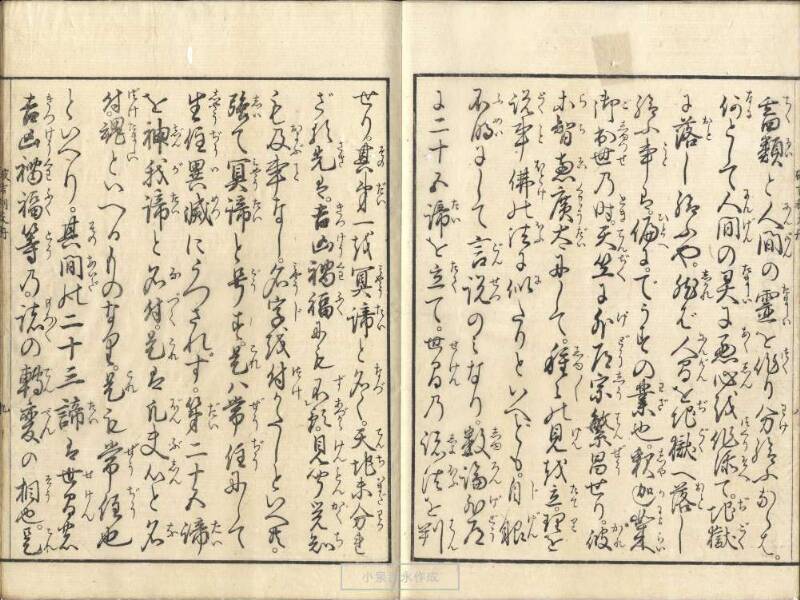
翻刻
【右丁】
畜類(ちくるい)と人間(にんげん)の霊(たましい)を作(つく)り分(わけ)給ふならは。
何(なに)として人間(にんげん)の霊(たましい)に悪心(あくしん)を作添(つくりそへ)て。地獄(ぢごく)
に落(おと)し給ふや。然(しかれ)ば人間(にんげん)を地獄(ぢごく)へ落(おと)し
給ふ事(こと)は。偏(ひとへ)に。でうすの業(わざ)也。釈迦如来(しやかによらい)
御出世(ごしゆつせ)の時(とき)。天竺(てんぢく)に外道宗(げどうしう)繁昌(はんぜう)せり。彼(かれ)
等(ら)智恵(ちゑ)広太(くわうだい)にして。種々(しゆ〳〵)の見(けん)を立(たて)。理(り)を
説事(とくこと)佛(ほとけ)の法(ほふ)に似(に)たりといへども。自眼(じげん)
不明(ふめい)にして言説(ごんせつ)のみなり。数論外道(しゆろんげどう)
に二十五/諦(たい)を立(たて)て。世間(せけん)の諸法(しよほふ)を判(はん)
【左丁】
せり。其(その)第(だい)一を冥諦(みやうたい)と名(なづ)く。天地(てんち)未(いまだ)分(わか)れ
ざる先(さき)は。吉凶(きつけう)禍福(くわふく)にも不(ず)_レ預(あづから)。見聞覚知(けんもんかくち)
も及(およぶ)事(こと)なし。名字(みやうじ)を付(つけ)かたしといへ共。
強(しい)て冥諦(みやうたい)と号(ごう)す。是(これ)は常住(ぜうぢう)にして
生住異滅(しやうぢういめつ)にうつされず。第(だい)二十五/諦(たい)
を神我諦(じんがたい)と名付(なづく)。是(これ)は凡夫心(ぼんぶしん)と名(な)
付(づけ)。魂(たましい)といへるものなり。是(これ)も常住(ぜうぢう)也
といへり。其(その)間(あいだ)の二十三/諦(たい)は世間(せけん)の
吉凶(きつけう)禍福(くわふく)等(とう)の。諸(もろ〳〵)の転変(てんべん)の相(そう)也。是(これ)
現代語訳
【右丁】
畜生と人間の霊魂を区別して作りなさるのであれば、どうして人間の霊魂に悪心を作り添えて、地獄に落としなさるのか。そうであれば、人間を地獄へ落としなさることは、ひとえにデウスの業である。釈迦如来がご出世の時、天竺(インド)に外道の宗派が繁栄していた。彼らは智慧が広大で、種々の見解を立て、理を説くことは仏の法に似ているといえども、自らの眼が不明で言説のみである。数論外道では二十五諦を立てて、世間の諸法を判断
【左丁】
している。その第一を冥諦と名づける。天地がまだ分かれない先は、吉凶禍福にも関わらず、見聞覚知も及ぶことがない。名前を付けがたいといえども、強いて冥諦と号する。これは常住であって生住異滅に移されない。第二十五諦を神我諦と名付ける。これは凡夫心と名付け、魂といわれるものである。これも常住である
という。その間の二十三諦は世間の吉凶禍福等の、もろもろの転変の相である。これ
英語訳
【Right page】
If [God] creates and distinguishes between the souls of animals and humans, then why does He add evil hearts to human souls and drop them into hell? If this is so, then dropping humans into hell is entirely the work of Deus. When Shakyamuni Buddha appeared in this world, heretical sects flourished in India. Although they had vast wisdom, established various views, and their explanations of principles resembled the Buddha's Dharma, their own vision was unclear and consisted only of verbal explanations. The Samkhya school established twenty-five principles (tattvas) to judge all phenomena of the world.
【Left page】
They name the first one the "unmanifest principle" (avyakta). Before heaven and earth were separated, it was unaffected by fortune and misfortune, and beyond the reach of seeing, hearing, feeling, and knowing. Though difficult to name, they forcibly call it the "unmanifest principle." This is eternal and unchanged by birth, duration, change, and extinction. They name the twenty-fifth principle the "self principle" (purusha). This is called the "ordinary mind" and is what is referred to as the soul. They say this too is eternal. The twenty-three principles in between are the various aspects of transformation such as the fortune, misfortune, calamities, and blessings of the world. These