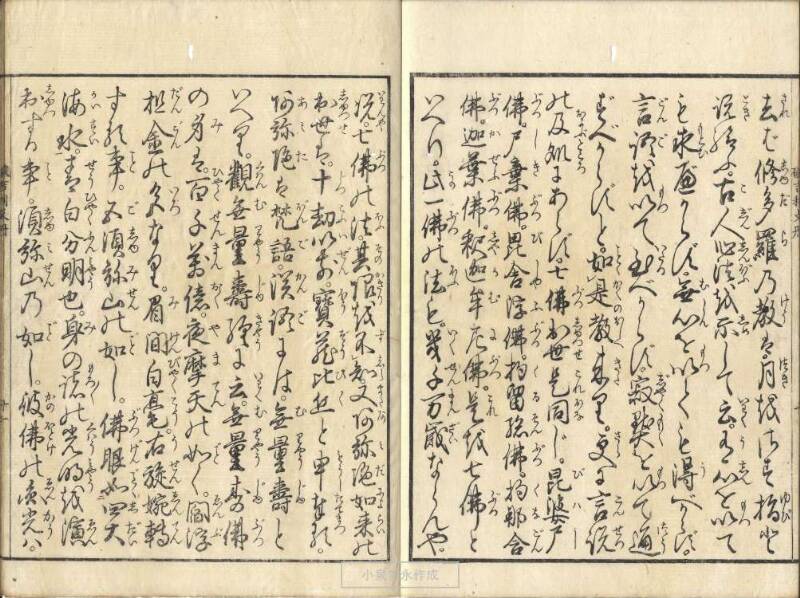
翻刻
【右丁】
去(され)ば修多羅(しゆだら)の教(けう)は。月(つき)をさす指(ゆび)と
説(とき)給ふ。古人(こじん)心法(しんぼふ)を示(しめ)して云(いわく)。有心(うしん)を以(もつ)て
も求(もとむ)べからず。無心(むしん)を以(もつ)ても得(う)べからず。
言語(ごんご)を以(もつ)て至(いたる)べからず。寂黙(じやくもく)を以(もつ)て通(つう)
ずべからずと。如(ことく)_レ是(かくの) 教(おしへ)来(きた)り。更(さら)に言説(こんせつ)
の及処(およぶところ)にあらず。七 佛(ぶつ)出世(しゆつせ)是(これ)同(おな)じ。昆婆尸(びはし)
佛(ぶつ)。尸棄佛(しきぶつ)。昆舎浮佛(びしやふぶつ)。拘留孫佛(くるそんぶつ)。拘那含(くなごん)
佛(ぶつ)。迦葉佛(かせふぶつ)。釈迦牟尼佛(しゃかむにぶつ)。是(これ)を七 佛(ぶつ)と
いへり。此(この)一 佛(ぶつ)の法(ほふ)も。幾千万歳(いくせんまんざい)ならんや。
【左丁】
況(いわんや)。七/佛(ぶつ)の法(ほふ)。其限(そのかきり)を不(ず)_レ知(しら)。又(また)阿弥陀如来(あみだによらい)の
出世(しゆつせ)は。十劫(じつこふ)以前(いぜん)。宝蔵比丘(ほうぞうびく)と申奉(もうしたてまつ)る。
阿弥陀(あみた)は梵語(ぼんご)。漢語(かんご)には。無量寿(むりやうじゆ)と
いへり。観無量寿経(くわんむりやうじゆきやう)に云(いわく)。無量寿佛(むりやうじゆぶつ)
の身(み)は。百千万億(ひやくせんまんおく)。夜摩天(やまてん)の如(ごと)く。閻浮(ゑんぶ)
檀金(だんごん)の色(いろ)なり。眉間白毫(みけんびやくこう)。右旋婉転(うせんゑんてん)
する事(こと)。五須弥山(ごしゆみせん)の如(ごと)し。佛眼(ぶつげん)如(ごとく)_二 四大(しだい)
海水(かいすい)_一。青白分明(せうひやくふんみやう)也。身(み)の諸(もろ〳〵)の光明(くはうみやう)を演(ゑん)
出(しゆつ)する事(こと)。須弥山(しゆみせん)の如(ごと)し。彼佛(かのほとけ)の円光(ゑんかう)は。
現代語訳
【右丁】
それゆえに修多羅(経典)の教えは、月を指す指であると説かれる。古人が心法を示して言うには、「有心(意識的な心)をもっても求めることはできず、無心をもっても得ることはできない。言語によって至ることもできず、沈黙によって通じることもできない」と。このような教えが来ているのであり、さらに言説の及ぶところではない。七仏の出世はこれと同じである。毘婆尸仏、尸棄仏、毘舎浮仏、拘留孫仏、拘那含牟尼仏、迦葉仏、釈迦牟尼仏。これを七仏という。この一仏の法でも、いく千万歳であろうか。
【左丁】
まして、七仏の法においては、その限りを知らない。また阿弥陀如来の出世は、十劫以前に宝蔵比丘と申し上げる。阿弥陀は梵語で、漢語では無量寿という。観無量寿経に言うには、「無量寿仏の身は、百千万億の夜摩天のように、閻浮檀金の色である。眉間の白毫が右旋婉転することは五須弥山のようである。仏眼は四大海水のように、青白分明である。身の諸々の光明を演出することは須弥山のようである。彼の仏の円光は、
英語訳
【Right page】
Therefore, the teaching of the sutras is explained as a finger pointing at the moon. An ancient master, demonstrating the dharma of mind, said: "It cannot be sought through having mind, nor can it be attained through no-mind. It cannot be reached through language, nor can it be penetrated through silence." Such teaching has come to us, and it is beyond the reach of verbal explanation. The appearance of the Seven Buddhas is the same. Vipaśyin Buddha, Śikhin Buddha, Viśvabhu Buddha, Krakucchanda Buddha, Kanakamuni Buddha, Kāśyapa Buddha, and Śākyamuni Buddha. These are called the Seven Buddhas. Even the dharma of this one Buddha - how many tens of millions of years would that span?
【Left page】
How much more so with the dharma of the Seven Buddhas - their limits are unknowable. Moreover, Amida Tathāgata's appearance in the world was more than ten kalpas ago as the monk Dharmākara. Amida is Sanskrit; in Chinese it is called Amitāyus (Infinite Life). The Contemplation Sutra on Infinite Life states: "The body of Amitāyus Buddha is like hundreds of thousands of millions of Yāma heavens, the color of jambūnada gold. The white tuft of hair between his eyebrows spirals to the right like five Mount Sumerus. The Buddha's eyes are like the waters of the four great oceans, clearly distinguished in blue and white. The emanation of various lights from his body is like Mount Sumeru. That Buddha's circular light is