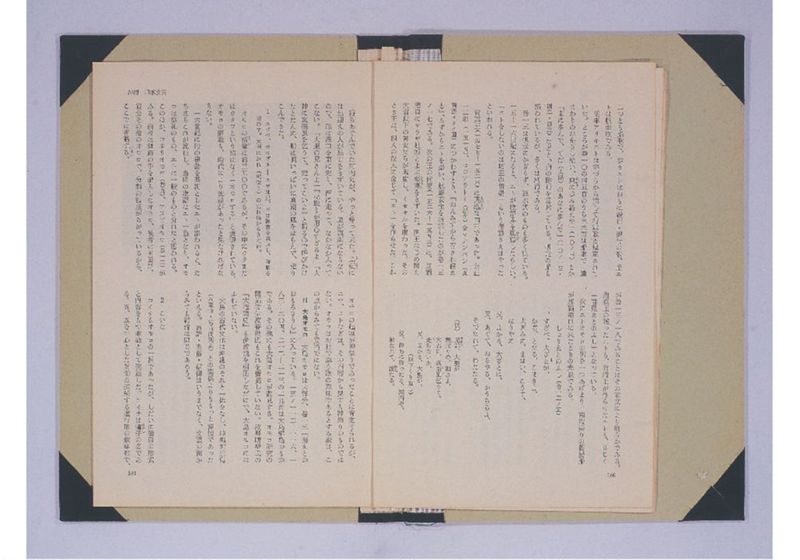
翻刻
180
【右頁上段】
二つとも船歌で、歩きエトはおもに□行・□行の歌、□エ
トは帆走歌である。
従来アリキエトは字づらから推して行□歌と規定されて
いた。ところが巻一〇の四五首のうち三三首は船歌で「浦
まわりのお舟召し給い、東(あがり)に歩み給えや」(一〇ノ四)とか
「東に歩んで、てだ(太陽)のあなに歩んで」(一〇ノ□四・
四二・四三)などと、舟の除行を意味している。帆走の船も
謡われているが、多くは□行である。
巻一三は帆走にかぎらず、進水式のものも多く出ている。
一五―一六世紀になると、エトが歌謡界を風靡(ふうび)したらしい。
「エトをしないのは□王の□□」という俚諺さえはやった
といわれる。
尚真王(一四七七―一五二六)は英邁(えいまい)な国王であった。永正
一二年(一五一五)、セジアラトミ(船名)をマナンバン(真
南蛮=タイ国)につかわすとき、「おんみずから召され候ゑ
と」、みずからエトを謡い、航海安全を祈求したのが巻一三
ノ一七である。次の王の尚清(一五二六―一五五三)に、那覇
港口にヤラザ杜城とよぶ要塞をきずいた。国王はじめ聞え
大君以下の神女たちが臨席し、ミセセルを賜わった。その
とき王は、四人の役人に命じて「エト」を作らせた。これ
【右頁下段】
が巻一三ノ一八であることはその前文により明らかである。
尚真王の謡ったエトも、尚清王が作らせたエトも、同じく
「首里ゑとのふし」となっている。
次にエトオモロの例を一つあげよう。南蛮帰りの貿易船
が那覇港口に来たときの光景である。
しよりゑとのふし(巻一三ノ五)
一、すざべ、大ざと【1】が、
かぢ、とたる、こまさよ、
大ぎみに、まはい、こうて、
はりやに
又、よかる、大ざとに、
又、あぐて、おちやる、かうちちよ、
そでたれて、わたたる。
(訳)兄部(すざべ)、大里が
楫取りの、細さよ、
大君に、真/南風(はい)乞うて、
走(は)らないか、
又、よかる、大里が、
(以下くり返し)
又、待ちに待ったる、河内ぞ、
袖たれて、渡(わた)たる。
【左頁上段】
待ちあぐんでいた河内丸が、やっと帰って来た。埠頭(ふとう)に
は出迎えの人が黒山をきずいている。風が真南にならない
ので、船は港口を東に走り、西に走って、なかなか入って
こない。「大里の兄さんよ」「楫取りが用心すぎるよ」「大
神に真南風を乞うて、走ってこいよ」と祈る心で呼びかけ
たとたんに、船は帆いっぱいに真南の風をはらんで、走り
こんできた。
1 スザベ、オオザト―スザは兄、ベは敬意を意味し、□□を
表わす。大里にかれ(□取り)の生れ島からきた□。
オモロの語彙(ごい)は約三五〇〇であるが、その中にウタまた
はウタフという語はなく「オモロする」と表現されている。
オモロの語義も、時代により変遷があったと見なければな
らない。
一六世紀に船の律動を基調としたエトが謡われると、た
ちまちこれが流行し、当時の歌謡はエト一色となり、オモ
ロは祭礼のもの、エトは一般のものと分れたと思われる。
このほか、コネリオモロ(巻九)、アスビオモロ(巻一二)が
ある。前者は舞踊の手を記入したオモロ、後者は□遊び、
宴会その他のオモロで、分類の観点がちがっているから、
ここでは省略する。【(4)】
【左頁下段】
オモロの起原が神祭りであったことは肯定せられるが、
エサ、エトなどは、その内容から見ても神祭りのものでは
ない。オモロはお杜で謡う歌の意味であるとする説は、こ
の点からみても妥当ではない。
付 大島オモロ 大島オモロは大部分、巻一三「舟えとの
おもろさうし」に入っている。一三ノ一一二―一一六、一
八三―二〇四、二一二―二一三の二九首は大島群島のもの
である。その他にも大島オモロが散見する。オモロ研究の
開拓者伊波普猷氏もこれを指摘していない。故昇曙夢氏の
『大奄美史』も伊波説を引用しただけで、大島オモロには
ふれていない。
大島の古代文化は沖縄のそれと一体をなし、沖縄対先島
(八重山・宮古両列島)との関係よりももっと密接であった
といえる。言語・習俗・信仰はいうまでなく、文芸の面か
らみても結論は同じであろう。
2 こいな
コイナもオモロの一種であったが、しだいに独自の形式
と内容をもつ歌謡として発達した。コイナは囃子(はやし)の名であ
る。五、五を中心とした対句の連続する進行形の叙事歌で、
沖縄 口承文芸
181
現代語訳
180
【右頁上段】
二つとも船歌で、歩きエトは主に櫂漕ぎ・棹漕ぎの歌、舞エトは帆走歌である。
従来アリキエト(歩きエト)は字面から推して行進歌と規定されていた。ところが巻10の45首のうち33首は船歌で「浦回りのお舟召し給い、東(あがり)に歩み給えや」(10の4)とか「東に歩んで、てだ(太陽)のあなに歩んで」(10の14・42・43)などと、舟の櫂漕ぎを意味している。帆走の船も歌われているが、多くは櫂漕ぎである。
巻13は帆走にかぎらず、進水式のものも多く出ている。15-16世紀になると、エトが歌謡界を風靡したらしい。「エトをしないのは豚王の子豚」という俚諺さえ流行ったといわれる。
尚真王(1477-1526)は英明な国王であった。永正12年(1515)、セジアラトミ(船名)をマナンバン(真南蛮=タイ国)に派遣するとき、「御自ら召され候エト」、自らエトを歌い、航海安全を祈願したのが巻13の17である。次の王の尚清(1526-1553)に、那覇港口にヤラザ杜城と呼ぶ要塞を築いた。国王をはじめ聞得大君以下の神女たちが臨席し、ミセセルを賜わった。そのとき王は、4人の役人に命じて「エト」を作らせた。これ
【右頁下段】
が巻13の18であることはその前文により明らかである。尚真王の歌ったエトも、尚清王が作らせたエトも、同じく「首里エトの節」となっている。
次にエトオモロの例を一つ挙げよう。南蛮帰りの貿易船が那覇港口に来たときの光景である。
首里エトの節(巻13の5)
一、兄部(すざべ)、大里が、
舵取りの、細さよ、
大君に、真南風(まはい)乞うて、
走らないか
又、よかる、大里に、
又、待ちに待ったる、河内船よ、
袖垂れて、渡ったる。
(訳)兄部、大里が
舵取りの、慎重さよ、
大君に、真南風を乞うて、
走らないか、
又、よかる、大里が、
(以下繰り返し)
又、待ちに待ったる、河内船よ、
袖垂れて、渡ったる。
【左頁上段】
待ちに待っていた河内丸が、やっと帰って来た。埠頭には出迎えの人が黒山を築いている。風が真南にならないので、船は港口を東に走り、西に走って、なかなか入ってこない。「大里の兄さんよ」「舵取りが用心すぎるよ」「大神に真南風を乞うて、走ってこいよ」と祈る心で呼びかけたとたんに、船は帆いっぱいに真南の風をはらんで、走り込んできた。
1 スザベ、オオザト―スザは兄、ベは敬意を意味し、兄様を表わす。大里は舵取りの生まれ島からきた呼び名。
オモロの語彙は約3500であるが、その中にウタまたはウタフという語はなく「オモロする」と表現されている。オモロの語義も、時代により変遷があったと見なければならない。
16世紀に船の律動を基調としたエトが歌われると、たちまちこれが流行し、当時の歌謡はエト一色となり、オモロは祭礼のもの、エトは一般のものと分かれたと思われる。このほか、コネリオモロ(巻9)、アスビオモロ(巻12)がある。前者は舞踊の手を記入したオモロ、後者は遊び、宴会その他のオモロで、分類の観点が違っているから、ここでは省略する。
【左頁下段】
オモロの起源が神祭りであったことは肯定されるが、エサ、エトなどは、その内容から見ても神祭りのものではない。オモロはお杜で歌う歌の意味であるとする説は、この点からみても妥当ではない。
付 大島オモロ 大島オモロは大部分、巻13「舟エトのオモロ草紙」に入っている。13の112-116、183-204、212-213の29首は大島群島のものである。その他にも大島オモロが散見する。オモロ研究の開拓者伊波普猷氏もこれを指摘していない。故昇曙夢氏の『大奄美史』も伊波説を引用しただけで、大島オモロにはふれていない。
大島の古代文化は沖縄のそれと一体をなし、沖縄対先島(八重山・宮古両列島)との関係よりももっと密接であったといえる。言語・習俗・信仰はいうまでもなく、文芸の面からみても結論は同じであろう。
2 こいな
コイナもオモロの一種であったが、しだいに独自の形式と内容をもつ歌謡として発達した。コイナは囃子の名である。五、五を中心とした対句の連続する進行形の叙事歌で、
沖縄 口承文芸
181
英語訳
180
[Right page, upper section]
Both are boat songs: "walking Eto" are mainly songs for rowing with oars and poles, while "dancing Eto" are sailing songs.
Previously, Ariki-eto (walking Eto) had been classified as marching songs based on the literal meaning of the characters. However, 33 of the 45 songs in volume 10 are boat songs, with lyrics like "Summon the boat around the bay, walk eastward" (10-4) and "Walking eastward, walking beyond the sun (teda)" (10-14, 42, 43), referring to rowing boats. Sailing ships are also sung about, but most involve rowing.
Volume 13 includes not only sailing songs but also many launching ceremony songs. In the 15th-16th centuries, Eto seems to have taken the song world by storm. It is said that even the folk saying "Not doing Eto is like a pig king's piglet" became popular.
King Shō Shin (1477-1526) was a wise ruler. In Eishō 12 (1515), when sending the ship Seji-ara-tomi to Manan-ban (True Nanban = Thailand), he personally sang Eto, praying for safe voyage - this is recorded in volume 13, section 17. Under the next king, Shō Sei (1526-1553), a fortress called Yaraza-mori-gusuku was built at Naha harbor entrance. The king and priestesses from the Kikoe-ōgimi down attended and were granted Miseseru. At that time, the king ordered four officials to compose "Eto." This
[Right page, lower section]
is clearly volume 13, section 18, as evident from its preface. Both the Eto sung by King Shō Shin and the Eto commissioned by King Shō Sei are called "Shuri Eto melody."
Let me give one example of Eto Omoro - a scene when a trading ship returning from Nanban arrived at Naha harbor entrance.
Shuri Eto melody (Volume 13, Section 5)
1. Brother Suzabe, Ōzato's
helmsman's caution,
Pray to the great lord for true south wind,
Won't you sail forth?
Again, Good Ōzato,
Again, Long-awaited Kawachi ship,
With sleeves trailing, it crosses.
(Translation) Brother, Ōzato's
helmsman's prudence,
Pray to the great lord for south wind,
Won't you sail forth?
Again, Good Ōzato,
(repetition follows)
Again, Long-awaited Kawachi ship,
With sleeves trailing, it crosses.
[Left page, upper section]
The long-awaited Kawachi-maru has finally returned. People gathering to welcome it form crowds like black mountains at the wharf. Since the wind is not from the true south, the ship runs east and west at the harbor entrance, unable to enter easily. Just as they call out with prayerful hearts, "Brother from Ōzato!" "The helmsman is too cautious!" "Pray to the great god for a true south wind and sail forth!" - the ship fills its sails with the true south wind and comes sailing in.
1 Suzabe, Ōzato - Suza means brother, be expresses respect, meaning "honored brother." Ōzato is a name derived from the helmsman's home island.
Omoro vocabulary consists of about 3,500 words, but among them there are no words for "uta" (song) or "utau" (to sing) - instead it is expressed as "doing Omoro." The meaning of Omoro must also be seen as having changed over time.
When Eto based on ship rhythms was sung in the 16th century, it immediately became popular, and contemporary songs became entirely Eto-colored. It appears that Omoro became associated with rituals while Eto became general songs. There are also Koneri Omoro (volume 9) and Asobi Omoro (volume 12). The former records dance movements with Omoro, the latter covers play, banquet and other Omoro - since their classification perspective differs, they are omitted here.
[Left page, lower section]
While the origin of Omoro in divine festivals is acknowledged, Esa and Eto clearly are not divine festival songs based on their content. The theory that Omoro means songs sung at sacred groves is not valid from this perspective either.
Appendix: Ōshima Omoro - Most Ōshima Omoro are included in volume 13, "Fune Eto no Omoro Sōshi" (Ship Eto Omoro Collection). The 29 songs in sections 13-112-116, 183-204, and 212-213 are from the Ōshima island group. Other Ōshima Omoro are also scattered throughout. Even Iha Fuyū, the pioneer of Omoro research, did not point this out. The late Nobori Shomu's "History of Greater Amami" merely quoted Iha's theory without touching on Ōshima Omoro.
Ōshima's ancient culture formed a unity with that of Okinawa and was even more closely connected than the relationship between Okinawa and the Sakishima Islands (Yaeyama and Miyako archipelagos). The same conclusion applies not only to language, customs, and beliefs, but also from the perspective of literature.
2 Koina
Koina was also a type of Omoro but gradually developed as songs with their own unique form and content. Koina is the name of a musical accompaniment. It is a progressive narrative song consisting of continuous couplets centered on five-five meter,
Okinawa Oral Literature
181