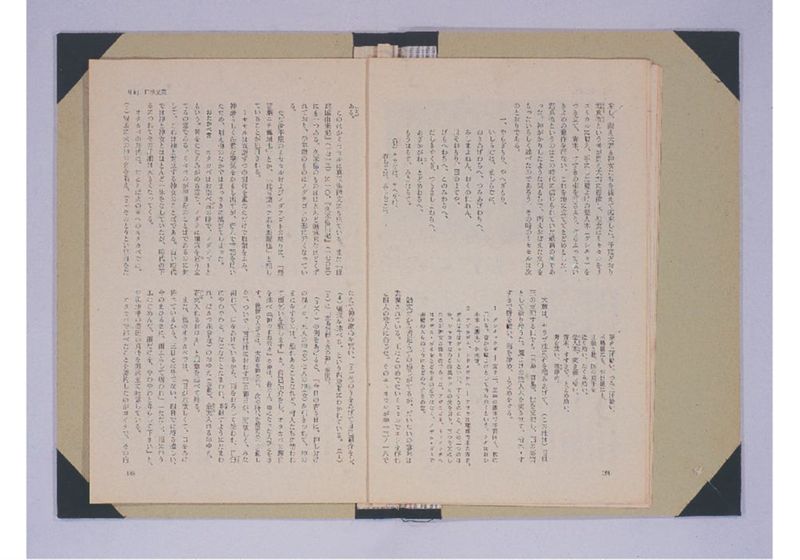
翻刻
184
【右頁上段】
□し、聞え大君も神女たちを従えて臨席した。予定どおり
君真物(きんまもん)という神が聞え大君に憑依し、神女はミセセルをリ
ズミカルに唱え、手にした魔よけの楚人木(ダシキャ)を
つき立て、青木、すすきの束を打ちふり、打ちふって祓い
きよめの動作を行ない、これを地に立ててとどめとした。
君真物というのはこの時代に信じられていた最高の神であ
った。神がかりしたような気もちで、唱えおぼえた文句を
もったいらしく述べたのであろう。その時のミセセルは次
のとおりである。
一、やらざもり、やへざもり、
いしらごは、ましらごは、
おりあげわちへ、つみあげわちへ、
みしまよねん、おくの世ねん、
世そおもり、国のまてや、
げらへわちへ、このみわちへ、
だしきやくぎ【1】、つきさしよわちへ、
あざかがね【2】、とどめわちへ、
もうはらて、みをはらて。
(訳)ヤラザ杜、ヤヘザ杜、
石らごは、真しらごは、
【右頁下段】
築き上げ給い、つみ上げ給い、
三島世にも、お国世にも、
世襲う杜、国の真手を
造り給い、たくみ給い、
楚人木、突き差し給い、
青木、すすきで、とどめ給い、
野を祓い、澪(みお)浄め。
大意は、ヤラザ杜に石を積みあげて、(この杜は)首里
王の支配する世でも(三島□首里)、世を支配し、国の要害
として造り給うた。魔よけの楚人木を突き立て、青木・す
すきで野を祓い、海を浄め、とどめをする。
1 ダシキャクギ―高さ二、三mの灌木で木質堅く、杖に
用いる。昔から魔よけとして持ち歩くという。クギは釘か
小木(灌木)か□□。
2 アザカガネ、トドメワチヘ―アザカは琉球青木の古名。
ガネは今はゲェーンといい、すすきのこと。この二つのほ
か、□□□□□□□□□□□□の先を□り、三つを束にし
たのが神女の繰り物であった。アザカガネ、トドメワチヘ
はアザカ・ガネをとどめるの意ではなく、アザカ・ガネで
悪魔の入らぬようにとどめをするの意。
韻文だから舌足らずの感じがするが、だいたいの意味は
表現されている。王はこのめでたいミセセルでエトを作れ
と四人の役人に命じた。そのエトオモロが巻一三ノ一八で
【左頁上段】
ある【(2)】。
このほかミセセルは真玉湊碑文にも出ている。また『琉
球国由来記』(一七一三)に一〇、『久米島日記』(一七〇三)
にも一つある。久米島のものはほとんど無意味なほどくず
れており、伊平屋のものはノダテゴトの形に近くなってい
る。
ただ伊平屋のミセセルおよびノダテゴトの終りに、「是
言葉ニテ□□也」とか、「此言葉ニテ謡ヒ□躍也」と記し
ていることが注目される。
ミセセルは五語ずつの対句を重ねただけで□韻をふみ、
神語らしく荘重な空気をかもし出すが、好んで古語を用い
たため、唱え物のなかではまっさきに滅びてしまった。
おたかべ言 オタカベはお崇べ言(ごと)の略で、ノダテゴトと
もいう。神をたたえあがめる意で、ノダテは願意を宣(の)り立
てるの意である。ミセセルが神自身のことばであるのに対
して、これは神と対立する神女のことばである。古い時代
では神と神女とはほとんど一体をなしていたが、時代の下
るにつれてその□離は大きくなってくる。
オタカベの形式は、たとえば火の神へのオタカベでは、
(1)冒頭に火の神の名を唱え、(2)そのとうとい出自をた
【左頁下段】
たえて神の歓心を買い、(3)名のりをあげて自己紹介をし、
(4)願意を述べる、という四□□にわかれている。((1)
(2)は「太陽崇拝と火の神」参照)
(3)(4)の例をあげると、「今日の吉き日に、押し分け
の親ノロ、王人の神(女)七人の神(女)を引きつれて、神の
まねをするのは、恐れあることなれど、村人たちに請われ
て雨乞いを致します」と、自己紹介をし、オタカベの理由
を述べ(「神のまね云々」の神は、昔の人、神になった人びとをさ
す。後世の人びとは、太古を神の世、次の時代を按司の世と称し
た)、ついで「首里杜におわす王の御田が、雨欲しく、みな
□れて、口をあけているから、雨をおろして給われ、田/毎(ごと)
にやわやわと、なごなごとたまわれ、畔(あぜ)越すようにたまわ
れ、ぼさつ花(菩薩)のおゆえ(お故)、金実(かねみ)入れるおゆえ、
石実(いしみ)入れるおゆえ」と願意を述べて終る。
また、他のオタカベでは、「田が水欲しくて、口をあけ
待っているから、三日とは待てない、四日では待ち遠しい、
今のまひるまに、雨ふらして賜われ」「ただし、雨に伴う
風はごめんだ、雨だけを、やわやわと降らして下さい」と、
台風地帯の農民の真情を無遠慮に吐露している。
オタカベで述べたことを要約したのがコイナで、その内
沖縄 口承文芸
185
現代語訳
184
【右頁上段】
列席し、聞得大君も神女たちを従えて臨席した。予定どおり君真物(きんまもん)という神が聞得大君に憑依し、神女はミセセルをリズミカルに唱え、手にした魔よけの楚人木(ダシキャ)を突き立て、青木、すすきの束を打ち振り、打ち振って祓い清めの動作を行ない、これを地に立ててとどめとした。君真物というのはこの時代に信じられていた最高の神であった。神がかりしたような気持ちで、唱え覚えた文句をもったいらしく述べたのであろう。その時のミセセルは次のとおりである。
一、やらざもり、やへざもり、
いしらごは、ましらごは、
おりあげわちへ、つみあげわちへ、
みしまよねん、おくの世ねん、
世そおもり、国のまてや、
げらへわちへ、このみわちへ、
だしきやくぎ、つきさしよわちへ、
あざかがね、とどめわちへ、
もうはらて、みをはらて。
(訳)ヤラザ杜、ヤヘザ杜、
石らごは、真しらごは、
【右頁下段】
築き上げ給い、つみ上げ給い、
三島世にも、お国世にも、
世襲う杜、国の真手を
造り給い、たくみ給い、
楚人木、突き差し給い、
青木、すすきで、とどめ給い、
野を祓い、澪(みお)清め。
大意は、ヤラザ杜に石を積み上げて、(この杜は)首里王の支配する世でも(三島は首里)、世を支配し、国の要害として造り給うた。魔よけの楚人木を突き立て、青木・すすきで野を祓い、海を清め、とどめをする。
1 ダシキャクギ―高さ2、3メートルの灌木で木質堅く、杖に用いる。昔から魔よけとして持ち歩くという。クギは釘か小木(灌木)か不明。
2 アザカガネ、トドメワチヘ―アザカは琉球青木の古名。ガネは今はゲェーンといい、すすきのこと。この二つのほか、(不明の植物)の先を切り、三つを束にしたのが神女の持ち物であった。アザカガネ、トドメワチヘはアザカ・ガネをとどめるの意ではなく、アザカ・ガネで悪魔の入らぬようにとどめをするの意。
韻文だから舌足らずの感じがするが、だいたいの意味は表現されている。王はこのめでたいミセセルでエト(詠)を作れと四人の役人に命じた。そのエトオモロが巻13の18で
【左頁上段】
ある。
このほかミセセルは真玉湊碑文にも出ている。また『琉球国由来記』(1713)に10、『久米島日記』(1703)にも一つある。久米島のものはほとんど無意味なほど崩れており、伊平屋のものはノダテゴトの形に近くなっている。
ただ伊平屋のミセセルおよびノダテゴトの終りに、「是言葉ニテ躍也」とか、「此言葉ニテ謡ヒ踊躍也」と記していることが注目される。
ミセセルは五語ずつの対句を重ねただけで押韻をふみ、神語らしく荘重な空気をかもし出すが、好んで古語を用いたため、唱え物のなかでは真っ先に滅びてしまった。
おたかべ言 オタカベはお崇べ言(ごと)の略で、ノダテゴトともいう。神をたたえあがめる意で、ノダテは願意を宣(の)り立てるの意である。ミセセルが神自身のことばであるのに対して、これは神と対立する神女のことばである。古い時代では神と神女とはほとんど一体をなしていたが、時代の下るにつれてその分離は大きくなってくる。
オタカベの形式は、たとえば火の神へのオタカベでは、(1)冒頭に火の神の名を唱え、(2)そのとうとい出自をた
【左頁下段】
たえて神の歓心を買い、(3)名のりをあげて自己紹介をし、(4)願意を述べる、という四部分にわかれている。((1)(2)は「太陽崇拝と火の神」参照)
(3)(4)の例をあげると、「今日の吉き日に、押し分けの親ノロ、王人の神(女)七人の神(女)を引きつれて、神の真似をするのは、恐れあることなれど、村人たちに請われて雨乞いを致します」と、自己紹介をし、オタカベの理由を述べ(「神の真似云々」の神は、昔の人、神になった人々をさす。後世の人々は、太古を神の世、次の時代を按司の世と称した)、ついで「首里杜におわす王の御田が、雨欲しく、みな枯れて、口をあけているから、雨をおろして給われ、田ごとにやわやわと、なごなごとたまわれ、畔(あぜ)越すようにたまわれ、菩薩花(菩薩)のお故、金実(かねみ)入れるお故、石実(いしみ)入れるお故」と願意を述べて終る。
また、他のオタカベでは、「田が水欲しくて、口をあけ待っているから、三日とは待てない、四日では待ち遠しい、今の真昼間に、雨降らして賜われ」「ただし、雨に伴う風はごめんだ、雨だけを、やわやわと降らして下さい」と、台風地帯の農民の真情を無遠慮に吐露している。
オタカベで述べたことを要約したのがコイナで、その内
沖縄 口承文芸
185
英語訳
184
[Right page, upper section]
attended, and the Kikoe-Ōgimi (highest priestess) also attended with priestesses in attendance. As planned, the god Kimmamun (Lord True Thing) possessed the Kikoe-Ōgimi, and the priestess rhythmically chanted Miseseru, thrusting up the magical Dashikya (tamarisk wood) she held in her hand, waving and shaking bundles of blue wood and pampas grass to perform purification actions, then planted these in the ground as a final seal. Kimmamun was believed to be the highest god of this era. In a state resembling divine possession, she probably solemnly recited the phrases she had learned to chant. The Miseseru from that time is as follows:
1. Yaraza shrine, Yaheza shrine,
Stone foundations, true foundations,
Built up high, piled up high,
In the three-island world, in the royal world,
World-inheriting shrine, the nation's true stronghold,
Constructed well, crafted well,
Dashikya wood, thrust and planted,
Blue wood and pampas grass, sealed with,
Fields purified, channels cleansed.
(Translation) Yaraza shrine, Yaheza shrine,
Stone foundations, true foundations,
[Right page, lower section]
Built up and granted, piled up and granted,
In the three-island world too, in the royal world too,
World-inheriting shrine, the nation's true stronghold
Made and granted, crafted and granted,
Tamarisk wood, thrust and planted,
With blue wood and pampas grass, sealed and granted,
Fields purified, channels cleansed.
The general meaning is: stones were piled up at Yaraza shrine, and (this shrine) was constructed as a stronghold of the nation, governing the world even under the Shuri king's rule (the three islands refer to Shuri). Magical tamarisk wood was thrust up, and fields were purified and the sea cleansed with blue wood and pampas grass as a final seal.
1. Dashikya-kugi - A shrub 2-3 meters high with hard wood, used for walking sticks. It has been carried as protection against evil spirits since ancient times. Whether "kugi" means nail or small tree (shrub) is unclear.
2. Azaka-gane, Todome-wachie - Azaka is the ancient name for Ryukyu blue wood. Gane is now called "geen" and refers to pampas grass. Besides these two, (unclear plant name) tips were cut and bundled together in threes as ritual implements for priestesses. Azaka-gane, Todome-wachie does not mean to stop the azaka and gane, but to use azaka and gane to seal against evil spirits.
Since it's verse, it feels somewhat inadequate in expression, but the general meaning is conveyed. The king ordered four officials to compose an Eto (song) based on this auspicious Miseseru. That Eto-Omoro is volume 13, number 18
[Left page, upper section]
[of the Omoro collection].
Besides this, Miseseru also appears in the Madama Harbor stone inscription. There are also ten in the "Ryūkyū-koku Yurai-ki" (Records of the Origins of the Ryukyu Kingdom, 1713) and one in the "Kumejima Nikki" (Kumejima Diary, 1703). The Kumejima version has deteriorated to an almost meaningless degree, while the Iheya version has become close to the form of Nodategoto.
It is noteworthy that at the end of Iheya Miseseru and Nodategoto, phrases like "With these words, dance" or "With these words, sing and dance" are recorded.
Miseseru simply repeats couplets of five words each with rhyme, creating a solemn atmosphere befitting divine language, but because it preferred to use archaic words, it was the first among chanted forms to disappear.
Otakabe-goto: Otakabe is an abbreviation of "O-takabe-goto" (words of veneration), also called Nodategoto. It means to praise and revere the gods, and Nodate means to proclaim and announce one's wishes. While Miseseru represents the gods' own words, this represents the priestesses' words in dialogue with the gods. In ancient times, gods and priestesses formed almost a unity, but as time progressed, their separation grew larger.
The format of Otakabe, for example in Otakabe to the fire god, is divided into four parts: (1) beginning by chanting the fire god's name, (2) praising their noble ori-
[Left page, lower section]
gin to win the god's favor, (3) announcing one's name for self-introduction, and (4) stating one's wishes. (See "Sun Worship and Fire Gods" for (1) and (2).)
Examples of (3) and (4): "On this auspicious day, the chief Noro of the Oshi-wake, leading seven royal priestesses, though it is fearsome to imitate the gods, at the villagers' request we perform rain prayers," introducing themselves and explaining the reason for the Otakabe ("imitating gods" refers to ancient people who became gods. Later generations called ancient times the age of gods, and the next era the age of aji lords). Then: "The king's rice fields in Shuri shrine desire rain, all withered and gaping, so please send down rain, gently to each field, peacefully grant it, overflowing the ridges, for the sake of Buddha flowers, for the sake of golden fruit, for the sake of stone fruit," concluding with the statement of wishes.
In another Otakabe: "The fields thirst for water, waiting with mouths agape, we cannot wait three days, four days is too long, right now at noon, please send down rain" "However, we don't want the wind that comes with rain, please send only rain, gently." This frankly expresses the true feelings of farmers in a typhoon region.
Koina is a summary of what was stated in Otakabe, and its content
Okinawa Oral Literature
185