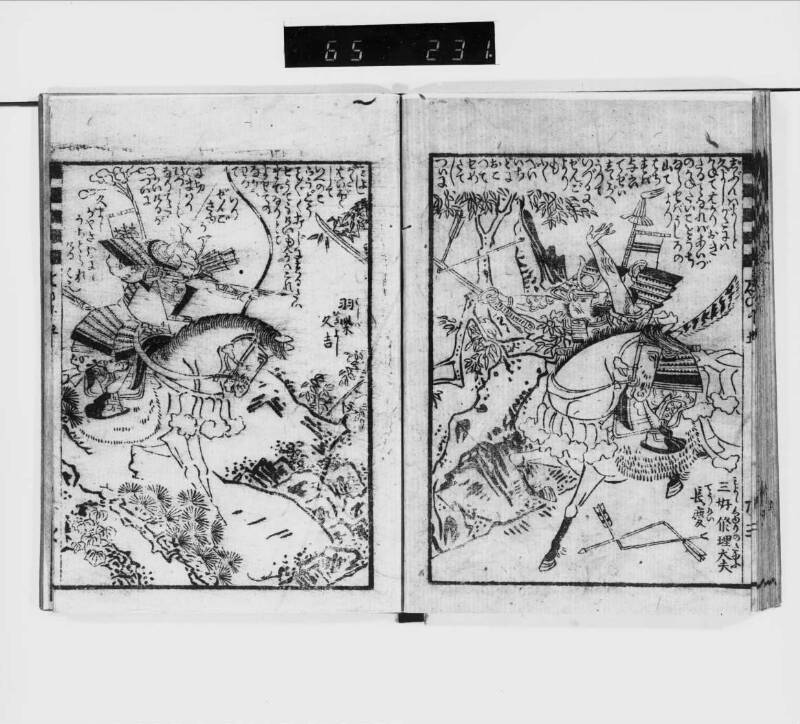
翻刻
じぶんはよしと
久よしがたには
かねてはかりおき
たることなればあいづ
のかねたいこをうち
ならせばうしろの
山てより
はち
すば
与六
てぜい
したがへ
うつて
いづる又
ぜんご
より
も
ふく
へい
いち
どに
おこ
つて
せめ
たて
〳〵
ついに
みよし
がた
はいぼく
して
いへのこ
らうどう
こと〴〵く打じにするたい
せうていけいも今はこれ
までなりとて
よせての
なかへ
わり
ていり
ぜんご
さゆ
う
に切
てまはり
ひつしと
なりてたゝ
かいけるが
ついに
久よし
がや□□に
うちとられ
けると也
三好(みよし)修理大夫(しゆりのたゆふ)
長慶(てうけい)
羽柴(はしば)
久吉(ひさよし)
現代語訳
時分はよしと、久吉方にはかねて謀り置いたることなれば、合図の鐘太鼓を打ち鳴らせば、後ろの山手より蜂須賀与六、手勢を従えて撃って出る。また前後よりも伏兵一度に起こって攻め立てたり。
ついに三好方は敗北して、家の郎党ことごとく討死する。大将長慶も今はこれまでなりとて、寄せ手の中へ割って入り、前後左右に切って回り、必死となって戦いけるが、ついに久吉が矢先に討ち取られけるとなり。
三好修理大夫長慶
羽柴久吉
英語訳
Judging the time was right, Hisayoshi's forces, having made preparations in advance, struck the signal gongs and drums. From the mountains behind, Hachisuka Yoroku led his troops in a charge. Simultaneously, ambush forces from front and rear rose up and launched their attack.
Finally, the Miyoshi forces were defeated, with all their household retainers killed in battle. General Chokei, seeing that this was the end, plunged into the midst of the attacking forces, cutting left and right in all directions, fighting desperately to the death, but was ultimately struck down by Hisayoshi's arrow.
Miyoshi Shuri-no-taifu Chokei
Hashiba Hisayoshi