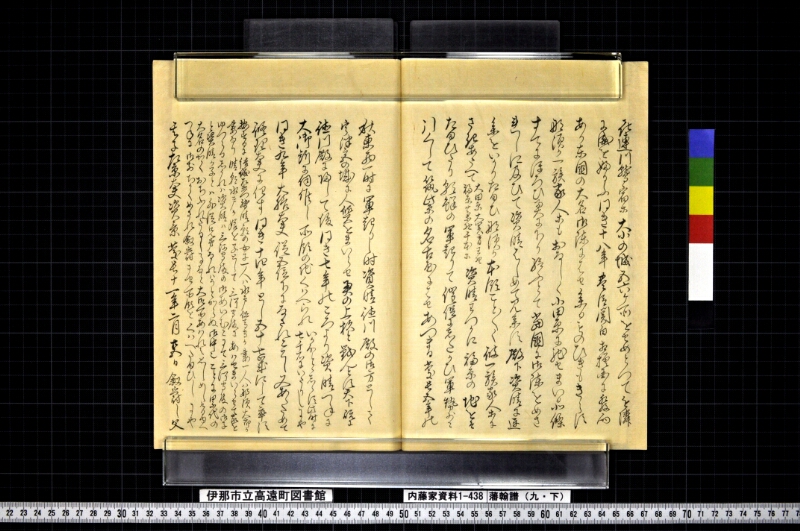
翻刻
【右丁】
喜連川鷲宿等大小の城五六ヶ所をせめとつて近隣
に威をふるふ同き十八年豊臣関白相模国に発向
あり東国の大名御陣にはせ参るものひきもきらす
那須か一族家人等もおなしく小田原に馳せまいる北条
すてにほろひ奥に下り給ふとて当国に御陣をめさ
れしに及ひて資晴はしめて見参す殿下資晴に遅
参をいかりたまひ那須か本領こと〳〵く彼一族家人等に
さきあたへて《割書:大田原大関育王野|福原藁野千本等》資晴わつかに福原の地をそ
たまひたり朝鮮の軍起りて催促にしたかひ軍勢少々
引くして筑紫の名古【ママ】屋にはせあつまる慶長五年の
【左丁】
秋東西一時に軍起りし時資晴徳川殿の御方として
宇津宮の城に人質をまいらせ奥の上杉と戦んとす天下既に
徳川殿に帰して後同き七年のころより資晴つねに
大御所に伺候し所領の地くはへられ《割書:いかほとゝしらす此時に|七千石にいたりしにや》
同き九年大膳大夫従五位下になされことし又あらためて
修理大夫に任す同き十四年とし五十七歳にして卒す
《割書:按するに結城左衛門督晴朝の女子一人は水戸但馬守か妻一人は那須大【ママ】郎か|妻なり晴朝水戸か娘を子として三河守殿にあはせまいらせて家を》
《割書:ゆつらるしかれは資晴は三河守殿の御あいむこにて三河守殿の御子|と資晴か子とは外従弟なれはうとからぬ御中也ことに累代の》
《割書:大名のかくおちふれたりし事なと大御所あはれみ思しめしけるゆへ|つねに御前ちかくめされ叙爵させ所領をくはへたまひしにや》
其子左京大夫資景慶長十一年二月廿五日叙爵し父
現代語訳
【右丁】
喜連川、鷲宿等大小の城五、六ヶ所を攻め取って近隣に威勢を振るった。同じ天正十八年、豊臣関白が相模国に出陣され、東国の大名が御陣に馳せ参じる者が引きも切らなかった。那須の一族家人等も同じく小田原に馳せ参じた。北条がすでに滅び、奥州に下り給うとて当国に御陣を置かれるに及んで、資晴は初めて謁見した。殿下は資晴の遅参を怒られ、那須の本領をことごとく、かの一族家人等に先に与えて(大田原・大関・烏山・福原・藁科・千本等)、資晴にはわずかに福原の地を与えられただけであった。朝鮮の軍が起こって催促に従い、軍勢少々を引き連れて筑紫の名護屋に馳せ集まった。慶長五年の
【左丁】
秋、東西一時に軍が起こった時、資晴は徳川殿の御方として宇都宮の城に人質を参らせ、奥州の上杉と戦おうとした。天下がすでに徳川殿に帰した後、同じく慶長七年頃より資晴は常に大御所に伺候し、所領の地を加えられた(どれほどかは知らないが、この時に七千石に至ったのであろうか)。同じく九年、大膳大夫従五位下になされ、この年また改めて修理大夫に任じられた。同じく十四年、年五十七歳にして卒した。
(按ずるに、結城左衛門督晴朝の女子一人は水戸但馬守の妻、一人は那須太郎の妻である。晴朝は水戸の娘を子として三河守殿に合わせ参らせて家を譲られた。されば資晴は三河守殿の御相婿にて、三河守殿の御子と資晴の子とは外従弟なれば疎からぬ御仲である。ことに累代の大名がかく落ちぶれたりした事など大御所が哀れみ思し召しけるゆえ、常に御前近くお召しになり、叙爵させ所領を加え給うたのであろうか)
その子左京大夫資景は慶長十一年二月二十五日叙爵し、父
英語訳
【Right Page】
He captured five or six castles of various sizes including Kitsuregawa and Washijuku, and wielded his authority over the neighboring areas. In the same year of Tenshō 18 (1590), when Toyotomi Kanpaku launched a campaign to Sagami Province, daimyo from the eastern provinces rushed to join his army in an endless stream. The Nasu clan members and retainers likewise hurried to Odawara. When the Hōjō were already destroyed and [Toyotomi Hideyoshi] was about to proceed to Ōshū, establishing his camp in this province, Sukeharu had his first audience. His Highness was angered by Sukeharu's late arrival and gave away all of the Nasu domain to those clan members and retainers who had arrived earlier (Ōtawara, Ōzeki, Karasuyama, Fukuhara, Warashina, Senpon, etc.), leaving Sukeharu with only the small territory of Fukuhara. When the Korean campaign began and following the summons, he led a small military force and gathered at Nagoya in Kyushu. In the autumn of Keichō 5 (1600),
【Left Page】
when military campaigns arose simultaneously in the east and west, Sukeharu sided with Tokugawa-dono, sent hostages to Utsunomiya Castle, and prepared to fight against the Uesugi in Ōshū. After the realm had already been unified under Tokugawa-dono, from around Keichō 7 (1602), Sukeharu constantly served the Ōgosho, and his domain was expanded (the exact amount is unknown, but it may have reached 7,000 koku at this time). In the same year 9 (1604), he was made Daizen-dayū with the court rank of Jugoi-ge, and in the same year was further appointed to Shuridayū. In the same year 14 (1609), he died at the age of 57.
(Upon consideration, one daughter of Yuki Saemon-no-kami Harutomo was the wife of Mito Tajima-no-kami, and another was the wife of Nasu Tarō. Harutomo adopted a daughter of Mito as his child and had her marry Mikawa-no-kami-dono, passing the house to him. Therefore, Sukeharu was the co-father-in-law of Mikawa-no-kami-dono, and Mikawa-no-kami-dono's children and Sukeharu's children were second cousins, maintaining a close relationship. Perhaps because the Ōgosho pitied how this hereditary daimyo house had fallen into such decline, he always summoned him to be near his presence, granted him court rank, and added to his domain.)
His son Sakyō-dayū Sukekage was granted court rank on the 25th day of the 2nd month of Keichō 11 (1606), and his father