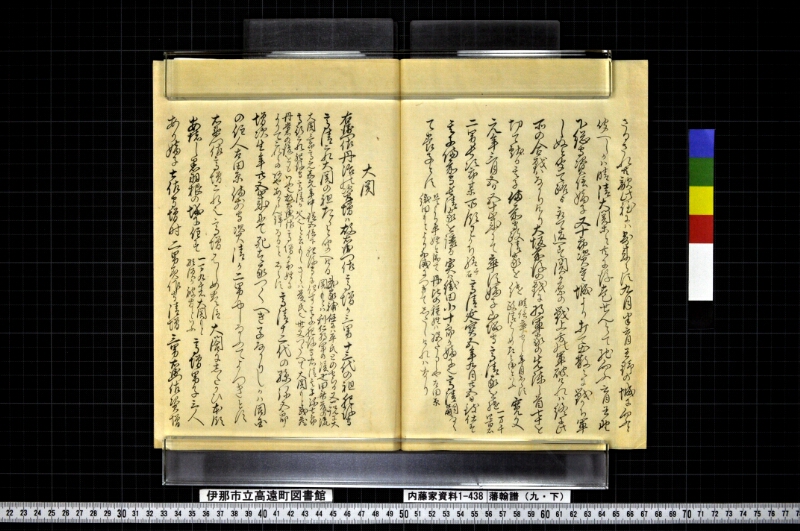
翻刻
【右丁】
さるされ共敵此程には寄来らす九月半育王野の城に向ふと
聞へしかは晴清大関等と共に後巻せんとて馳向ふ育王野
下総守資信嫡子又十郎資重城より打て出散々に戦かち軍
しぬと聞て路より取て返す関か原の戦上方の軍破けれは終に此
所の合戦はなかりけり大坂前後の戦に将軍家の先陣し首七十を
切て献る其子備前守政清を継《割書:晴信【ママ】卒せし年月しらす|政清はしめ左兵衛といふ》寛文
元年三月五日五十歳にて卒す嫡子山城守高清家を継《割書:一万千|四百石》
二男長次郎某所領わかち給《割書:千|石》高清延宝五年九月廿五日致仕す
其子備前守長清家を譲る実は織田小十郎か嫡子也高清嗣なく
て養子とす《割書:是より平姓と成て丹比の種姓は絶たりしや太田原|織田もとより外戚につきてしたしけれはなり》
大関
右衛門佐丹治の資増は故右衛門佐高増か三男十三代の祖肥後守
高清これ大関の祖たりと聞へける《割書:武家補任には平氏とのせらる又一説に大|関もとは利仁将軍の後疋田斎藤の流》
《割書:大関三郎高之嘉元年中従五位下肥後守に任す其子肥後守忠清其子弥七郎|高行これ肥後守高清か父也と云もしさらは藤氏也世又つたへて大関もと武蔵》
《割書:丹党の後をもいふ也故右衛門佐高増か本姓に|よりてこれらのあやあるらん詳なることしらす》高清十二代の孫弥五郎
増次生年廿五歳にて死す家つくへき子なかりしかは同国
の住人太田原備前守資清か二男やしなふてよつきとす
右衛門佐高増これ也高増はしめ豊臣太閤にしたかひ本領
安堵し黒羽根の城に住す《割書:一万九千石大関もと|那須か被官といふ》高増男子三人
あり嫡子土佐守増時二男美作守清増三男右衛門佐資増
現代語訳
【右丁】
されども敵はこの頃には寄せて来ず、九月半ばに石田三成が佐竹義宣の居城である久保田(秋田)に向かうと聞こえたので、晴清は大関等と共に後詰めをしようとして馳せ向かった。しかし途中で佐竹義宣の嫡子佐竹義重が城より打って出て散々に戦い、軍に勝利したと聞いて、路より引き返した。関ヶ原の戦いで上方の軍が破れたので、ついにこの所での合戦はなかった。大坂の陣(前後の戦い)では将軍家の先陣を務め、首七十を切って献上した。その子備前守政清が跡を継いだ。(晴清が卒した年月は分からない。政清は初め左兵衛と言った。)寛文元年三月五日、五十歳で卒した。嫡子山城守高清が家を継いだ。(一万千四百石)二男長次郎某は所領を分け給わった。(千石)高清は延宝五年九月廿五日に致仕した。その子備前守長清に家を譲った。実は織田小十郎の嫡子である。高清に跡継ぎがなかったので養子とした。(これより平姓となって丹比の種姓は絶えたのだろうか。太田原と織田はもとより外戚につながりがあって親しかったためである。)
大関
右衛門佐丹治の資増は、故右衛門佐高増の三男で、十三代の祖肥後守高清がこれ大関の祖であったと聞いている。(武家補任には平氏と記載されている。また一説に大関はもと利仁将軍の後で疋田斎藤の流れという。)
(大関三郎高之は嘉元年中に従五位下肥後守に任じられた。その子肥後守忠清、その子弥七郎高行がこれ肥後守高清の父であるという。もしそうであれば藤氏である。世にまた伝えて大関はもと武蔵丹党の後であるとも言う。故右衛門佐高増の本姓によって、これらの混乱があるのだろう。詳しいことは分からない。)高清の十二代の孫弥五郎増次は、生年二十五歳で死去した。家を継ぐべき子がなかったので、同国の住人太田原備前守資清の二男を養って跡継ぎとした。右衛門佐高増がこれである。高増は初め豊臣太閤に従い、本領安堵され、黒羽根の城に住んだ。(一万九千石。大関はもと那須の被官という。)高増には男子三人があった。嫡子土佐守増時、二男美作守清増、三男右衛門佐資増である。
英語訳
【Right Page】
However, the enemy did not advance at this time. In mid-September, when it was heard that Ishida Mitsunari was heading toward Kubota (Akita), the castle of Satake Yoshinobu, Harukiyo rushed forward with Ōzeki and others to provide rear support. However, upon hearing that Satake Yoshishige, the eldest son of Satake Yoshinobu, had sallied forth from the castle and fought fiercely, achieving victory, they turned back along the road. Since the western forces were defeated at the Battle of Sekigahara, there was ultimately no battle at this location. During the Siege of Osaka (the earlier and later campaigns), he served in the Shogun's vanguard and presented seventy severed heads. His son Bizen-no-kami Masakiyo succeeded him. (The year and month of Harukiyo's death is unknown. Masakiyo was initially called Sahyōe.) He died on March 5, Kanbun 1 (1661), at the age of fifty. His eldest son Yamashiro-no-kami Takakiyo inherited the house. (11,400 koku) His second son Chōjirō received a division of territory. (1,000 koku) Takakiyo retired on September 25, Enpō 5 (1677). He passed the house to his son Bizen-no-kami Nagakiyo, who was actually the eldest son of Oda Kojūrō. Since Takakiyo had no heir, he adopted him. (From this point, they became the Taira clan, and the Tanhi lineage was severed. This was because Ōtawara and Oda had originally been connected through marriage relations and were close.)
Ōzeki
Uemon-no-suke Tanji no Sukemasu was the third son of the late Uemon-no-suke Takamasu. The thirteenth-generation ancestor Higo-no-kami Takakiyo is said to have been the founder of the Ōzeki. (The Buke Bunin records them as Taira clan. Another theory states that the Ōzeki were originally descendants of General Toshihito and of the Hikita-Saitō lineage.)
(Ōzeki Saburō Takayuki was appointed Jūgoi-no-ge Higo-no-kami during the Kagen era. His son Higo-no-kami Tadakiyo, and his son Yahichirō Takayuki are said to be the father of Higo-no-kami Takakiyo. If so, they would be Fujiwara clan. It is also traditionally said that the Ōzeki were originally descendants of the Musashi Tan Party. Due to the original surname of the late Uemon-no-suke Takamasu, there may be confusion regarding these matters. The details are unclear.) Takakiyo's twelfth-generation descendant Yagorō Masutsugu died at the age of twenty-five. Since there was no son to inherit the house, they adopted the second son of Ōtawara Bizen-no-kami Sukekiyo, a resident of the same province, as heir. This was Uemon-no-suke Takamasu. Takamasu initially served Kampaku Toyotomi, had his original territory confirmed, and resided at Kurohaneno Castle. (19,000 koku. The Ōzeki are said to have originally been retainers of the Nasu.) Takamasu had three sons: eldest son Tosa-no-kami Masutoki, second son Mimasaku-no-kami Kiyomasu, and third son Uemon-no-suke Sukemasu.