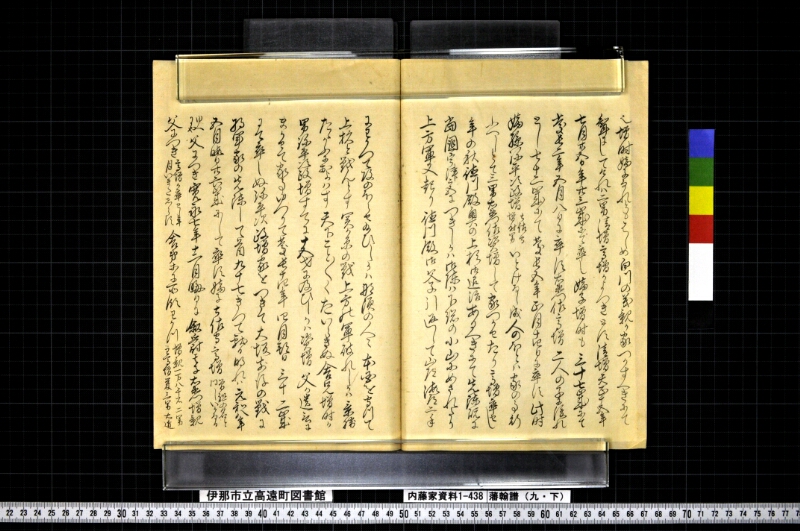
翻刻
【右丁】
也増時嫡子なれともはしめ白川の義親か家つかすへきにて
聟にしてけれは二男清増高増かよつきとす清増天正十五年
七月廿五日年廿三歳にて卒し嫡子増時も三十七歳にて
慶長二年五月八日に卒す右衛門佐高増二人の子に後れ
とし七十二歳にて慶長五年正月十四日に卒す此時
嫡孫弥平次政増《割書:土佐守|増時男》いとけなし成人のほとは家の事行
ふへしとて三男右衛門佐資増して家つかせたり高増卒せし
年の秋徳川殿奥の上杉御退治あるへきにて先陣既に
当国宇津宮につきしかは御陣は下総の小山にめされたり
上方軍又起り徳川殿御父子引返して山道海道二手
【左丁】
にわかつて攻のほらせ給ひしかは那須の人々本国を守つて
上杉と戦んとす関か原の戦上方の軍破れしかは景勝
たゝかふにおよはす天下こと〳〵くたいらきぬ舎兄増時か
男弥平次政増すてに十五才に及ひしかは資増父か遺言に
まかせて家事ゆつりて慶長十四年四月朔日三十二歳
にて卒しぬ弥平次政増家をつきて大坂前後の戦に
将軍家の先陣して首九十七きつて献る明れは元和八年
五月晦日廿六歳にして卒す嫡子土佐守高増《割書:曾祖の名と|同しいかなる》
《割書:ゆへ|にや》父につき寛永七年十二月晦日に叙爵其子右衛門増親
父につき《割書:高増か卒せし年|月いまたしらす》舎弟等に所領わかつ《割書:増親一万八千石二男|主馬増栄三男右近》
現代語訳
【右丁】
増時は嫡子であったが、初め白河の義親の家を継ぐべきということで婿養子となっていたので、二男清増を高増の跡継ぎとした。清増は天正十五年(1587年)七月二十五日、年二十三歳で卒去し、嫡子増時も三十七歳で慶長二年(1597年)五月八日に卒去した。右衛門佐高増は二人の子に先立たれ、年七十二歳で慶長五年(1600年)正月十四日に卒去した。この時、嫡孫弥平次政増(土佐守増時の男子)はまだ幼少であった。成人するまでは家の事を行うべきということで、三男右衛門佐資増に家を継がせた。高増が卒去したその年の秋、徳川殿が奥州の上杉を征伐することになり、先陣は既に当国宇都宮に着いたが、御陣は下総の小山に置かれた。上方軍がまた蜂起したので、徳川殿御父子は引き返して、山道・海道の二手に
【左丁】
分かれて攻め上らせ給ったので、那須の人々は本国を守って上杉と戦おうとした。関ヶ原の戦いで上方の軍が破れたので、上杉景勝は戦うに及ばず、天下はことごとく平定された。兄増時の男子弥平次政増が既に十五歳に達したので、資増は父の遺言に従って家事を譲り、慶長十四年(1609年)四月一日、三十二歳で卒去した。弥平次政増が家を継ぎ、大坂の陣(前後の戦い)では将軍家の先陣を務めて首九十七を切って献上した。明けて元和八年(1622年)五月晦日、二十六歳で卒去した。嫡子土佐守高増(曽祖父の名と同じなのはいかなる理由によるものか)が父に続き、寛永七年(1630年)十二月晦日に叙爵した。その子右衛門増親が父に続いた(高増の卒去した年月はまだ分からない)。弟たちに所領を分与した(増親一万八千石、二男主馬増栄、三男右近)。
英語訳
【Right Page】
Although Masutoki was the eldest son, since he was initially supposed to inherit the house of Yoshichika of Shirakawa and had become an adopted son-in-law, the second son Kiyomasu was made Takamasu's heir. Kiyomasu died on July 25, Tenshō 15 (1587), at the age of twenty-three, and his eldest son Masutoki also died on May 8, Keichō 2 (1597), at the age of thirty-seven. Uemon-no-suke Takamasu, having been preceded in death by his two sons, died on January 14, Keichō 5 (1600), at the age of seventy-two. At this time, his eldest grandson Yahēji Masamasu (son of Tosa-no-kami Masutoki) was still young. It was decided that until he came of age, the family affairs should be handled by the third son, Uemon-no-suke Sukemasu, who was made to inherit the house. In the autumn of the year Takamasu died, Lord Tokugawa was to subjugate the Uesugi of Ōshū, and the vanguard had already reached Utsunomiya in this province, but the main camp was established at Oyama in Shimōsa. When the western forces rose again, Lord Tokugawa and his son turned back and divided into two forces along the mountain and sea routes
【Left Page】
to attack, so the people of Nasu defended their home province to fight against the Uesugi. When the western forces were defeated at the Battle of Sekigahara, Uesugi Kagekatsu had no need to fight, and the entire realm was pacified. Since his elder brother Masutoki's son Yahēji Masamasu had already reached fifteen years of age, Sukemasu, following his father's dying wishes, transferred the family affairs to him and died on April 1, Keichō 14 (1609), at the age of thirty-two. Yahēji Masamasu inherited the house and served in the Shogun's vanguard during the Siege of Osaka (the earlier and later campaigns), presenting ninety-seven severed heads. In the following year, on the last day of May, Genna 8 (1622), he died at the age of twenty-six. His eldest son Tosa-no-kami Takamasu (for what reason does he share the same name as his great-grandfather?) succeeded his father and was granted court rank on the last day of December, Kan'ei 7 (1630). His son Uemon Masuchika succeeded his father (the year and month of Takamasu's death are still unknown). He divided territory among his younger brothers (Masuchika received 18,000 koku, second son Shume Masuhide, third son Ukon).