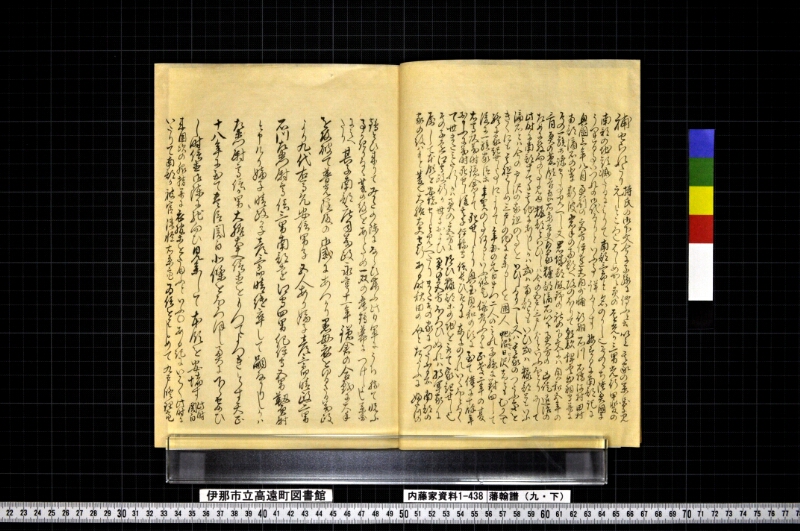
翻刻
【右丁】
補せられたり《割書:持氏の御下文今に子孫に伝ふと云々以上其家の系図に見|えしところ也はしめ加々美の遠光か三男光行甲斐の》
《割書:南部の地頭滅たるによりて南部三郎と名のりし也そのゝち陸奥国に|うつれる事いつれの御代なりといふ事詳ならす按するに南部記に》
《割書:興国三年八月奥州の宮方伊達宮内少【ママ】輔行朝石川石橋河村田村|南部滴石の輩斯波岩手の両郡へ攻のほりて朝敵稗貫出羽守幷に》
《割書:その一族等誅せし事見へし又岩城郡飯野の社の下文には貞和五年の|三月奥の管領吉良右京大夫貞家糠部滴石以下奥方の凶徒退治の》
《割書:ために発向の事見ゆ糠部といひしは今の五戸三戸なといふほとりにして|此時に南部すてに其地にありしかは或は南部ともいひ或は糠部ともいふ》
《割書:滴石とは今の戸沢の家祖の事をいひしなるへし又は其家のつたふ処を|きくにも其祖はしめ三戸の地に参りしを国人 蛇沼(イカルマ)日(ヒノ)沢者ともむかへて》
《割書:終に家起せし事によりて年毎の元日まつ二人のもの子孫に対面して|後に一族家臣等年賀の事ありといふ彼是併考ふるに正慶二年の夏》
《割書:右馬頭茂時鎌倉にて死せしより興国貞和の頃に至て僅に十余年|おもふに茂時死せし後其子伊予守信長ひそかに東にのかれいくほとなく》
《割書:て世またみたれしかは奥の宮方に随ひ糠部等の地を取て家起せし也|その子遠江守政行か世におよひ奥の宮方ほろひむれは将軍家に》
《割書:属して本領を安堵せしと見へたりまたその家につたふる所南部の|家の紋はもと菱也大膳大夫守行ある時秋田の介とたゝかふにふたつの》
【左丁】
《割書:鶴とひ来りてみかたの陣にならひ舞ふ此日軍にうち勝て悦ふ|事かきりなく菱の紋をあらため一双の舞鶴幕につけしよし系図》
《割書:にみへ|たり》其子南部庄司茂【或は義ヵ】政永享十一年鎌倉の合戦に大手
を攻破て普光院殿の御感にあつかり黒母衣をゆるさる茂【或は義ヵ】政
より九代右馬允安信男子五人あり嫡子彦三郎晴政二男
石川左衛門尉高信三男南部遠江守四男紀伊守五男靫負尉
と申けり嫡子晴政か子彦三郎晴継卒して嗣なかりしかは
左衛門尉高信か男大膳大夫信直をもつてよつきとす天正
十八年に至て豊臣関白北条をほろほし奥に下らせ給ひ
し時信直御陣に馳向ひ見参して本領を安堵す《割書:此時|関白》
《割書:来国次の脇指幷に衣服等をたまふといふ○ある記にいはく此時に|いたりて南部か被官津軽右京亮為信をはしめて九戸修理亮》
【注 虵は蛇の俗字】
現代語訳
【右丁】
補任された。(持氏の御下文は今も子孫に伝えられているという。以上はその家の系図に見えるところである。初め加々美の遠光の三男光行は甲斐の南部の地頭が滅んだことにより南部三郎と名乗ったのである。その後陸奥国に移ったのがいつの御代であったかということは詳しくない。考察するに『南部記』には興国三年八月、奥州の宮方伊達宮内少輔行朝、石川、石橋、河村、田村、南部、滴石らが斯波・岩手の両郡へ攻め上って、朝敵稗貫出羽守並びにその一族等を誅したことが見える。また岩城郡飯野の社の下文には貞和五年三月、奥の管領吉良右京大夫貞家が糠部・滴石以下奥方の凶徒退治のために出向いたことが見える。糠部というのは今の五戸・三戸などという辺りのことで、この時すでに南部がその地にいたので、ある時は南部とも言い、ある時は糠部とも言う。滴石とは今の戸沢家の家祖のことを言ったのであろう。また、その家の伝えるところを聞くにも、その祖は初め三戸の地に参ったのを、国人蛇沼(イカルマ)・日(ヒノ)沢の者どもが迎えて、ついに家を起こしたことにより、年毎の元日にまずこの二人の者の子孫に対面して、後に一族家臣等の年賀のことがあるという。これらを併せ考えるに、正慶二年夏、右馬頭茂時が鎌倉で死んでから興国・貞和の頃に至るまでわずかに十余年、思うに茂時が死んだ後、その子伊予守信長がひそかに東に逃れ、いくらもなくして世がまた乱れたので、奥の宮方に従い、糠部等の地を取って家を起こしたのである。その子遠江守政行の世に及んで奥の宮方が滅んだので、将軍家に属して本領を安堵されたと見える。またその家に伝わるところでは、南部家の紋は元は菱であったが、大膳大夫守行がある時秋田介と戦うに、二つの鶴が飛んできて味方の陣に並んで舞った。この日軍に打ち勝って悦ぶことこの上なく、菱の紋を改めて一双の舞鶴を幕につけたということが系図に見えている。)
【左丁】
その子南部庄司茂政(或いは義政)は永享十一年鎌倉の合戦で大手を攻め破って普光院殿の御感に預かり、黒母衣を許された。茂政から九代目の右馬允安信には男子五人があった。嫡子彦三郎晴政、二男石川左衛門尉高信、三男南部遠江守、四男紀伊守、五男靫負尉と申した。嫡子晴政の子彦三郎晴継が卒して跡継ぎがなかったので、左衛門尉高信の男大膳大夫信直を以って養子とした。天正十八年に至って豊臣関白が北条を滅ぼし奥州に下向された時、信直は御陣に馳せ向かって見参し、本領を安堵された。(この時関白は来国次の脇指並びに衣服等を賜ったという。ある記には、この時に至って南部の被官津軽右京亮為信をはじめて九戸修理亮...)
(注:虵は蛇の俗字)
英語訳
【Right Page】
was appointed. (Mochiuji's official document is said to be passed down to descendants even today. The above is what appears in that family's genealogy. Initially, Mitsuyuki, the third son of Kagami no Tōmitsu, took the name Nanbu Saburō when the jitō (steward) of Nanbu in Kai Province was destroyed. When he later moved to Mutsu Province is not clear as to which imperial reign it was. Upon examination, the "Nanbu-ki" records that in the 8th month of Kōkoku 3, the imperial loyalists of Ōshū - Date Kunai-shōyū Yukitomo, Ishikawa, Ishibashi, Kawamura, Tamura, Nanbu, Tekiseki and others - attacked the two districts of Shiba and Iwate and executed the imperial enemies Hienuki Dewa-no-kami and his clan. Also, in the official documents of Iino Shrine in Iwaki District, it is recorded that in the 3rd month of Jōwa 5, Kira Ukyō-no-daibu Sadaie, the deputy of the north, set out to suppress the rebels of Nukabe, Tekiseki and other northern factions. Nukabe refers to the area around present-day Gonohe and Sannohe, and since Nanbu was already in that territory at this time, it was sometimes called Nanbu and sometimes Nukabe. Tekiseki probably refers to the ancestor of the present Tozawa family. According to what that family传s down, when their ancestor first came to the Sannohe region, the local people Januma (Ikaruma) and Hi(no)sawa welcomed him, and he eventually established his house there. Because of this, every New Year's Day, he would first meet with the descendants of these two men, followed by New Year greetings from clan members and retainers. Considering all this together, from when Umanosuke Shigetoki died at Kamakura in the summer of Shōkyō 2 until the Kōkoku-Jōwa period was only about ten years. I believe that after Shigetoki's death, his son Iyo-no-kami Nobunaga secretly fled east, and not long after, when the world became turbulent again, he followed the northern imperial loyalists, seized the lands of Nukabe and others, and established his house. By the time of his son Tōtōmi-no-kami Masayuki, when the northern imperial loyalists were destroyed, he submitted to the shogunal house and had his original territories confirmed. Also according to what is passed down in that family, the Nanbu family crest was originally a diamond shape, but when Daizen-no-daibu Moriyuki was fighting against Akita-no-suke, two cranes flew down and danced in formation in his allied camp. Having won the battle that day, his joy was boundless, and he changed the diamond crest to a pair of dancing cranes on his curtains, as recorded in the genealogy.)
【Left Page】
His son, Nanbu Shōji Shigemasa (or perhaps Yoshimasa), broke through the main attack at the Kamakura battle in Eikyō 11 and received the appreciation of Fukōin-dono, being granted the black horo (war banner). From Shigemasa, nine generations later, Umanosuke Yasunobu had five sons: the eldest son Hikosaburō Haremasa, second son Ishikawa Saemon-no-jō Takanobu, third son Nanbu Tōtōmi-no-kami, fourth son Kii-no-kami, and fifth son Yukie-no-jō. When the eldest son Haremasa's son Hikosaburō Haretsugu died without an heir, they adopted Saemon-no-jō Takanobu's son, Daizen-no-daibu Nobunao, as the successor. In Tenshō 18, when Toyotomi Kanpaku destroyed the Hōjō and went down to the north, Nobunao rushed to the encampment for an audience and had his original territories confirmed. (At this time, the Kanpaku bestowed a wakizashi by Raigokuni and clothing. According to one record, at this time, Nanbu's retainer Tsugaru Ukyō-no-suke Tamenobu, beginning with Kunohe Shuri-no-suke...)
(Note: 虵 is a vulgar character for 蛇 (snake))