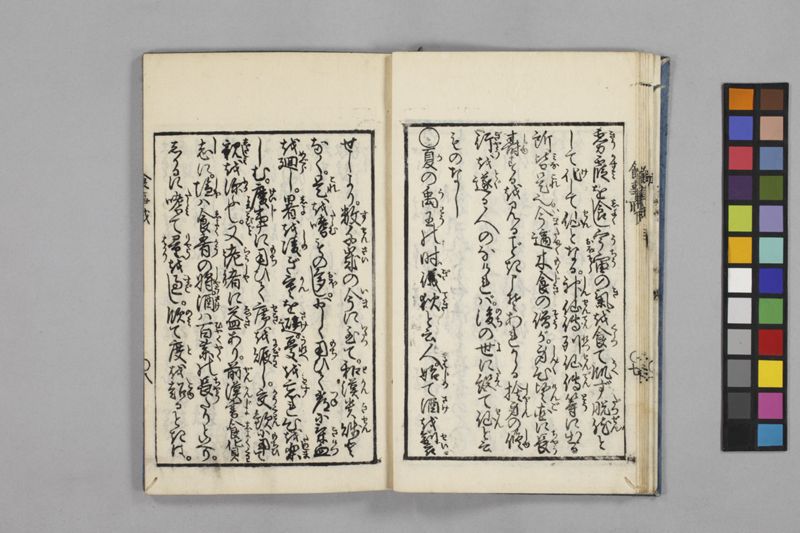
翻刻
【右頁】
霧(きり)【雾】霞(かすみ)を食(しよく)し宇宙(うちう)【左ルビ「おほそら」】の気(き)を食(くらつ)て飢(うへ)ず脱然(だつぜん)と
して化(け)して仙(せん)となる。神仙伝(しんせんてん)列仙伝(れつせんでん)等(とう)に出る
所/皆(みな)是(これ)也。今/適(たま〳〵)木食(もくじき)の僧(そう)が。身心(しん〳〵)堅固(けんご)に長(ちやう)
寿(じゆ)するを見るごときこそあれかゝる捨身(しやしん)の修(しゆ)
行(ぎやう)を遂(とぐ)る人のなければ。後(のち)の世(よ)に絶(たえ)て仙(せん)と云
ものなし
○夏(か)の禹王(うわう)の時/儀狄(ぎてき)と云人/始(はじめ)て酒(さけ)を製(せい)
【左頁】
せしより。数千歳(すせんさい)の今(いま)に至(いたつ)て。和漢(わかん)貴賤(きせん)と
なく。是(これ)を嗜(たしむ)もの多(おほ)し。少しく用(もち)ひて常(つね)に気血(きけつ)
を廻(めぐら)し。暑(しよ)を凌(しの)ぎ寒(かん)を避(さけ)。憂(うれへ)を忘(わす)れ心を楽(たのしま)
しむ。慶事(けいじ)に用(もち)ひて席(せき)を賑(にぎわ)し。交歓(かうくわん)に用(もちひ)て
親(したしみ)を深(ふか)ふし。又/老者(らうしや)【左ルビ「としより」】に益(ゑき)あり。前(ぜん)漢(かん)書(じよ)食(しよく)貨(くわ)
志(し)に。塩(しほ)は食肴(しよくかう)の将(しやう)。酒(さけ)は百薬(ひやくやく)の長(ちやう)たりといへり。
しかるに嗜(たしみ)て量(りやう)【左ルビ「はかり」】を過(すご)し。飲(のみ)て度(と)を超(こゆ)るときは。
現代語訳
【右頁】
霧や霞を食べ、大空の気を食らって飢えることなく、脱然として化して仙人となる。『神仙伝』『列仙伝』などに出てくるところは皆これである。今たまたま木食の僧が、身心ともに堅固で長寿するのを見るようなことはあるが、このような捨身の修行を遂げる人がいないので、後の世に絶えて仙人というものはいない。
○夏の禹王の時、儀狄という人が初めて酒を製造
【左頁】
してから、数千歳の今に至って、日本と中国、貴人と賤民を問わず、これを嗜む者が多い。少し用いて常に気血を巡らし、暑さを凌ぎ寒さを避け、憂いを忘れ心を楽しませる。慶事に用いて席を賑わし、親睦に用いて親しみを深める。また老人に益がある。『前漢書』食貨志に「塩は食べ物の将、酒は百薬の長である」と言っている。しかし嗜んで量を過ごし、飲んで度を超えるときは、
英語訳
【Right Page】
They consume mist and haze, feed on the energy of the vast sky without hunger, and transcendently transform to become immortals. What appears in works like the "Biographies of Divine Immortals" and "Biographies of Ranked Immortals" is all of this nature. Today we occasionally see Buddhist monks who practice tree-eating and maintain robust physical and mental health with longevity, but since there are no people who complete such self-sacrificing ascetic practices, in later ages there are absolutely no beings called immortals.
○During the time of King Yu of the Xia dynasty, a person named Yi Di first manufactured wine.
【Left Page】
Since then, reaching the present after several thousand years, many people enjoy it regardless of whether they are Japanese or Chinese, noble or humble. Using it moderately, they constantly circulate their vital energy and blood, ward off heat and avoid cold, forget worries and gladden the heart. They use it at celebratory events to enliven gatherings, and use it in social intercourse to deepen friendships. It also benefits the elderly. The "Book of Han," in the "Treatise on Food and Money," states that "salt is the commander of food and drink, and wine is the chief of a hundred medicines." However, when one indulges beyond measure and drinks beyond moderation,