翻刻
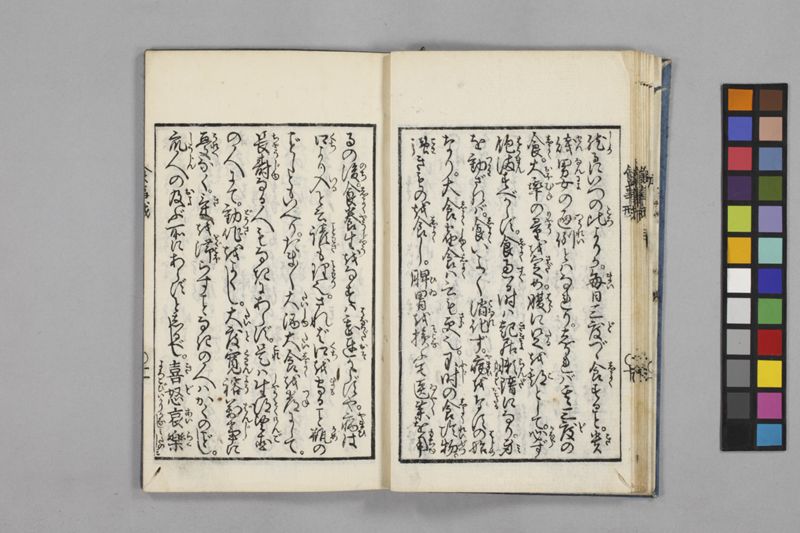
然(しか)るにいつの比(ころ)よりか。毎(まい)日三/度(ど)づゝ食(しよく)すること。貴(き)
賎(せん)男女(なんによ)の通例(つうれい)とはなれり。しかれば其三/度(ど)の
食(しよく)。大率(おほむね)の量(りやう)を定(さだ)め。腹(はら)に足(たる)を期(ご)として。必(かなら)ず
飽満(はうまん)すべからず。食(しよく)過(すぐ)る時は起居(ききよ)懶惰(らんだ)になり。身
を動(つかわ)ざれば。食(しよく)いよ〳〵消化(こなれ)ず。病(やまひ)をなすの始(はじめ)
なり。大/食(しよく)宿食(しゆくしよく)は云も更(さら)也。不時(ふじ)の食(しよく)冷物(れいぶつ)。
強(こわ)きものを食(しよく)し。脾胃(ひゐ)を損(そこな)ふて医薬(ゐやく)を用(もちゆ)
【左頁】
るの後(のち)。食養生(しよくやうじやう)をなすは甚(はなはだ)遅(おそ)からずや。病(やまひ)は
口(くち)より入(いる)と云/諺(ことわざ)も理(ことわり)也。されば口(くち)を守(まも)ること瓶(かめ)の
ごとしともいへり。たま〳〵大酒(たいしゆ)大食(たいしよく)を常(つね)にして。
長寿(ちやうじゆ)なる人もなきにあらず。是(これ)は生得(しやうとく)堅固(けんご)
の人にて。動作(どうさ)をよくし。大度(たいと)寛褣(くわんよう)万事(ばんじ)に
憂(うれへ)なく。気(き)を滞(とゞこほ)らすことなきの人はかくのごとし。
衆人(しうじん)の及(およ)ぶ所にあらずとしるべし。喜怒哀楽(きどあいらく)【左ルビ「よろこびいかりかなしみたのしみ」】
現代語訳
【右頁】
しかしながら、いつの頃からか、毎日三度ずつ食事することが、身分の高低・男女を問わず一般的な習慣となった。そうであるなら、その三度の食事について、おおよその分量を定め、腹に満足するを目安として、必ず満腹になるまで食べてはならない。食べ過ぎると日常の動作が怠惰になり、身体を動かさなければ、食べ物がますます消化されず、病気の始まりとなる。大食いや前日の食べ物が残ること(宿食)は言うまでもなく、時間外の食事や冷たい物、消化の悪い物を食べて、脾胃を損なってから医薬を用いる
【左頁】
その後に、食事による養生をするのは非常に遅すぎるのではないか。「病は口より入る」という諺も道理である。だから口を守ることは瓶を守るようだとも言われている。たまたま大酒・大食を常としながら長寿な人もないわけではない。これは生まれつき頑健な人で、よく体を動かし、度量が大きく寛容で、あらゆることに心配がなく、気を滞らせることのない人はこのようである。一般の人が及ぶところではないと知るべきである。喜怒哀楽(喜び・怒り・悲しみ・楽しみ)は
英語訳
【Right Page】
However, at some point in time, eating three times daily became the common practice for all people, regardless of social status or gender. If this is the case, then for these three meals, one should determine an approximate amount and aim for satisfaction of the stomach, but must never eat to complete fullness. When one overeats, daily activities become sluggish, and if the body is not moved, food becomes increasingly difficult to digest, marking the beginning of illness. Overeating and retention of undigested food from the previous day goes without saying, but eating at irregular times, consuming cold foods, or eating hard-to-digest items damages the spleen and stomach, and only after using medicine
【Left Page】
to then practice dietary cultivation is extremely belated, is it not? The proverb "illness enters through the mouth" is also reasonable. Therefore, it is said that guarding the mouth is like guarding a jar. Occasionally there are people who habitually engage in heavy drinking and overeating yet live long lives. These are people who are naturally robust, move their bodies well, are magnanimous and tolerant, worry about nothing, and never allow their qi to stagnate. One should know that this is not something ordinary people can achieve. The four emotions of joy, anger, sorrow, and pleasure