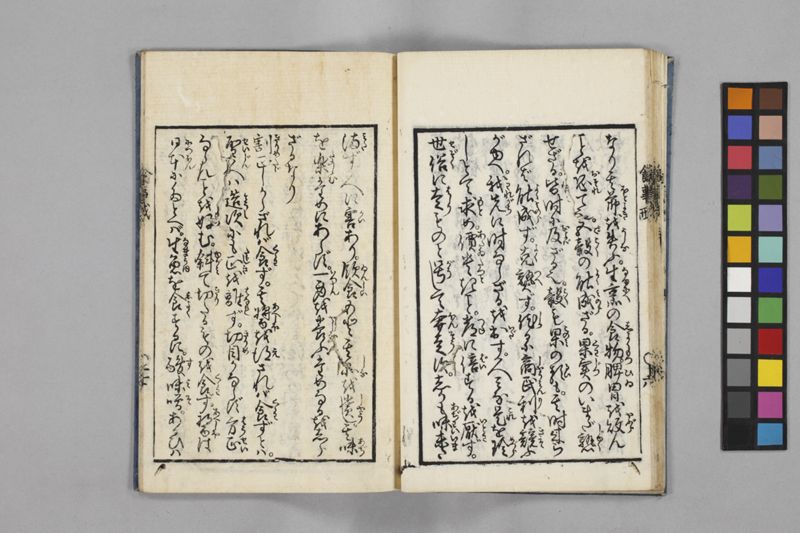
翻刻
【右頁】
なり其/節(ほとよき)を失(うしな)ふ。生烹(なまにへ)の食物(しよくもつ)脾胃(ひゐ)を敗(やぶら)ん
ことを恐(おそれ)て也。五穀(ごこく)の能(よく)成(みのら)ざる。果実(くわじつ)のいまだ熟(じゆく)
せざる。皆時に及(およば)ざる也。穀(こく)も果(このみ)の類(るい)も。其時来ら
ざれば能(よく)成(みのら)ず。克(よく)熟(つへ)ず。然(しか)るに商民(しやうみん)利(り)を競(きそ)ふ
がゆへ。我先(われがち)に時ならざるを出(いだ)す。人みな是(これ)を珍(めづら)
しとて求(もと)め。価(あたゐ)尊(たつと)きこと。常(つね)に倍(ばい)するを厭(いとわ)ず。
世俗(せぞく)に走(はしり)ものと号(がう)して奔走(ほんそう)す。しかも味(あぢわい)未(いま)た
【左頁】
満(みた)ず人に害(がい)あり。飲食(ゐんしい)もと其/品(しな)を賞(しやう)し。其/味(あぢ)
を楽(たのしむ)ためにあらず。一身(いつしん)を養(やしな)ふためなるをしら
ざるなり
割(きりめ)正(たゞ)しからざれば食(くらわ)ず。其/醤(あへしほ)を得(え)されば食(くらわ)ずとは。
聖人(せいじん)は造次(そうし)にも正(たゞしき)を離(はなれ)ず。切目(きりめ)かならず方正(はうせい)
ならんことを好(この)む。斜(ゆがみ)て切(きり)たるものを食(くらわ)ず。醤(あへしほ)は
日本(につほん)にたとへば。生魚(なまうほ)を食(しよく)するに。酸味噌(すみそ)。あるひは
現代語訳
【右頁】
ということである。その適切な加減を失う、生煮えの食物が脾胃を害することを恐れてのことである。五穀がよく実らない、果実がまだ熟していない、これらは皆時期に達していないのである。穀物も果物の類も、その時が来なければよく実らず、十分に熟さない。しかるに商人が利益を競うため、我先にと時期でないものを出す。人は皆これを珍しいとして求め、価格が高いこと、普通の倍になることを厭わない。世俗に「走りもの」と称して奔走する。しかも味はまだ
【左頁】
十分でなく人に害がある。飲食はもとよりその品質を賞し、その味を楽しむためではなく、一身を養うためであることを知らないのである。
「割が正しくなければ食わず、その醤を得なければ食わず」とは、聖人は急な場合にも正しさを離れない。切り方は必ず方正であることを好む。斜めに切ったものは食べない。醤は日本にたとえれば、生魚を食べるのに、酸味噌、あるいは
英語訳
【Right Page】
[continuing from previous page] That is to say, losing the proper degree [of cooking]. [This is] out of fear that undercooked food will harm the spleen and stomach. When the five grains do not ripen well, when fruits are not yet ripe - all these have not reached their proper season. Both grains and fruits, if their time has not come, will not ripen well nor mature fully. However, because merchants compete for profit, they rush to bring out unseasonable produce first. People all consider this rare and seek it out, not minding that the price is precious - often double the normal cost. In common parlance this is called "early produce" and people rush about for it. Yet the flavor is still
【Left Page】
incomplete and harmful to people. They do not understand that food and drink are not fundamentally for appreciating their quality and enjoying their taste, but for nourishing one's body.
"Do not eat if not cut properly, do not eat without the proper sauce" means that the sage does not depart from righteousness even in urgent moments. He prefers that cutting must always be square and proper. He does not eat things cut crookedly. As for sauce, to give a Japanese example, when eating raw fish, [one uses] vinegar miso, or