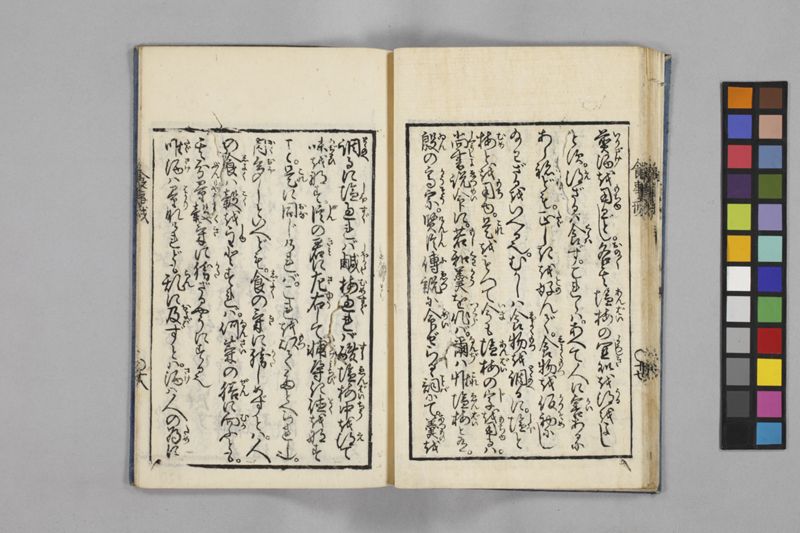
翻刻
【右頁】
煎酒(いりざけ)を用(もちゆ)るごとし。各々(おの〳〵)其/塩梅(あんばい)の宣(よろしき)処を得(うる)をよし
とす。得(え)ざるは食(くらは)ず。これらは。あへて人に害(かい)あるに
あらねども。正(たゞ)しきを好(この)んで。食物(しよくもつ)を仮初(かりそめ)にし
給わざるをいへる也。むかしは食物(しよくもつ)を調(とゝのへ)るに。塩(しほ)と
梅(むめ)とを用(もち)ゆ。是(これ)をもつて今(いま)も塩梅(あんばい)の字(じ)を用(もちゆ)るは。
尚書(しやうしよ)説命(ゑつめい)に。若(もし)和羹(くわかう)を作(つくら)ば。爾(なんぢ)は惟(これ)塩梅(ゑんばい)と有。
殷(ゐん)の高宗(かうそう)。賢臣(けんしん)傅説(ふゑつ)に命(めい)ぜらるゝ詞(ことば)にて羹(あつもの)を
【左頁】
調(とゝのへ)るに塩(しほ)過(すぐ)れば鹹(しほからく)梅(むめ)過(すぐ)れば酸(すし)塩梅中(ゑんばいちう)を得(え)て
味(あぢわひ)なす。臣(しん)の君(きみ)に左右(さゆう)して補導(たすけみちび)き徳(とく)をなす
こと。是(これ)に同(おな)じければ。これを以(もつ)てたとへられし也。
肉(にく)多(おほ)しといへども。食(しよく)の気(き)に勝(かた)しめずとは。人
の食(しよく)は穀(こく)を主(しゆ)とすれば。何菜(なんさい)の膳(ぜん)に向(むか)ふとも。
其/分量(ぶんりやう)穀(こく)気(に)に勝(かた)ざるやうにする也
唯(たゞ)酒(さけ)は量(はかり)なけれども乱(らん)に及(およば)ずとは。酒(さけ)は人の為(ため)に
現代語訳
【右頁】
煎酒を用いるようなものである。それぞれその塩梅の適切なところを得るのを良しとする。得られなければ食べない。これらは、特に人に害があるわけではないが、正しいことを好んで、食物を軽んじることをなさらないということを言っているのである。昔は食物を調理するのに、塩と梅を用いた。このため今でも塩梅という字を用いるのは、『尚書』説命に「もし和羹(スープ)を作るなら、汝はこれ塩梅である」とある。殷の高宗が賢臣傅説に命じられた言葉で、羹(スープ)を
【左頁】
調理するのに塩が過ぎれば塩辛く、梅が過ぎれば酸っぱい。塩梅の中庸を得て味をなす。臣が君に仕えて補佐し導いて徳をなすことが、これと同じであるので、これを以って例えられたのである。
「肉多しといえども、食の気に勝たしめず」とは、人の食事は穀物を主とするので、どのような料理の膳に向かっても、その分量が穀物の気に勝たないようにするということである。
「ただ酒は量なけれども乱に及ばず」とは、酒は人のために
英語訳
【Right Page】
like using irizake (seasoned cooking sake). Each person should find the proper seasoning balance, and this is considered good. If this cannot be achieved, one should not eat. These things do not particularly harm people, but this speaks of preferring what is correct and not treating food carelessly. In ancient times, when preparing food, salt and plum were used. This is why we still use the characters for "anbai" (seasoning/balance) today, as found in the Book of Documents, "Yue Ming": "If you make a harmonious soup, you are the salt and plum." These are the words of Yin's Emperor Gaozong commanding the wise minister Fu Yue, regarding soup
【Left Page】
preparation: if there is too much salt it becomes salty, if too much plum it becomes sour. By achieving the proper balance of salt and plum, one creates flavor. A minister serving his lord, assisting and guiding him to create virtue, is the same as this, so this was used as an analogy.
"Even if meat is abundant, do not let it overcome the qi of grain" means that since human diet is based primarily on grains, no matter what dishes one faces at the table, their quantity should not exceed the qi of grains.
"Only for wine, though there is no measure, do not reach disorder" means that wine is for people's