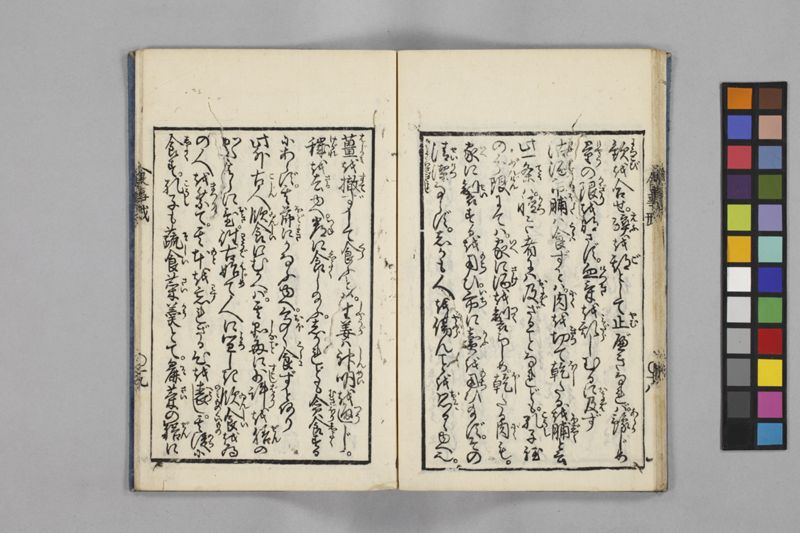
翻刻
【右頁】
歓(よろこび)を合せ。酔(えふ)を期(ご)として止(やむ)べきなれば。予(あらか)じめ
量(りやう)の限(かぎり)をなさず。血気(けつき)を乱(みだら)しむるに及(およば)ず
沽酒(かふさけ)市脯(かふほじゝ)は食(くらは)ずとは。肉(にく)を切(きり)て乾(ほし)たるを脯(ほじゝ)と云
此一/条(てう)は。軽(かろ)き者には及(およば)ざることなれども。孔子(こうし)程
の分限(ぶんげん)にては。家(いへ)に酒(さけ)を製(つく)らしめ。乾(ほし)たる肉(にく)も。
家(いへ)に製(せい)するを用(もち)ひ。市(いち)に売(かふ)【賈ヵ】を用(もち)ひ給ず。その
清潔(せいけつ)【左ルビ「きよくいさぎよし」】ならず。しかも人を傷(やぶら)んことを恐(おそ)るゝゆへ也
【左頁】
薑(はじかみ)を撤(すて)ずして食(くら)ふとは。生姜(しやうが)は神明(しんめい)を通(つう)じ。
穢(けがれ)を去(さる)ゆへ。常(つね)に食(しよく)し給ふ。しかれども貪(むさぼり)食(しよく)する
にあらず。其/節(ほどよき)にかなふゆへ。多(おほ)く食(くらわ)ずとあり
此外/古人(こじん)飲食(ゐんしい)にむかへば。其/品(しな)毎(ごと)に少(すこし)計(ばかり)を膳(ぜん)の
かたはらに置(おき)。往古(わうご)始(はじめ)て人に宣(よろ)しき飲食(ゐんしい)【左ルビ「のみものくいもの」】を為
の人を祭(まつり)て。其/本(もと)を忘(わす)れざる心を表(へう)し。其/後(のち)に
食(しよく)す。孔子(こうし)も蔬食(そしい)菜羹(さいかう)とて。麁菜(そさい)の膳(ぜん)に
現代語訳
【右頁】
歓びを合わせ、酔うことを目安として止めるべきであるから、あらかじめ量の限りを設けず、血気を乱すに及ばない。
「沽酒市脯は食らわず」とは、肉を切って干したものを脯という。この一条は、身分の軽い者には及ばないことであるが、孔子ほどの身分においては、家で酒を製造させ、干した肉も家で製造したものを用い、市で売っているものは用いられなかった。それが清潔でなく、しかも人を傷つけることを恐れるためである。
【左頁】
「薑を撤てずして食らう」とは、生姜は神明に通じ、穢れを去るゆえに、常に食べられる。しかしながら貪り食いするのではなく、その節度にかなうゆえに、多く食べずとある。
このほか古人が飲食に向かえば、その品ごとに少しばかりを膳の傍らに置き、往古に始めて人に良い飲食をもたらした人を祭って、その本を忘れない心を表し、その後に食事をした。孔子も蔬食菜羹といって、粗菜の膳に
英語訳
【Right Page】
bringing together joy, and should stop when intoxication is reached, so one does not set limits on quantity in advance, and does not reach the point of disturbing one's blood and qi.
"Do not consume wine or dried meat bought from the market" - dried meat cut and dried is called "hojishi." This precept does not apply to those of lower status, but for someone of Confucius's standing, wine was made at home and dried meat was also made at home, not using what was sold in the market. This was because such products were not clean and he feared they might harm people.
【Left Page】
"Eat without removing the ginger" means that ginger connects with divine illumination and removes impurity, so it was constantly consumed. However, this was not greedy eating, but because it accorded with proper moderation, it says not to eat too much.
Additionally, when ancient people approached meals, they would place a small portion of each dish beside the table, offering it to worship those who first provided good food and drink to people in ancient times, expressing a heart that does not forget the origin, and then they would eat. Confucius also, with "sparse food and vegetable soup," at a table of simple vegetables