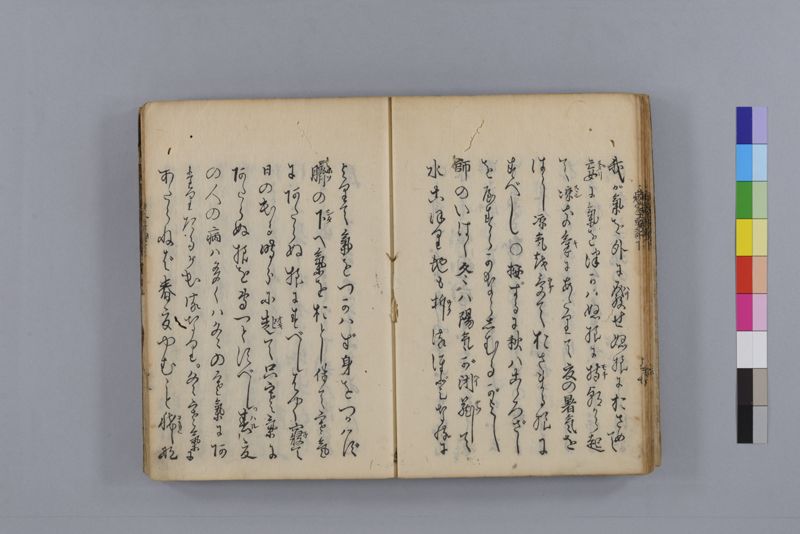
翻刻
【右丁】
我が気を外に発(ハツ)せぬ様におさめて
妄(ミダリ)に気をつかはぬ様に持(モチ)朝から起
て涼(スヽシ)き気(キ)にあたりて夏の暑気を
はらし涼気を受(ウケ)ておさまる様に
すべし○按ずるに秋はこゝろざし
をやすらかならしむるがよし
師のいはく冬は陽気が閉蔵(ヘイザウ)して
水こほり地も拆(サク)るほどなるに
【左丁】
よりて気をつかはず身をつかはず
臍(ホソ)の下(シタ)へ気をおとし保て寒気
にあたらぬ様にすべしはやく寝(ネ)て
日の出る時分に起(オキ)て只寒気に
あたらぬ様を専一とすべし。春(ハル)-夏
の人の病は多くは冬の寒気にあ
たりたるが出るなり。冬寒気に
あたらねば春夏やむと稀(マレ)な
現代語訳
【右丁】
我が気を外に発散させないように収めて、むやみに気を使わないように持ち、朝から起きて涼しい気にあたって夏の暑気を払い、涼気を受けて落ち着くようにすべきである。○考察するに、秋は心志を安らかにするのがよい。師が言うには、冬は陽気が閉じ込められて蔵され、水は凍り地面も割れるほどになるので、
【左丁】
それゆえ気を使わず身体を使わず、臍の下へ気を落として保ち、寒気にあたらないようにすべきである。早く寝て日の出る時分に起きて、ただ寒気にあたらないようにすることを第一とすべきである。春・夏の人の病気は多くは冬の寒気にあたったものが現れ出るのである。冬に寒気にあたらなければ、春夏に病むことは稀である。
英語訳
【Right page】
One should contain one's energy so as not to let it disperse outward, and maintain oneself so as not to use energy carelessly. Rising from morning, one should be exposed to cool air to dispel summer's heat and receive cool energy to settle oneself. ○Upon reflection, in autumn it is good to keep one's mind and will peaceful. The master says: In winter, yang energy is sealed and stored away, water freezes and the ground cracks to such a degree that
【Left page】
Therefore, one should not use energy or exert the body, but lower one's energy below the navel and preserve it, avoiding exposure to cold air. One should sleep early and rise at sunrise, making it the primary concern to avoid exposure to cold air. The illnesses people suffer in spring and summer are mostly manifestations of exposure to winter's cold air. If one avoids exposure to cold air in winter, falling ill in spring and summer is rare.