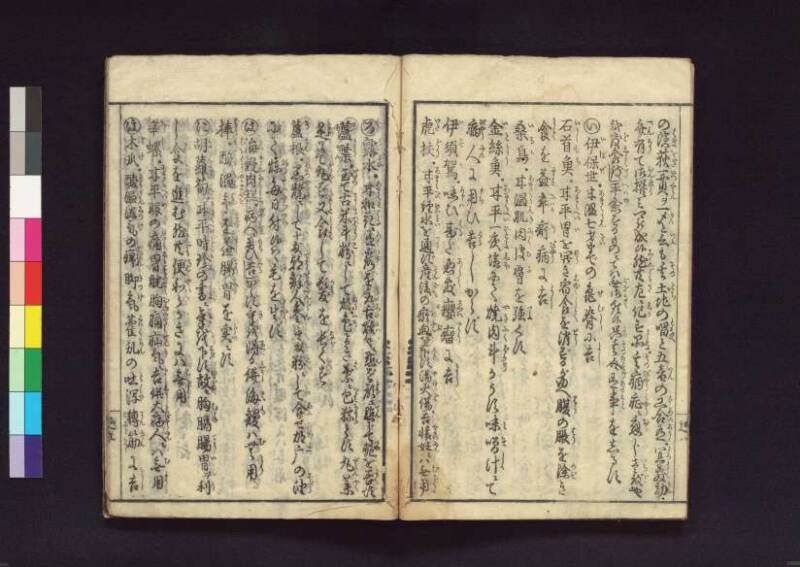
翻刻
の濱荻一貫(はまをぎいつくわん)ヲ一/〆(かん)と云(いふ)も其土地(そのとち)の唱(となへ)と五/音(いん)の工合有(ぐあいあり)。宜敷勘(よろしくかん)。
弁有(べんあり)て御撰(おんゑら)み可被成候/然共左(しかれどもさ)に記(しる)す品(しな)。其病症(そのびやうしやう)に応(おゝ)じ壱度(いちど)や
弐/度食致(どしよくいた)し平愈(へいゆ)するものにてハ無御座(ござなく)候/只其介有事(たゞそのたすけあること)をしるす
い 伊保世(いぼぜ)。甘温(あまくうん)七/才(さい)までの亀背(せむし)に吉(よし)
石首魚(いしもち)。甘(あまく)平(へい)胃(い)を開(ひら)き宿食(しゆくしよく)を消(せう)ずるがゆへ腹(はら)の腸(てう)を除(のぞ)き
食(しよく)を益卒痢病(ますにはかりびやう)に吉(よし)
桑鳥(いるか)。甘温肌肉(あまくうんきにく)皮膚(ひふ)を強(つよ)くす
金絲魚(いとより)。甘(あまく)平(へい)一夜塩(ひとよしほ)にて焼肉斗(やきにくばかり)かうす味噌汁(みそしる)にて
病人(びやうにん)に用(もち)ひ苦(くる)しからず
伊須駕(いすか)。味(あじは)ひ甚(はなは)だ悪敷/癭瘤(ゑいりう)に吉(よし)
虎枝(いたどり)。甘(あまく)平(へい)経水(けいすい)を通(つう)ず産後(さんご)の瘀血(をけつ)を下(くだ)す湯火傷(やけど)に吉/懐妊(くわいにん)には無用(むよう)
ろ 露水(ろすい)。甘(あまく)和花(わはな)に有露(あるつゆ)を取舌乾(とりしたかは)くに点(てん)ず顔(かほ)に点(てん)じて艶(つや)を善(よく)す
蘆葉(ろよう)。至(いたつ)て古米斗粉(こうまいばかりこ)にして練(ねり)。色(いろ)よき葉(は)に包(つゝみ)粽(ちまき)とす丸薬(ぐわんやく)
是(これ)にて丸(ぐはん)ず又食(またしよく)して髪(かみ)を長(なが)くす
蘆根(ろこん)。黒焼(くろやき)にして十匁/朝鮮人参(てうせんにんじん)壱匁/粉(こ)にして合(あは)せ胡麻(ごま)の油(あぶら)
にて練毎日付(ねりまいにちつけ)候ハゝ毛(け)を生(しやう)ず
は 海鰻肉糯(かいまんにくもち)。病人(びやうにん)に用(もち)ひ苦(くる)しからず気(き)を得(ゑ)る併(しかし)海鰻(はも)ハ無用(むよう)
棒(はしばみ)。酸温気(すくうんき)を益腸胃(ましてうい)を実(じつ)にす
に 胡蘿蔔(にんじん)。甘(あまく)平(へい)時珍(じちん)の書(しよ)に気(き)を下(くだ)す故(かるがゆへ)に胸膈腸胃(むねてうい)ヲ利(り)
し食(しよく)を進(すゝ)む然共(しかれども)便和(べんやは)らかきにハ無用(むよう)
辛螺(ふし)。甘(あまく)平(へい)眼(め)の痛胃脘胸痛疝気(いたみしもはらのいたみむねのいたみせんき)に吉併大病人(よししかしたいびやうにん)にハ無用(むよう)
ほ 木瓜(ぼけ)。酸温湿気(すくうんしつけ)の痺(しびれ)脚気(かつけ)霍乱(くはくらん)の吐瀉転筋(としやてんきん)に吉(よし)
【左ページ二行目左ルビー 蘆葉 あしやは】
【左ページ十一行目左ルビー 木瓜 もくるは 転筋 こぶらかつり】
現代語訳
の浜荻も一貫を一〆と言うのも、その土地の唱え方と五音の具合がある。よろしく勘弁して選び取るべきである。しかれども左に記す品は、その病症に応じて一度や二度食べて完全に治るものではございません。ただその助けとなることを記すものです。
い 伊保世(いぼぜ)。甘温。七歳までの背骨の曲がった子に良い。
石首魚(いしもち)。甘平。胃を開き宿食を消化するので、腹の腸を除き、食を益し、急な下痢病に良い。
桑鳥(いるか)。甘温。肌肉、皮膚を強くする。
金糸魚(いとより)。甘平。一夜塩にして焼き肉だけ、香す味噌汁にて病人に用いて苦しくない。
伊須駕(いすか)。味はいささだ悪い。癭瘤に良い。
虎枝(いたどり)。甘平。経水を通じる。産後の瘀血を下す。湯火傷に良い。懐妊には無用。
ろ 露水(ろすい)。甘和。花にある露を取り、舌の乾きに点ずる。顔に点じて艶を良くする。
蘆葉(ろよう)。至って古米だけを粉にして練り、色の良い葉に包んで粽とする。丸薬をこれにて丸める。また食して髪を長くする。
蘆根(ろこん)。黒焼にして十匁、朝鮮人参一匁、粉にして合わせ胡麻の油にて練り毎日付ければ毛を生ずる。
は 海鰻肉糯(かいまんにくもち)。病人に用いて苦しくない。気を得る。併し海鰻(はも)は無用。
棒(はしばみ)。酸温。気を益し腸胃を実にする。
に 胡蘿蔔(にんじん)。甘平。時珍の書に気を下すゆえに胸膈腸胃を利し、食を進む。しかれども便やわらかきには無用。
辛螺(ふし)。甘平。眼の痛み、胃脘胸痛、疝気に良い。併し大病人には無用。
ほ 木瓜(ぼけ)。酸温。湿気の痺れ、脚気、霍乱の吐瀉転筋に良い。
英語訳
The beach reeds of Ise, even calling one kan as one shime, has to do with the local pronunciation and the harmony of the five tones. Please make good judgment and select accordingly. However, the items recorded below are not things that will completely cure after eating once or twice according to the symptoms. I only record what can be of help.
い Ibose (a type of fish). Sweet and warm. Good for spinal curvature in children up to seven years old.
Ishimochi (croaker fish). Sweet and neutral. Opens the stomach and dissolves accumulated food, so it removes intestinal blockages, benefits digestion, and is good for sudden diarrhea.
Iruka (dolphin). Sweet and warm. Strengthens muscle and skin.
Itoyori (golden threadfin bream). Sweet and neutral. Salted overnight and grilled, just the meat, in fragrant miso soup, can be used for sick people without causing distress.
Isuka (crossbill). The taste is quite bad. Good for goiter and tumors.
Itadori (Japanese knotweed). Sweet and neutral. Promotes menstrual flow. Expels stagnant blood after childbirth. Good for burns. Not to be used during pregnancy.
ろ Rosui (dew water). Sweet and mild. Take dew from flowers and apply to dry tongue. Apply to face to improve luster.
Royō (reed leaves). Grind very old rice into powder and knead it, wrap in well-colored leaves to make chimaki (rice dumplings). Use this to make pills. Also eating it makes hair grow long.
Rokon (reed root). Make into charcoal powder, ten monme, with one monme of Korean ginseng, powder and mix with sesame oil, apply daily to grow hair.
は Kaiman nikumochi (sea eel meat). Can be used for sick people without causing distress. Gains qi. However, hamo (pike conger) should not be used.
Hashibami (hazelnut). Sour and warm. Benefits qi and strengthens the intestines and stomach.
に Ninjin (carrot). Sweet and neutral. According to Shizhen's writings, it moves qi downward, thus benefits the chest, diaphragm, intestines and stomach, and promotes appetite. However, should not be used when stools are soft.
Fushi (turban shell). Sweet and neutral. Good for eye pain, gastric and chest pain, and hernia. However, should not be used for seriously ill patients.
ほ Boke (Japanese quince). Sour and warm. Good for numbness from dampness, beriberi, and muscle cramps with vomiting and diarrhea from cholera.