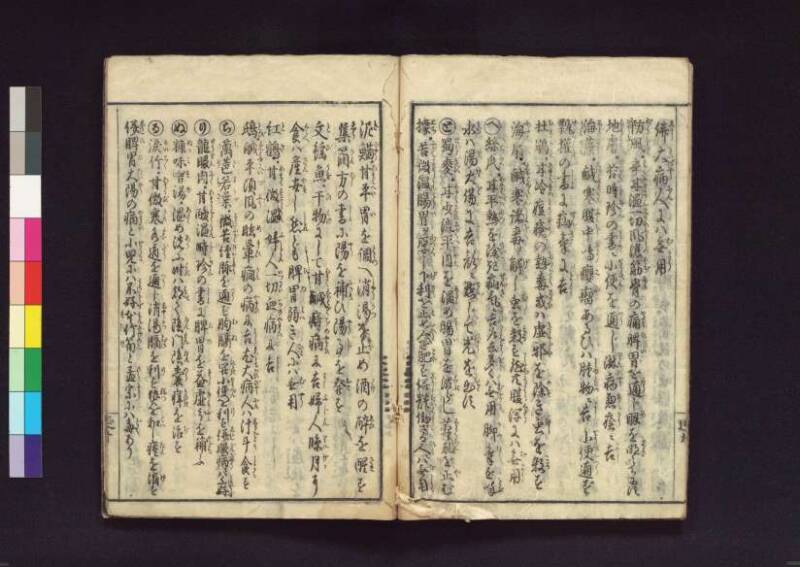
翻刻
併(しかし)大病人(たいびやうにん)にハ無用(むよう)
防風(ぼうふう)。辛(からく)甘温(あまうん)一切風湿筋骨(いっさいふうしつすぢほね)の痛(いたみ)脾胃(ひい)を通(つう)じ眼(め)を明(あき)らかにす
地膚(ほうきじ)。苦(にがく)時珍(じちん)の書(しよ)に小便(せうべん)を通(つう)じ淋病悪瘡(りんびやうあくさう)に吉(よし)
海藻(ほだわら)。鹹寒腹中鳴(しほはやくかんふくちうなり)癭瘤(こぶ)あるひハ腫物(しゆもつ)に吉(よし)小便通(せうべんつう)ず
甄權(けん〳〵)の書(しよ)に疝気(せんき)に吉(よし)
杜鵑(ほとゝぎす)。甘冷痘瘡(あまくれいとうそう)の熱毒(ねつどく)或(あるひ)ハ虚邪(きよじや)を除(のぞ)き虫(むし)を殺(ころ)す
海扇(ほたてがい)。鹹寒諸毒(しほはやくかんしよどく)ヲ解(げ)し虫(むし)を殺(ころ)す然共(しかれども)腹瀉(はらくだり)又ハ無用(むよう)
へ 糸瓜(へちま)。甘平熱(あまくへいねつ)を除(のぞ)き疝気(せんき)に吉乍去多(よしさりながらをゝ)くハ無用脚気(くようかつけ)を呼(よぶ)
水(みづ)ハ湯火傷(やけど)に吉顔(よしかほ)に点(てん)じて光(ひかり)を出(いだ)す
と 蜀麥(とうきび)。甘少渋併内(あまくすこししぶくうち)を温(あたゝ)め腸胃(てうい)を渋(しぶ)らし霍乱(くわくらん)を止(や)む
橡(とち)。苦微温(にがくすこしうん)腸胃(てうい)ヲ厚(あつく)し下利(げり)を止(と)め人(ひと)を肥(こや)す併(しかし)/体働(たいはたらか)ざる人(ひと)にハ無用(むよう)
泥鰌(どじやう)。甘平(あまくへい)胃(い)を調(とゝの)へ消渇(しやうかつ)を止(や)め酒(さけ)の酔(ゑひ)を醒(さま)す
集簡方(しうかんほう)の書(しよ)に陽(やう)を補(おきな)ひ陽事(やうじ)を発(おこ)す
文鰩魚(とびうを)。干物(ひもの)にして甘鹹痔病(あまくしほはやくぢのやまひ)に吉婦人臨月(よしふじんりんげつ)に
食(くらへ)バ産安(さんやす)し然(しかれ)ども脾胃(ひゐ)弱(よは)き人(ひと)にハ無用(むやう)
紅鶴(とき)。甘微温(あまくすこしうん)婦人一切血病(ふじんいつさいちのやまひ)に吉(よし)
鵄(とび)。鹹平(しほはやくへい)頭風(づふう)の眩暈癇(めまいかん)の病(やまひ)に吉尤大病人(よしもつともたいびやうにん)ハ汁斗食(しるばかりしよく)す
ち 萵苣若葉(ちさわかば)。微苦経脈(すこしにがくけいみやく)を通(つう)ず胸膈(むね)を開小便(ひらきせうべん)を利(り)す併眼病(しかしがんびやう)にハ不好(よろしからず)
り 龍眼肉(りうがんにく)。甘酸温時珍(あまくすくうんじちん)の書(しよ)に脾胃(ひゐ)を益虚分(ましきよぶん)を補(おぎな)ふ
ぬ 糠味噌湯(ぬかみそゆ)。温(あたゝ)め洗(あら)ふ時(とき)ハ都(すべ)て陰門陰嚢痒(いんもんいんのうかゆき)を治(ぢ)す
る 涙竹(るいちく)。甘微寒水道(あまくびかんすいだう)を通(つう)じ消渇膈(しやうかつむね)を利(り)す熱(ねつ)を和(くは)し痰(たん)を消(け)す
併脾胃太陽(しかしひゐたいやう)の病(やまひ)と小児(せうに)にハ不好(よろしからず)本竹筍(ほんたけのこ)と孟宗にハ毒(どく)あり
【右ページ二行目左ルビー 防風 びやうぶぐた】
【右ページ四行目左ルビー 海藻 うみのも】
【左ページ七行目左ルビー 萵苣若葉 うりちさ】
【左ページ十一行目左ルビー 本竹筍 またけ】
現代語訳
併し大病人には無用。
防風(ぼうふう)。辛甘温。一切の風湿による筋骨の痛みに効き、脾胃を通じ眼を明らかにする。
地膚(ほうきぎ)。苦味。時珍の書によると小便を通じ、淋病や悪瘡に良い。
海藻(ほだわら)。鹹寒。腹中の鳴動、癭瘤あるいは腫物に良い。小便を通じる。甄權の書によると疝気に良い。
杜鵑(ほととぎす)。甘冷。痘瘡の熱毒あるいは虚邪を除き、虫を殺す。
海扇(ほたてがい)。鹹寒。諸毒を解し虫を殺す。しかれども腹瀉の際は無用。
へ 糸瓜(へちま)。甘平。熱を除き疝気に良い。去りながら多く食べるのは無用で脚気を呼ぶ。その水は湯火傷に良く、顔に点じて光を出す。
と 蜀麦(とうきび)。甘少渋。内を温め腸胃を渋らし霍乱を止める。
橡(とち)。苦微温。腸胃を厚くし下利を止め人を肥やす。併し体を働かせない人には無用。
泥鰌(どじょう)。甘平。胃を調え消渇を止め酒の酔いを醒ます。集簡方の書によると陽を補い陽事を発する。
文鰩魚(とびうお)。干物にして甘鹹。痔病に良い。婦人が臨月に食べば産が安らかになる。しかれども脾胃の弱い人には無用。
紅鶴(とき)。甘微温。婦人の一切の血病に良い。
鵄(とび)。鹹平。頭風の眩暈、癇の病に良い。もっとも大病人は汁だけを食す。
ち 萵苣若葉(ちさわかば)。微苦。経脈を通じ胸膈を開き小便を利す。併し眼病には良くない。
り 龍眼肉(りゅうがんにく)。甘酸温。時珍の書によると脾胃を益し虚分を補う。
ぬ 糠味噌湯(ぬかみそゆ)。温めて洗う時は、すべて陰門陰嚢の痒みを治す。
る 涙竹(るいちく)。甘微寒。水道を通じ消渇膈を利す。熱を和らげ痰を消す。併し脾胃太陽の病と小児には良くない。本竹筍と孟宗には毒がある。
英語訳
However, it should not be used for seriously ill patients.
Bōfū (Saposhnikovia divaricata). Pungent, sweet, and warm. Effective for all kinds of wind-dampness pain in muscles and bones, opens the spleen and stomach, and clears the eyes.
Hōkigi (Kochia scoparia). Bitter taste. According to Shizhen's writings, it promotes urination and is good for gonorrhea and malignant sores.
Hodawara (seaweed). Salty and cold. Good for abdominal rumbling, goiter, tumors, or swellings. Promotes urination. According to Kenken's writings, good for hernia.
Hototogisu (cuckoo). Sweet and cold. Removes heat toxins from smallpox or eliminates deficient pathogens, kills parasites.
Hotategai (scallop). Salty and cold. Detoxifies various poisons and kills parasites. However, should not be used during diarrhea.
he Hechima (loofah). Sweet and neutral. Removes heat and is good for hernia. However, eating too much is harmful and can cause beriberi. Its water is good for burns and when applied to the face, brings out radiance.
to Tōkibi (corn). Sweet and slightly astringent. Warms the interior, makes the intestines and stomach astringent, and stops cholera.
Tochi (horse chestnut). Bitter and slightly warm. Strengthens the intestines and stomach, stops diarrhea, and makes people gain weight. However, it should not be used by people who don't exercise.
Dojō (loach). Sweet and neutral. Regulates the stomach, stops wasting thirst, and sobers up alcohol intoxication. According to the Shū Kan Hō writings, it supplements yang and stimulates sexual function.
Tobiuo (flying fish). Dried, sweet and salty. Good for hemorrhoids. If women eat it during the final month of pregnancy, childbirth becomes easier. However, it should not be used by people with weak spleen and stomach.
Toki (Japanese crested ibis). Sweet and slightly warm. Good for all blood diseases in women.
Tobi (black kite). Salty and neutral. Good for head wind dizziness and epileptic diseases. Seriously ill patients should only consume the broth.
chi Chisa wakaba (young lettuce leaves). Slightly bitter. Opens the meridians, opens the chest and diaphragm, and promotes urination. However, not good for eye diseases.
ri Ryūgan niku (longan flesh). Sweet, sour, and warm. According to Shizhen's writings, it benefits the spleen and stomach and supplements deficiency.
nu Nuka miso yu (rice bran miso hot water). When warmed and used for washing, it treats all itching of the genital area and scrotum.
ru Ruichiku (bamboo shoots). Sweet and slightly cold. Opens the urinary tract, benefits wasting thirst and chest tightness. Harmonizes heat and eliminates phlegm. However, not good for spleen-stomach-taiyang diseases and children. Hon takenoko and mōsō bamboo shoots contain poison.