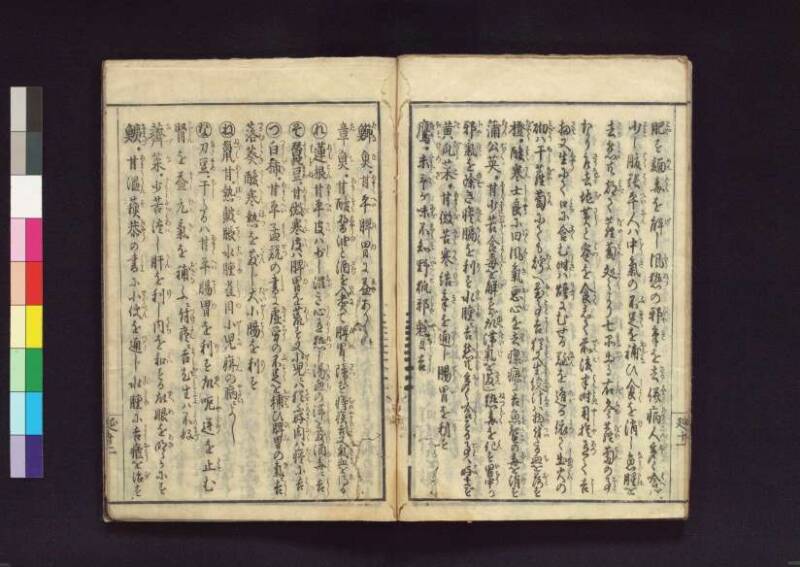
翻刻
肥(こや)す麺毒(めんどく)を解(げ)し風熱(ふうねつ)の邪気(じやき)を去(さる)併病人多(しかしびやうにんおゝ)く喰(くへ)バ
少(すこ)し腹張平人(はらはるへいにん)ハ中気(ちうき)の不足(ふそく)を補(おぎな)ひ食(しよく)を消(け)し魚腥(なまぐさき)を
去(さる)然(しかれ)共/都(すべ)て蘿蔔(だいこん)処々(しよ〱)より七/品出(しないづ)る右冬蘿蔔(みぎふゆだいこん)の事(こと)
なり乍去(さりながら)地黄(ぢわう)と蜜(みつ)を食(しよく)して前後(ぜんご)半時(はんとき)用捨(やうしや)有(あつ)て吉(よし)
扨(さて)又/生(しやう)にて口(くち)に含(ふく)む時(とき)ハ煙(けふり)にむせる難(なん)を遁(のが)る依(よつ)て出火(しゆつくは)の
砌(みぎり)ハ干蘿蔔(ほしだいこん)にても貯(たくは)へ置事吉(おくことよし)猶又生絞汁(なをまたしぼりしる)ハ物付(ものつい)たる血(ち)を落(おと)す
橙(だい〱)。酸寒士良(すくかんしりやう)に曰(いはく)風気悪心(ふうきおしん)を去(さる)瘰癧(るいれき)に吉(よし)魚蟹(うをかに)の毒(どく)を消(け)す
蒲公英(たんぽ〱)。甘少(あまくすこし)苦食毒(にがくしよくどく)を解(げ)すが故(ゆへ)滞気(たいけ)を散(さん)じ熱毒(ねつどく)を化(くは)す胃中(いちう)の
邪気(じやき)を除(のぞ)き痰膈(たんかく)を利(り)す水腫(すいしゆ)に吉然共(よししかれども)多(おゝ)く喰(しよく)する事(こと)ハ好(この)まず
黄瓜菜(たびらこ)。甘(あまく)微苦(びにがく)寒結気(かんけつき)を通(つう)じ腸胃(てうい)を利(り)す
鷹(たか)。未(いまだ)予(よ)が味不知野(あぢしらずや)狐邪魁(こじやかい)に吉(よし)
鱮魚(たなご)。甘(あまく)平脾胃(へいひゐ)に益(ゑき)あり
章魚(たこ)。甘(あまく)酸醤油(すくしやうゆ)と酒(さけ)を入(いれ)煑(に)て脾胃(ひゐ)に障(さは)らず痔疾吉(ぢのやまひよし)又/気血(きけつ)を得(ゑ)る
れ 蓮根(れんこん)。甘(あまく)平皮(へいかは)ハ少(すこ)し渋(しぶ)き心有熱(こゝろありねつ)し渇血(かはきち)の滞(とゞこふり)を散(さんじ)酒毒(しゆどく)に吉(よし)
そ 蠺豆(そらまめ)。甘(あまく)微寒皮(びかんかは)ハ脾胃(ひゐ)を荒(あら)す又/小児(せうに)にハ猶不好肉(なをこのまずにく)ハ痰(たん)に吉(よし)
つ 白柿(つるしがき)。甘(あまく)平孟説(へいもうせつ)の書(しよ)に虚労(きよらう)の不足(ふそく)を補(おぎな)ひ脾胃(ひゐ)の気(き)に吉(よし)
落葵(つるむらさき)酸寒熱(すくかんねつ)を散(さん)じ大小腸(だいせうてう)を利(り)す
ね 鼠甘(めづみあまく)。熱皷脹水腫(ねつこてうすいしゆ)雀目(とりめ)小児疳(せうにかん)の病(やまひ)によし
な 刀豆(なたまめ)。干(ほし)たるハ甘(あまく)平腸胃(へいてうゐ)を利(り)す故(ゆへ)吃逆(しやくり)を止(とゞ)む
腎(じん)を益(まし)元気(げんき)を補(おぎな)ふに付(つけ)痰(たん)に吉(よし)尤生(もつともなま)ハ不好(このまづ)
薺菜(なづな)。少苦淡(すこしにがくあは)し肝(かん)を利(り)し内(うち)を和(くは)する故(ゆへ)眼(め)を明(あき)らかにす
鯰(なまづ)。甘(あまく)温蘇恭(うんそきやう)の書(しよ)に小便(せうべん)を通(つう)じ水腫(すいしよ)に吉(よし)瘧(おこり)を治(ぢ)す
【右ページ十行目左ルビー 黄瓜菜 ほとけのざ】
現代語訳
肥らせる。麺毒を解し風熱の邪気を去る。併し病人が多く食べば少し腹が張る。平人(健康な人)は中気の不足を補い食を消し魚の生臭さを去る。然れども総じて大根は処々より七品出る。右は冬大根の事なり。去りながら地黄と蜜を食する前後半時は用心して控えるのが良い。
さて又生で口に含む時は煙にむせる難を逃れる。依って出火の砌は干し大根にても蓄え置くことが良い。猶また生の絞り汁は物が付いた血を落とす。
橙(だいだい)。酸寒。士良によれば風気による悪心を去る。瘰癧に良い。魚蟹の毒を消す。
蒲公英(たんぽぽ)。甘く少し苦い。食毒を解すが故に滞気を散じ熱毒を化す。胃中の邪気を除き痰膈を利す。水腫に良い。然れども多く食することは好まず。
黄瓜菜(たびらこ)。甘く微苦寒。結気を通じ腸胃を利す。
鷹(たか)。未だ予は味を知らず。野狐邪魁に良い。
鱮魚(たなご)。甘く平。脾胃に益あり。
章魚(たこ)。甘く酸。醤油と酒を入れ煮て脾胃に障らず。痔疾に良い。また気血を得る。
れ 蓮根(れんこん)。甘く平。皮は少し渋き心あり。熱し渇き、血の滞りを散じ酒毒に良い。
そ 蠺豆(そらまめ)。甘く微寒。皮は脾胃を荒らす。また小児には猶好まず。肉は痰に良い。
つ 白柿(つるし柿)。甘く平。孟説の書に虚労の不足を補い脾胃の気に良い。
落葵(つるむらさき)。酸寒。熱を散じ大小腸を利す。
ね 鼠(ねずみ)。甘く熱。鼓脹、水腫、雀目、小児疳の病に良い。
な 刀豆(なたまめ)。干したるは甘く平。腸胃を利す故に吃逆を止む。腎を益し元気を補うに付き痰に良い。尤も生は好まず。
薺菜(なずな)。少し苦く淡し。肝を利し内を和する故に眼を明らかにす。
鯰(なまず)。甘く温。蘇恭の書に小便を通じ水腫に良い。瘧を治す。
英語訳
makes people fat. Resolves noodle toxins and expels pathogenic qi from wind-heat. However, if sick people eat too much, the abdomen swells slightly. For healthy people, it supplements insufficiency of middle qi, aids digestion, and removes fishy odors. However, generally daikon radish produces seven varieties from various places. The above refers to winter daikon. Nevertheless, it is good to be cautious for half an hour before and after eating rehmannia and honey.
Furthermore, when held raw in the mouth, it helps escape the difficulty of being choked by smoke. Therefore, during fires, it is good to store even dried daikon. Moreover, fresh squeezed juice removes blood stains from objects.
Daidai (bitter orange). Sour and cold. According to Shiryō, removes nausea from wind qi. Good for scrofula. Neutralizes toxins from fish and crabs.
Tanpopo (dandelion). Sweet and slightly bitter. Because it resolves food toxins, it disperses stagnant qi and transforms heat toxins. Removes pathogenic qi from the stomach and benefits phlegm obstruction. Good for edema. However, eating too much is not preferred.
Tabirako (nipplewort). Sweet, slightly bitter, and cold. Opens bound qi and benefits the intestines and stomach.
Taka (hawk). I do not yet know its taste. Good for wild fox evil spirits.
Tanago (bitterling fish). Sweet and neutral. Benefits the spleen and stomach.
Tako (octopus). Sweet and sour. When cooked with soy sauce and sake, does not harm the spleen and stomach. Good for hemorrhoid diseases. Also obtains qi and blood.
re Renkon (lotus root). Sweet and neutral. The skin has a slightly astringent nature. Disperses heat, thirst, and blood stagnation. Good for alcohol toxins.
so Soramame (broad beans). Sweet and slightly cold. The skin harms the spleen and stomach. Also not preferred for children. The meat is good for phlegm.
tsu Shiroshi-gaki (dried persimmons). Sweet and neutral. According to Mōsetsu's writings, supplements deficiency from consumptive fatigue and is good for spleen and stomach qi.
Tsurumurasaki (Malabar spinach). Sour and cold. Disperses heat and benefits the large and small intestines.
ne Nezumi (mouse). Sweet and hot. Good for tympanites, edema, night blindness, and childhood malnutrition diseases.
na Natamame (sword bean). When dried, sweet and neutral. Benefits the intestines and stomach, therefore stops hiccups. Benefits the kidneys and supplements original qi, thus good for phlegm. Raw ones are particularly not preferred.
Nazuna (shepherd's purse). Slightly bitter and bland. Benefits the liver and harmonizes the interior, therefore clarifies the eyes.
Namazu (catfish). Sweet and warm. According to Sukyō's writings, opens urination and is good for edema. Treats malaria.