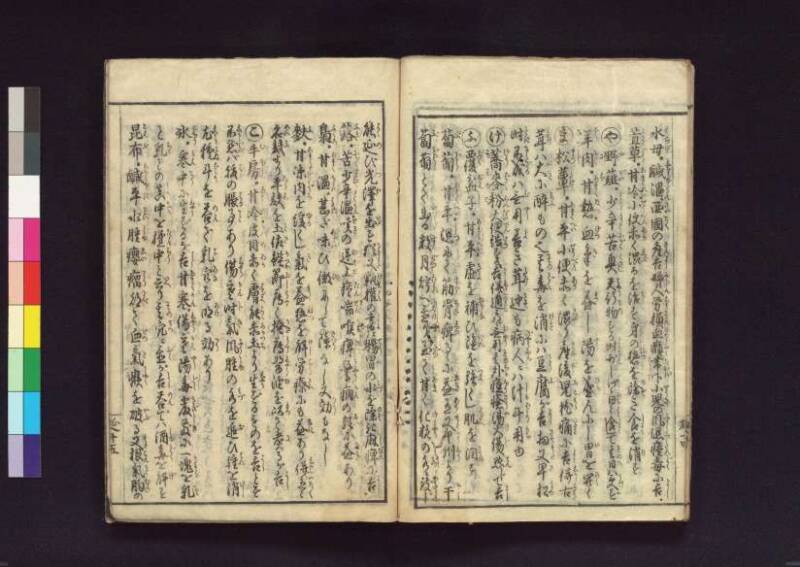
翻刻
水母(くらげ)。鹹(しほはやく)温(うん)。西国(さいこく)の産吉(さんよし)婦人労損(ふじんらうそん)血癪(けつしやく)帯下(たいげ)小児(せうに)の風湿痰毒(ふうしつたんどく)に吉(よし)。
萓草(くわんざう)。甘冷(あまくれい)。小便赤(せうべんあか)く渋(しぶ)るを治(ぢ)す身(み)の熱(ねつ)を除(のぞ)き食(しよく)を消(け)す
や 野薤(やがい)。少辛苦臭(すこしからくにがくくさし)天行物(はやりもの)する時少(ときすこ)しヅヽ日々(にち〱)食(しよく)して其日(そのひ)ハ受(うけ)ず
羊肉(やうにく)。甘熱(あまくねつ)。血気(けつき)を益(ま)し陽(やう)を盛(さか)んにし胃(い)を開(ひら)く
ま 松蕈(まつたけ)。甘平(あまくへい)小便赤(せうべんあか)く渋(しぶ)り産後児枕痛(さんごあとはらいたみ)に吉(よし)併古(しかしふるき)
茸(たけ)ハ大(おゝき)に酔(ゑふ)もの也/其毒(そのどく)を消(けす)にハ豆腐(とうふ)が吉扨又(よしさてまた)早松(さまつ)
時不成(ときならざる)ハ無用善(むやうよ)き茸迚(たけとて)も病人(びやうにん)にハ汁斗(しるばかり)用(もち)ゆ
け 蕎麦粉大便結(けうばくふんだいべんけつ)するに吉併通(よししかしつうじ)候ハヾ無用其外(むやうそのほか)痘瘡湯火傷(ほうさうやけど)に点(てん)じて吉(よし)
ふ 覆盆子(ふくぼんし)。甘平(あまくへい)。虚(きよ)を補(おぎな)ひ陰(いん)を強(つよ)くし肌(はだへ)を潤(うるほ)す
葡萄(ぶどう)。甘平(あまくへい)。湿(しつ)にて筋骨痺(すじほねしび)るゝに益有(ゑきあり)又甲州(またかうしう)より干(ほし)
葡萄(ぶどう)とて出(いづ)る数月貯(すげつたくは)へ置(おけ)り至(いたつ)て甘(あま)く化粧(けしやう)の水(みづ)に致(いた)し
能延(よくの)び光沢(つや)を出(いだ)す猶又(なをまた)甄權(けん〱)の書(しよ)に腸胃(てうい)の水(みづ)を除(のぞ)き麻痺(しびれ)に吉(よし)
蕗(ふき)。苦少辛温(にがくすこしからくうん)。咳(せき)の逆上痰喘喉痺驚癇(のぼせたんぜんこうひきやうかん)の類(るい)に益(ゑき)あり
梟(ふくろ)。甘温(あまくうん)。甚(はなは)だ味(あじは)ひ微(び)にして障(さはり)なし又/効(かう)もなし
麩(ふ)。甘涼内(あまくすゞしくうち)を緩(ゆる)くし気(き)を益熱(ましねつ)を解労瘵(けしらうさい)にも益(ゑき)あり併色々(しかしいろ〱)
名麩(めいふ)より平麩(ひらふ)を土佐鰹節(とさかつをぶし)薄(うす)く掻(かき)薄醤油(うすしやうゆ)を以(もつ)て煑(に)るが吉(よし)
こ 牛房(ごほう)。甘冷(あまくれい)。皮目赤(かはめあか)く膚能赤土(はだへよくあかつち)より生(しやう)ずるものを吉(よし)とす
不然(しからず)バ腹(はら)の脹事(はること)あり傷寒(しやうかん)時気(じき)風腫(ふうしゆ)の水(みづ)を追(お)ひ腫(はれ)を消(けし)
尤(もつとも)種斗(たねばかり)を呑(のん)で乳穴(ちあな)を明(あけ)る効(かう)あり
氷(こほり)。寒中(かんちう)に生(しやう)ずるが吉甘寒(よしあまくかん)。傷寒(しやうかん)陽毒厳敷(やうどくきびしき)に一/塊(かたまり)を乳(ちゝ)
と乳(ちゝ)との真中(まんなか)を檀中(だんちう)と云(いへ)り其穴(そのけつ)に置(おく)が吉吞(よしのん)でハ酒毒(しゆどく)を解(げ)す
昆布(こんぶ)。鹹平水腫(しほはやくへいすいしゆ)癭瘤(ゑいりう)都(すべ)て血気癪(けつきしやく)を破(やぶ)る又(また)根気胸(こんきむね)の
【右ページ一行目左ルビー 帯下 こしけ】
【右ページ三行目左ルビー 野薤 にら】
【右ページ四行目左ルビー 羊肉 ひつじ】
【右ページ八行目左ルビー 蕎麦粉 そばこ 】
現代語訳
水母(くらげ)。塩辛く温性。西国産のものが良い。婦人の疲労による損傷、血の滞り、帯下、小児の風湿痰毒に良い。
萓草(くわんざう)。甘く冷性。小便が赤く渋るのを治す。身体の熱を除き、消化を助ける。
野薤(やがい)。少し辛く苦く臭い。流行病の時は少しずつ毎日食べればその日は病気にかからない。
羊肉(やうにく)。甘く熱性。血気を益し、陽気を盛んにし、胃を開く。
松茸(まつたけ)。甘く平性。小便が赤く渋り、産後の児枕痛に良い。ただし古い茸は大いに酔うものである。その毒を消すには豆腐が良い。さてまた早松や時期外れのものは使用しない。良い茸でも病人には汁だけを用いる。
蕎麦粉。大便が詰まるときに良い。ただし通じているなら使用しない。その他、疱瘡や火傷に点じて良い。
覆盆子(ふくぼんし)。甘く平性。虚を補い陰を強くし、肌を潤す。
葡萄(ぶどう)。甘く平性。湿気で筋骨が痺れるのに効果がある。また甲州より干し葡萄として出るものは数ヶ月貯蔵でき、極めて甘く、化粧水として用いればよく伸び艶を出す。なお甄權の書によれば腸胃の水を除き、麻痺に良い。
蕗(ふき)。苦く少し辛く温性。咳の逆上、痰喘、喉の痺れ、驚癇の類に効果がある。
梟(ふくろ)。甘く温性。甚だ味は微細で害はない。また効果もない。
麩(ふ)。甘く涼性。内を緩くし気を益し熱を解し、労咳にも効果がある。ただし色々な名麩より平麩を土佐鰹節を薄く削り、薄醤油で煮るのが良い。
牛蒡(ごぼう)。甘く冷性。皮目が赤く肌触りの良い赤土から生じるものを良しとする。そうでなければ腹が張ることがある。傷寒、時気、風腫の水を追い、腫れを消す。特に種だけを飲んで乳腺を通す効果がある。
氷(こおり)。寒中に生じるものが良く、甘く寒性。傷寒陽毒が厳しい時、一塊を乳と乳との真中の檀中という穴に置くのが良い。飲めば酒毒を解す。
昆布(こんぶ)。塩辛く平性。水腫、癭瘤、すべての血気の滞りを破る。また根気、胸の
英語訳
Jellyfish (kurage). Salty and warm in nature. Those from the western provinces are good. Beneficial for women's fatigue-related damage, blood stasis, vaginal discharge, and wind-dampness phlegm toxicity in children.
Daylily (kwanzau). Sweet and cool in nature. Treats red and difficult urination. Removes body heat and aids digestion.
Wild chives (yagai). Slightly pungent, bitter, and malodorous. During epidemics, eating a little daily prevents contracting the disease that day.
Mutton (yauniku). Sweet and hot in nature. Benefits blood and qi, strengthens yang energy, and opens the stomach.
Pine mushrooms (matsutake). Sweet and neutral in nature. Good for red and difficult urination and postpartum abdominal pain. However, old mushrooms are highly intoxicating. Tofu is good for neutralizing their toxicity. Early pine mushrooms or those out of season should not be used. Even with good mushrooms, only the broth should be used for sick people.
Buckwheat flour. Good for constipation. However, if bowels are already moving, do not use. Also good when applied to smallpox and burns.
Raspberry (fukubonshi). Sweet and neutral in nature. Supplements deficiency, strengthens yin, and moistens the skin.
Grapes (budou). Sweet and neutral in nature. Beneficial for numbness in muscles and bones due to dampness. Dried grapes from Koshu province can be stored for several months, are extremely sweet, and when used as cosmetic water, spread well and produce luster. According to Kenken's writings, they remove water from the intestines and stomach and are good for numbness.
Butterbur (fuki). Bitter, slightly pungent, and warm in nature. Beneficial for cough with qi counterflow, phlegm asthma, throat numbness, and convulsions.
Owl (fukurou). Sweet and warm in nature. The taste is very subtle and harmless. Also has no particular effect.
Wheat gluten (fu). Sweet and cool in nature. Relaxes the interior, benefits qi, resolves heat, and is beneficial for consumption. However, rather than fancy wheat gluten, plain wheat gluten cooked with thinly shaved Tosa bonito flakes and light soy sauce is better.
Burdock (gobou). Sweet and cool in nature. Those with reddish skin and good texture growing from red soil are considered best. Otherwise, abdominal distension may occur. Expels water from cold damage, seasonal qi, and wind swelling, and reduces swelling. Particularly effective when just the seeds are swallowed to open milk ducts.
Ice (koori). That formed during the cold season is good; sweet and cold in nature. For severe cold damage with yang toxicity, place one piece at the point called Danchu between the breasts. When swallowed, it resolves alcohol toxicity.
Kelp (konbu). Salty and neutral in nature. Breaks up water swelling, goiter tumors, and all blood-qi stagnation. Also for chronic qi and chest...