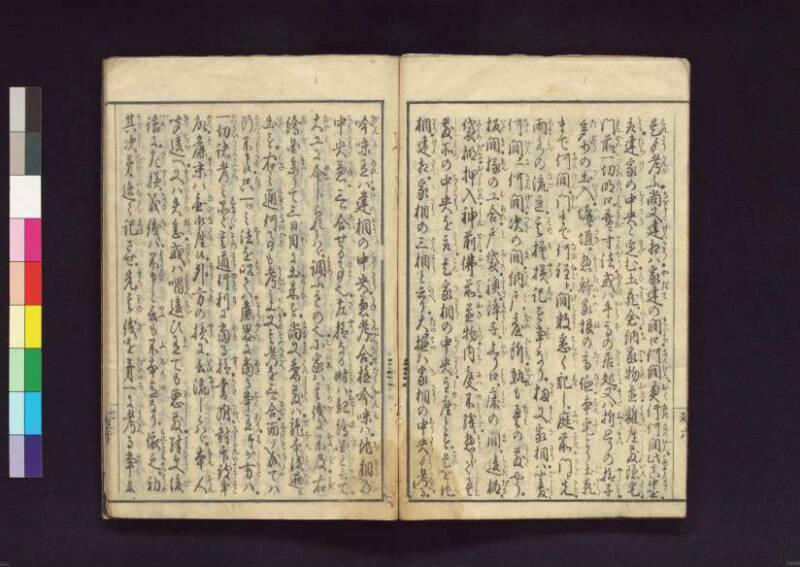
翻刻
是(これ)ゟ(より)考(かんが)ふ。尚又(なをまた)建相(けんさう)は。家建(やだて)の間口(まぐち)。何間(なんげん)。奥行(おくゆき)何間(なんげん)。此(この)真中(まんなか)を
取(とる)。建家(たちけ)の中央(ちうわう)と定(さだ)む。土蔵(どざう)。倉(くら)。納家(なや)。物置(ものおき)。離座敷(はなれざしき)。隠宅(いんたく)。
門前(もんぜん)。一切(いつさい)明口(あけぐち)。幷(ならび)に寸法(すんぽう)。或(あるひ)は牛馬(ぎうば)の居処(きよしよ)。又(また)は折廻(おりまは)りの様子(やうす)。
多少(たせう)の出入(でいり)。塀(へい)。垣(かき)。総体(そうたい)【惣】。家根(やね)の高低(たかひく)。本宅(ほんたく)より土蔵(どざう)
まで何間(なんけん)。門(もん)まで何程(なにほど)ト(と)。間数(けんすう)悉(こと〴〵)く記(しる)し。庭前(にはさき)。門(かど)ト先(さき)。
雨水(あまみづ)の流(なが)れ。其模様(そのもやう)記(しる)す事(こと)なり。扨(さて)又(また)家相(かさう)は。坐敷(ざしき)
何間(なんげん)。に何間(なんげん)。次(つぎ)の間(ま)。納戸(なんど)。台所(だいどころ)。孰(いづれ)も畳(たゝみ)の敷(しき)やう。
板間(いたま)。掾(ゑん)の工合(ぐあひ)。戸袋(とぶくろ)。襖(ふすま)。障子(しやうじ)。上(あが)り口(くち)。床(とこ)の間(ま)。違棚(ちがひだな)。
袋棚(ふくろだな)。押入(おしいれ)。神前(しんぜん)。仏前(ぶつぜん)。置物(おきもの)。内庭(うちには)不残(のこらず)。総(そう)【惣】じて畳(たゝみ)
敷所(しくところ)の中央(ちうわう)を取(とり)。是(これ)家相(かさう)の中央(ちうわう)。主座(しゆざ)とす。是(これ)を地(ち)
相(さう)。建相(けんさう)。家相(かさう)の三相(さんそう)と云(いへ)り。大抵(たいてい)は家相(かさう)の中央(ちうわう)ゟ(より)考(かんがへ)る。
吟味(ぎんみ)有(あれ)ば。建相(けんそう)の中央(ちうわう)。兼(かね)考合(かんがへあはせ)。極吟味(ごくぎんみ)は。地相(ちさう)の
中央(ちうわう)兼(かね)。三ッ合(あは)せる事(こと)也。左様(さやう)なる時(とき)は。起絵図(おこしゑづ)と言(いふ)て。
大工(だいく)に命(めい)じられ候はゞ。調(とゝの)ふもの也。小家(こいゑ)は其儀(そのぎ)に不及(およばず)。右(みぎ)
絵図(ゑづ)参(まい)りて三日/目(め)に出來(しゆつたい)す。尚又(なをまた)委敷(くはしく)は。施本(せほん)後遍(こうへん)に
出(いだ)す。右(みぎ)之/通(とをり)何事(なにごと)も考(かんがへ)之/上(うへ)。又(また)其考(そのかんがへ)を三ッ合(あはせ)。/而(しかうし)テ(て)成(なら)では
断不申(ことはりもうさず)候。只(たゞ)一ッ之/法(ほう)を以(もつ)ては。麤略(そりやく)に当(あた)る事有(ことあり)。《割書:予(よ)》が方(かた)は。
一切(いつさい)諸考(しよかんがへ)之 品々(しな〴〵)。其(その)道行(みちゆき)利(り)に当(あた)る様(やう)。書附(かきつけ)。封印(ふういん)致事(いたすこと)
故(ゆへ)。麤末(そまつ)は無御座(ござなく)候。外方(ほかかた)の様(やう)に。言流(いひなが)し候はゞ。本人(ほんにん)
聞違(きゝちが)へ。又(また)は失念(しつねん)。或(あるひ)は唱違(となへちが)ひ有(あつ)ても悪敷(あしき)。殊更(ことさら)後(ご)
詰(づめ)に。左様成(さやうなる)儀(ぎ)は。不申(もうさず)と言(いふ)も不本意(ふほんい)なり。依之(これによつて)。初(はじめ)
其(その)次第(しだい)逸々(いち〳〵)記(しる)させ。先(まづ)其儀(そのぎ)を第一(だいいち)に考(かんがへ)る事(こと)に
現代語訳
これより考える。なお又、建相は、家建ての間口何間、奥行き何間、この真ん中を取る。建家の中央と定める。土蔵、倉、納屋、物置、離れ座敷、隠宅、門前、一切の明け口、並びに寸法、あるいは牛馬の居所、また折り回りの様子、多少の出入り、塀、垣、総体、家根の高低、本宅より土蔵まで何間、門まで何程と、間数をことごとく記し、庭先、門と先、雨水の流れ、その模様を記すことである。さて又、家相は、座敷何間に何間、次の間、納戸、台所、いずれも畳の敷き方、板間、縁の具合、戸袋、襖、障子、上がり口、床の間、違い棚、袋棚、押入れ、神前、仏前、置物、内庭を残らず、総じて畳を敷く所の中央を取り、これを家相の中央、主座とする。これを地相、建相、家相の三相と言う。大抵は家相の中央より考える。
吟味があれば、建相の中央も兼ね考え合わせ、極吟味は地相の中央も兼ね、三つ合わせることである。そのような時は、起こし絵図と言って、大工に命じられれば、調うものである。小家はその儀に及ばず。右の絵図が参りて三日目に出来上がる。なお又、詳しくは施本後編に出す。右の通り、何事も考えの上、またその考えを三つ合わせ、そうしてでなければ断りを申さず候。ただ一つの法をもってしては、粗略に当たることがある。私の方は、一切諸考えの品々、その道行きが利に当たるよう、書き付け、封印致すこと故、粗末はございません。他方のように言い流しては、本人が聞き違え、また失念、あるいは唱え違いがあっても悪しき。殊更後詰めに、そのような儀はしないと言うも不本意なり。これによって、初めにその次第を一つ一つ記させ、まずその儀を第一に考えることに
英語訳
From this I make my considerations. Furthermore, for structural divination (kensō), I measure the frontage and depth of the house construction in ken, and take the center point to establish as the central point of the building. I record everything: storehouses, granaries, storage buildings, warehouses, detached rooms, hidden residences, areas in front of gates, all openings, along with their measurements, locations for cattle and horses, the layout of enclosures, various entrances and exits, walls, fences, the overall structure, the heights of roofs, the distance from the main house to the storehouse, the distance to the gate - recording all distances completely, as well as the garden areas, beyond the gate, the flow of rainwater, and documenting all these details. Now for house divination (kasō), I examine: the main room of so many ken by so many ken, the next room, storage rooms, kitchen, the arrangement of tatami mats in all rooms, wooden floors, the condition of verandas, door storage spaces, sliding doors, paper screens, entrances, alcoves, staggered shelves, bag shelves, closets, Shinto altars, Buddhist altars, decorative objects, inner gardens - everything without exception. Generally, I take the center point of the tatami-floored areas as the central point and main seat for house divination. This is called the three forms of divination: land divination, structural divination, and house divination. Usually I consider from the central point of the house divination.
If there is careful examination needed, I also consider the central point of the structural divination. For extremely careful examination, I combine all three, including the central point of the land divination. In such cases, I use what is called a "raised diagram," which can be prepared if you commission a carpenter. Small houses do not require such measures. Such diagrams are completed three days after submission. Furthermore, details will be provided in the latter part of the charitable book. As described above, I consider everything thoroughly, combining three methods of consideration, and only then do I provide my judgment. Using only one method can lead to oversights. My approach involves recording all various considerations and methods that lead to beneficial outcomes, then sealing them with my seal, so there is nothing crude about it. Unlike others who speak carelessly, causing the client to mishear, forget, or misremember - which would be unfortunate. Especially problematic would be later claiming "I didn't say such a thing," which would be against my principles. Therefore, I have everything recorded step by step from the beginning, making this consideration the first priority.