翻刻
【右丁】
十二月尚成王恩謝正使大宜見王子副使安村親方を
して方物を献す文化三年丙寅十一月尚顥王恩謝正使
読谷山王子副使小禄親方をして方物を献す天保三
年壬辰十一月尚育王恩謝正使豊見城王子前尚顥
王之使沢岻親方をして方物を献ず天保十三年壬寅十
一月尚育王賀慶正使浦添王子をして方物を献ず
今茲嘉永三庚戌十一月尚泰王恩謝正使玉川王子
をして方物を献ず慶長より今年に至る迄来聘
十九度に及ふ
官位《割書:並》冠服図説
位は一品より九品まであり勿論正従の別あり王の
子弟を王子(わんず)と称す《割書:正一品》領主を按司(あんず)と称ず《割書:従一品|○古は》
《割書:按司領地に住居して其地を治めしが各種威を振ふにより第十七|代の国王尚真制を改首里の城下に居住せしめ察事紀官といふ》
《割書:官人を一人宛遣はして其領内の事を支配せしめ|歳の終に物成を按司のかたへおさめしむ》天曹司地曹司
人曹司とて国家の政事を司る大臣三司官親方と
称す《割書:正一品》夫より以下の大臣を親方と称す《割書:従二品》
親雲上と称するものは武官なり《割書:三品より七|品まてあり》里之子と称
するは扈従(こせう)の少童なり《割書:八品》筑登之と称するは九品なり
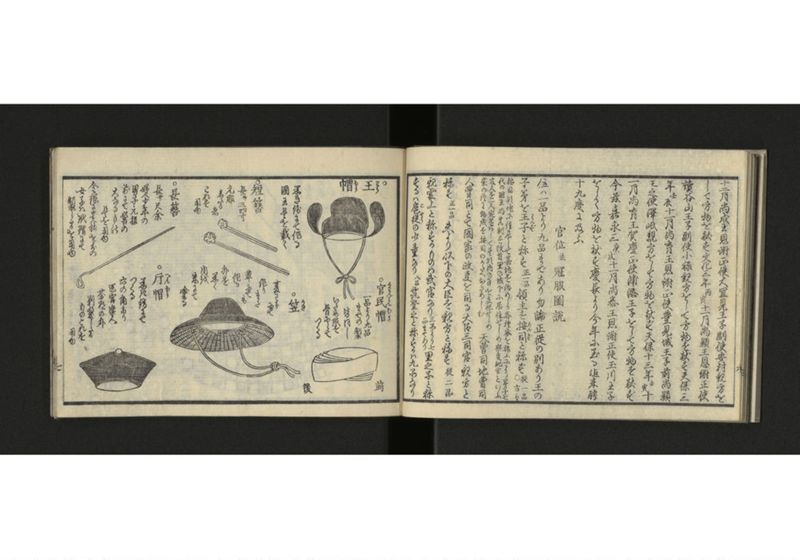
【左丁上段】
◦
王(わう)
帽(ほう)
黒き紗にて作る
国王是を載く
◦短簪
長サ三四寸
元服
したる
者
これを
用ゆ
◦長簪
長サ尺余
婦人少年の
男子元服
前にて髻の
大なるもの
是を用ゆ
金銀に貴賤を分つ
女子は玳瑁にて
製したるを用ゆ
【左丁下段】
◦官民帽(くわんみんほう)
一品より九品 前
までの製
皆同し 【帽の図】
いため紙を
骨にして 後
つくる
◦笠(かさ)
菱わら
にて
作り
また
葦にて
も
作る
外を
黒く
内を
朱にて
塗る
◦片帽(へんほう)
黒き■【絹】にて
つくる
六の角あり
医官楽人
茶道の外
剃髪したる
ものこれを
用ゆ
現代語訳
【右丁】
十二月、尚成王が恩謝正使大宜見王子、副使安村親方をして方物を献上した。文化三年丙寅(1806年)十一月、尚顥王が恩謝正使読谷山王子、副使小禄親方をして方物を献上した。天保三年壬辰(1832年)十一月、尚育王が恩謝正使豊見城王子、前尚顥王の使者沢岻親方をして方物を献上した。天保十三年壬寅(1842年)十一月、尚育王が賀慶正使浦添王子をして方物を献上した。
今この嘉永三年庚戌(1850年)十一月、尚泰王が恩謝正使玉川王子をして方物を献上した。慶長より今年に至るまで来聘は十九度に及んでいる。
官位並びに冠服図説
位は一品より九品まであり、もちろん正従の別がある。王の子弟を王子(わんず)と称する(正一品)。領主を按司(あんず)と称する(従一品。○古くは按司は領地に住居してその地を治めていたが、各々威勢を振るうことにより、第十七代の国王尚真が制を改め、首里の城下に居住させ、察事紀官という官人を一人ずつ派遣してその領内の事を支配させ、歳の終わりに物成を按司のもとに納めさせた)。天曹司・地曹司・人曹司といって国家の政事を司る大臣を三司官親方と称する(正一品)。それより以下の大臣を親方と称する(従二品)。親雲上と称するものは武官である(三品より七品まである)。里之子と称するのは扈従の少童である(八品)。筑登之と称するのは九品である。
【左丁上段】
◦王(わう)帽(ほう)
黒い紗で作る
国王がこれを載く
◦短簪
長さ三四寸
元服した者が
これを用いる
◦長簪
長さ尺余
婦人・少年の男子で元服前にて髻の大きなものが
これを用いる
金銀で貴賤を分つ
女子は玳瑁で製したものを用いる
【左丁下段】
◦官民帽(くわんみんほう)
一品より九品までの製はみな同じ
いため紙を骨にして作る
【帽の図が描かれている】
◦笠(かさ)
菱わらで作り、また葦でも作る
外を黒く、内を朱で塗る
◦片帽(へんほう)
黒い絹で作る
六つの角がある
医官・楽人・茶道の外、剃髪した者がこれを用いる
英語訳
【Right page】
In the twelfth month, King Shō Sei sent the gratitude chief envoy Prince Ōgiimi and vice-envoy Yasumura Ueekata to present tribute. In the 3rd year of Bunka, hinoe-tora (1806), in the eleventh month, King Shō Kō sent the gratitude chief envoy Prince Yomitanzan and vice-envoy Oroku Ueekata to present tribute. In the 3rd year of Tenpō, mizunoe-tatsu (1832), in the eleventh month, King Shō Iku sent the gratitude chief envoy Prince Tomigusuku and the former King Shō Kō's envoy Takeshi Ueekata to present tribute. In the 13th year of Tenpō, mizunoe-tora (1842), in the eleventh month, King Shō Iku sent the congratulatory chief envoy Prince Urasoe to present tribute.
Now in this 3rd year of Kaei, kanoe-inu (1850), in the eleventh month, King Shō Tai sent the gratitude chief envoy Prince Tamakawa to present tribute. From Keichō to this year, court visits have reached nineteen times.
Official Ranks and Illustrated Description of Court Caps and Robes
Ranks range from first grade to ninth grade, and naturally there are distinctions between principal (shō) and subordinate (ju) ranks. The king's sons and brothers are called ōji (wanzu) [First Grade Principal]. Territorial lords are called aji (anzu) [First Grade Subordinate. ○In ancient times, aji resided in their domains and governed those lands, but because each wielded power independently, the 17th generation king Shō Shin reformed the system, making them reside in the castle town of Shuri, and dispatched officials called satsujikikatsa to govern the affairs of their territories, having the annual tribute paid to the aji at year's end]. The great ministers who oversee state affairs are called the Three Judicial Officers Ueekata (Tenshōshi, Chishōshi, and Jinshōshi) [First Grade Principal]. Ministers below them are called Ueekata [Second Grade Subordinate]. Those called Pechin are military officials [ranging from third to seventh grades]. Those called Satonoshi are young attendants in personal service [eighth grade]. Those called Chikudun are ninth grade.
【Left page, upper section】
◦Royal Cap (ō-bō)
Made of black gauze
Worn by the king
◦Short Hairpin
Length: 3-4 inches
Used by those who have
undergone coming-of-age ceremony
◦Long Hairpin
Length: over one shaku
Used by women and young men
before coming-of-age who have
large topknots
Noble and common ranks are distinguished by gold and silver
Women use those made of tortoiseshell
【Left page, lower section】
◦Official and Civilian Cap (kwan-min-bō)
The design is the same for all ranks from first to ninth grade
Made with stiffened paper as the frame
[Diagram of cap shown]
◦Conical Hat (kasa)
Made of diamond-patterned straw, also made of reed
The exterior painted black, the interior painted vermillion
◦Side Cap (hen-bō)
Made of black silk
Has six corners
Used by medical officials, musicians, tea ceremony practitioners, and others with shaved heads