翻刻
【右丁上段】
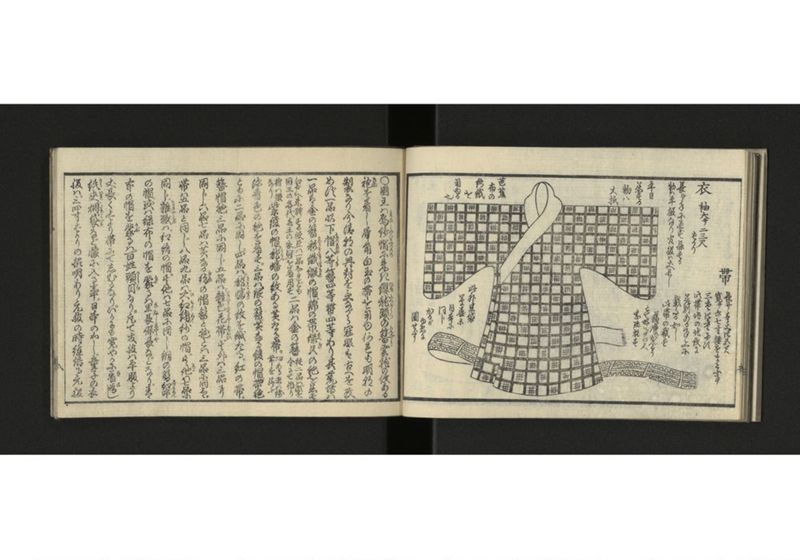
衣 袖大サ二三尺
ばかり
長サ手に過ず着する
物は平服なり官服は丈長し
平日
着する
物は
大抵
芭蕉
布の
縞織
を
用ゆる
也
【右丁下段】
帯 長サ壱丈四五尺
寛サ六七寸腰をまとふ事
三重四重にす
此帯地の地紋に
差別ある事上に
載たる如し
此帯の裁を
薩摩がんとう
とて好事の人
甚珍翫す
此外足袋
草履等
日本に
同じ
かるが
ゆゑに
図せず
【左丁】
○国王は烏紗帽(くろきしやのかぶりもの)に朱き纓(ひも)龍頭(たつがしら)の簪(かんざし)雲龍の紋ある
袍(きぬ)を着し犀角白玉の帯を用ゆ何れも明朝の
製なり今清朝の冊封を受ながら冠服は古へを改
めず一品以下 帽(かふりもの)八等(やしな)簪四等帯四等あり其荒増は
一品は金の簪 彩織縀(もやうををりたるきれ)の帽錦の帯。錦の帯。緑色(もへぎ)の袍を着す
《割書:江戸へ来聘する使臣は一品なれども|国王の名代故王の衣冠を着用す》二品は金の簪《割書:従二品は。頭を|金にて作り》
《割書:棒は銀|なり》紫綾の帽。龍(くわん)蟠の紋ある美なる帯。《割書:功ある者は錦|帯を結ふ》
深青色の袍を着す。三品は銀の簪。黄なる綾の帽。帯袍
ともに二品に同し。四品は。龍蟠(くわんりやう)の紋を織たる。紅の帯。
簪帽袍三品に同じ五品は。絲色花帯(いろいとにてもやうあるおひ)。其外は三品に
同じ六品七品は黄なる絹(きぬ)の帽簪と袍とは三品に同しく。
帯は五品と同じ八品九品は。火紅絹(ひちりめん)紗の帽。其 他(ほか)は七品に
同じ。雑職(かるきやくにん)は。紅絹の帽。其他は七品に同し銅の簪 紅布(あかもめん)
の帽。或は緑布の帽を蒙(かぶ)るは里長(なぬし)保長(しやうや)などなり。青
布の帽を蒙(かぶ)るは。百姓 頭目(かしら)なり。凡て官服は平服より
丈長く上より帯にてしむるなり。いかにも寛やかに着為(きな)し
紙夾(かみいれ)。烟袋(たばこいれ)など懐に入る事。日本の如し。童子の衣
服は。三四寸ばかりの脇明あり元服の時縫詰る元服
現代語訳
【右丁上段】
衣 袖の大きさは二、三尺ばかり
長さは手に過ぎず、着用するものは平服である。官服は丈が長い。
平日に着用するものは大抵、芭蕉布の縞織を用いる。
【右丁下段】
帯 長さ一丈四、五尺
幅六、七寸、腰に巻くことを三重四重にする
この帯地の地紋に差別があることは上に記載した通りである
この帯の裁ち方を薩摩がんとうといって、好事家の人が甚だ珍重している
この外、足袋・草履等は日本と同じであるゆえに図示しない。
【左丁】
○国王は烏紗帽(黒い紗の冠り物)に朱い纓(紐)、龍頭の簪、雲龍の紋がある袍を着し、犀角白玉の帯を用いる。いずれも明朝の製である。今、清朝の冊封を受けながら冠服は古制を改めない。一品以下、帽八等、簪四等、帯四等がある。その概略は以下の通り:
一品は金の簪、彩織縀の帽、錦の帯、緑色の袍を着する(江戸へ来聘する使臣は一品であるが、国王の名代ゆえ王の衣冠を着用する)。二品は金の簪(従二品は頭を金で作り、棒は銀である)、紫綾の帽、龍蟠の紋がある美なる帯(功ある者は錦帯を結ぶ)、深青色の袍を着する。三品は銀の簪、黄なる綾の帽、帯袍ともに二品と同じ。四品は龍蟠の紋を織った紅の帯、簪帽袍は三品と同じ。五品は絲色花帯、その外は三品と同じ。六品七品は黄なる絹の帽、簪と袍とは三品と同じく、帯は五品と同じ。八品九品は火紅絹紗の帽、その他は七品と同じ。雑職は紅絹の帽、その他は七品と同じ。銅の簪、紅布の帽、或いは緑布の帽を被るのは里長・保長などである。青布の帽を被るのは百姓頭目である。すべて官服は平服より丈が長く、上から帯で締めるのである。いかにも寛やかに着なし、紙夾・烟袋なども懐に入れることは日本の如くである。童子の衣服は三、四寸ばかりの脇明きがあり、元服の時に縫い詰める。元服
英語訳
【Right page, upper section】
Clothing Sleeve size: approximately 2-3 shaku
Length does not exceed the hands; what is worn is everyday clothing. Official robes have long hems.
For daily wear, they generally use striped weave made from banana fiber cloth.
【Right page, lower section】
Sash Length: 14-15 jō
Width: 6-7 sun, worn around the waist in three or four layers
The ground patterns on this sash fabric have distinctions as recorded above
The cutting style of this sash is called "Satsuma gantō" and is greatly treasured by connoisseurs
Besides these, tabi socks, sandals, etc. are the same as in Japan, so they are not illustrated.
【Left page】
○The king wears a black gauze cap with red cords, dragon-head hairpins, and robes with cloud-dragon patterns, using a rhinoceros horn and white jade sash. All are made in Ming Dynasty style. Though now receiving investiture from the Qing Dynasty, the cap and robe styles have not been changed from ancient times. Below first rank, there are eight grades of caps, four grades of hairpins, and four grades of sashes. The general outline is as follows:
First rank uses gold hairpins, caps of colored brocade, brocade sashes, and wears green robes (envoys coming to Edo are first rank, but as the king's representatives, they wear the king's ceremonial dress). Second rank uses gold hairpins (subordinate second rank has heads made of gold, with silver shafts), purple silk caps, beautiful sashes with coiled dragon patterns (those with merit wear brocade sashes), and wears deep blue robes. Third rank uses silver hairpins, yellow silk caps, with sashes and robes the same as second rank. Fourth rank has red sashes woven with coiled dragon patterns, with hairpins, caps, and robes the same as third rank. Fifth rank has colored thread flower-patterned sashes, with everything else the same as third rank. Sixth and seventh ranks have yellow silk caps, with hairpins and robes the same as third rank, and sashes the same as fifth rank. Eighth and ninth ranks have fire-red silk gauze caps, with everything else the same as seventh rank. Minor officials have red silk caps, with everything else the same as seventh rank. Those wearing copper hairpins and red cloth caps, or green cloth caps, are village heads and community leaders. Those wearing blue cloth caps are peasant headmen. All official robes are longer than everyday clothing and are fastened with sashes from above. They are worn quite loosely, and paper cases, tobacco pouches, etc. are kept in the bosom as in Japan. Children's clothing has side openings of about 3-4 sun, which are sewn closed at coming-of-age. Coming-of-age