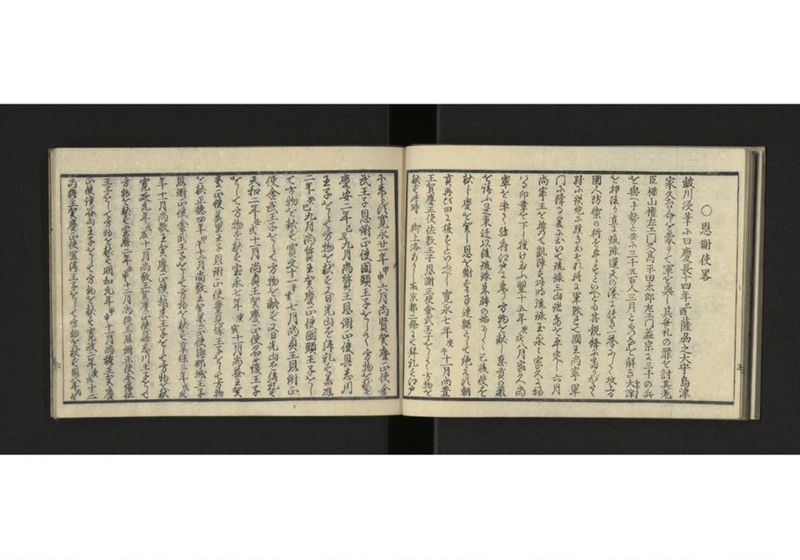
翻刻
【右丁】
○恩謝使略
皷川浸筆に曰慶長十四年己酉薩州之大守島津
家久台命を蒙りて軍を与し其無礼の罪を討其老
臣樺山権左エ門久高平田太郎左エ門益宗に三千の兵
を与へ手勢と共に三千五百人三月ともつなを解き大洋(おほうみ)
を押渡り直に琉球運天の湊につき一挙にして攻上る
国人防禦の術を尽すといへども其鋭鋒に当りがたく
殊に鉄炮に駭きおそれ終に軍敗れて国王尚寧軍
門に降る爰において琉球三山諸島を平定し六月
尚寧王を携て凱陣す此時琉球国永々家久に賜
はる印章を下し授け玉ふ翌十五年庚戌八月家久尚
寧を率て駿府江戸に来り方物を献し怠貢の罪
を請ふ是東遷以後琉球来聘の始にして已後使を
献じ慶を賀し恩を謝する事連綿として絶えす朝
貢再び旧に復すといふべし寛永七年庚午十一月尚豊
王賀慶正使佐敷王子恩謝正使金武王子をして方物を
献ず此時 御上洛ありし故京都二条にて拝礼す江戸
【左丁】
に来らず寛永廿一年甲申六月尚賢賀慶正使金
武王子恩謝正使国頭王子をして方物を献す
慶安二年己丑九月尚質王恩謝正使具志川
王子をして方物を献す又日光山を拝礼す承応
二年癸巳九月尚質王賀慶正使国頭王子をし
て方物を献ず寛文十一辛亥七月尚貞王恩謝正
使金武王子をして方物を献ず又日光山を拝礼す
天和二年壬戌十一月尚貞王賀慶正使名護王子
をして方物を献す宝永七年庚寅十一月尚益王賀
慶正使美里王子恩謝正使豊見城王子をして方物
を献正徳四年甲午十二月尚敬王賀慶正使与那城王子
恩謝正使金武王子をして方物を献す享保三年戊戌
年十一月尚敬王賀慶正使越来王子をして方物を献
寛延元年戊辰十一月尚敬王賀慶正使具志川王子をして
方物を献す宝暦二年壬申十二月尚穆王恩謝正使今帰仁
王子をして方物を献す明和元年甲申十一月尚穆王賀慶
正使読谷山王子をして方物を献す寛政二年庚戌十二
尚穆王賀慶正使宜湾王子をして方物を献ず同八年丙戌【丙辰の誤】
現代語訳
【右丁】
○恩謝使略
皷川浸筆によれば、慶長十四年己酉(1609年)、薩州の大守島津家久が台命を受けて軍を率い、その無礼の罪を討った。その老臣樺山権左衛門久高、平田太郎左衛門益宗に三千の兵を与え、手勢と共に三千五百人で、三月に船の綱を解き大海を渡って、直ちに琉球運天の港に着き、一挙にして攻め上った。
国人は防御の術を尽くしたが、その鋭い攻撃に当たることができず、特に鉄砲に驚き恐れ、ついに軍が敗れて国王尚寧が軍門に降った。ここにおいて琉球三山諸島を平定し、六月に尚寧王を連れて凱旋した。この時琉球国は永々に家久に賜わる印章を下し授けられた。翌十五年庚戌(1610年)八月、家久は尚寧を連れて駿府・江戸に来て方物を献上し、怠貢の罪を請うた。これは東遷以後の琉球来聘の始まりであり、以後使者を派遣して慶事を賀し恩を謝することが連綿として絶えず、朝貢が再び旧に復したといえる。寛永七年庚午(1630年)十一月、尚豊王が賀慶正使佐敷王子、恩謝正使金武王子をして方物を献上した。この時御上洛があったため京都二条にて拝礼し、江戸
【左丁】
には来なかった。寛永二十一年甲申(1644年)六月、尚賢が賀慶正使金武王子、恩謝正使国頭王子をして方物を献上した。
慶安二年己丑(1649年)九月、尚質王が恩謝正使具志川王子をして方物を献上した。また日光山を拝礼した。承応二年癸巳(1653年)九月、尚質王が賀慶正使国頭王子をして方物を献上した。寛文十一年辛亥(1671年)七月、尚貞王が恩謝正使金武王子をして方物を献上した。また日光山を拝礼した。
天和二年壬戌(1682年)十一月、尚貞王が賀慶正使名護王子をして方物を献上した。宝永七年庚寅(1710年)十一月、尚益王が賀慶正使美里王子、恩謝正使豊見城王子をして方物を献上した。正徳四年甲午(1714年)十二月、尚敬王が賀慶正使与那城王子、恩謝正使金武王子をして方物を献上した。享保三年戊戌(1718年)十一月、尚敬王が賀慶正使越来王子をして方物を献上した。
寛延元年戊辰(1748年)十一月、尚敬王が賀慶正使具志川王子をして方物を献上した。宝暦二年壬申(1752年)十二月、尚穆王が恩謝正使今帰仁王子をして方物を献上した。明和元年甲申(1764年)十一月、尚穆王が賀慶正使読谷山王子をして方物を献上した。寛政二年庚戌(1790年)十二月、尚穆王が賀慶正使宜湾王子をして方物を献上した。同八年丙辰(1796年)
英語訳
【Right page】
○Brief Account of Gratitude Envoys
According to the brush of Korokawa Sen, in the 14th year of Keichō, tsuchinoto-tori (1609), the lord of Satsushū, Shimazu Iehisa, received imperial command and led troops to punish the crime of insolence. He gave three thousand soldiers to his veteran retainers Kabayama Gonzaemon Hisataka and Hirata Tarōzaemon Masumune, and together with his own forces totaling 3,500 men, they set sail in the third month, crossing the great ocean and directly reaching the port of Unten in Ryukyu, attacking and advancing in one stroke.
The people of the country exhausted their defensive tactics, but could not withstand the sharp assault, being especially startled and frightened by firearms. Finally their army was defeated and King Shō Nei surrendered at the military camp. Thereupon the three mountains and various islands of Ryukyu were pacified, and in the sixth month they returned triumphantly bringing King Shō Nei with them. At this time, Ryukyu was granted and given a seal to be held by Iehisa in perpetuity. In the following 15th year, kanoe-inu (1610), in the eighth month, Iehisa brought Shō Nei to Sunpu and Edo to present tribute and request forgiveness for the crime of neglecting tribute. This was the beginning of Ryukyu's court visits after the eastern relocation, and thereafter the dispatch of envoys to celebrate festivities and express gratitude continued uninterrupted, and tribute was restored to its former state. In the 7th year of Kan'ei, kanoe-uma (1630), in the eleventh month, King Shō Hō sent the congratulatory chief envoy Prince Sashiki and the gratitude chief envoy Prince Kin to present tribute. At this time there was an imperial visit to the capital, so they paid respects at Nijō in Kyoto and did not come to Edo.
【Left page】
In the 21st year of Kan'ei, kinoe-saru (1644), in the sixth month, Shō Ken sent the congratulatory chief envoy Prince Kin and the gratitude chief envoy Prince Kunigami to present tribute.
In the 2nd year of Keian, tsuchinoto-ushi (1649), in the ninth month, King Shō Shitsu sent the gratitude chief envoy Prince Gushikawa to present tribute. They also paid respects at Nikkōzan. In the 2nd year of Jōō, mizunoto-mi (1653), in the ninth month, King Shō Shitsu sent the congratulatory chief envoy Prince Kunigami to present tribute. In the 11th year of Kanbun, kanoto-i (1671), in the seventh month, King Shō Tei sent the gratitude chief envoy Prince Kin to present tribute. They also paid respects at Nikkōzan.
In the 2nd year of Tenna, mizunoe-inu (1682), in the eleventh month, King Shō Tei sent the congratulatory chief envoy Prince Nago to present tribute. In the 7th year of Hōei, kanoe-tora (1710), in the eleventh month, King Shō Eki sent the congratulatory chief envoy Prince Misato and the gratitude chief envoy Prince Tomigusuku to present tribute. In the 4th year of Shōtoku, kinoe-uma (1714), in the twelfth month, King Shō Kei sent the congratulatory chief envoy Prince Yonashiro and the gratitude chief envoy Prince Kin to present tribute. In the 3rd year of Kyōhō, tsuchinoe-inu (1718), in the eleventh month, King Shō Kei sent the congratulatory chief envoy Prince Goeku to present tribute.
In the 1st year of Kan'en, tsuchinoe-tatsu (1748), in the eleventh month, King Shō Kei sent the congratulatory chief envoy Prince Gushikawa to present tribute. In the 2nd year of Hōreki, mizunoe-saru (1752), in the twelfth month, King Shō Boku sent the gratitude chief envoy Prince Nakijin to present tribute. In the 1st year of Meiwa, kinoe-saru (1764), in the eleventh month, King Shō Boku sent the congratulatory chief envoy Prince Yomitanzan to present tribute. In the 2nd year of Kansei, kanoe-inu (1790), in the twelfth month, King Shō Boku sent the congratulatory chief envoy Prince Giwan to present tribute. In the same 8th year, hinoe-tatsu (1796)