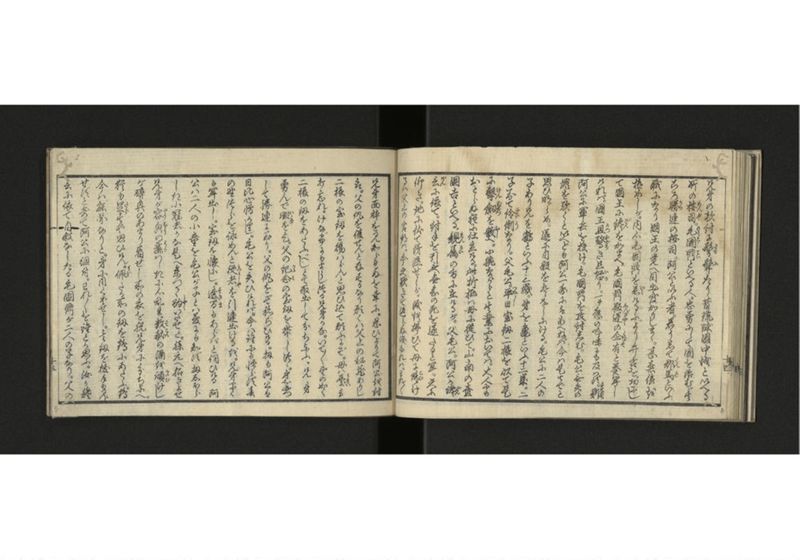
翻刻
【右丁】
兄弟の敵討に髣髴(さもに)たり昔琉球国中城といへる
所の按司(あんず)。毛国鼎(もうこくてい)といへる人。忠勇にして国を治む。其
ころ勝(かつ)連の按司。阿公といふ者。若うして郡馬(くんば)といふ
職になり国王の覚へ目出度かりしまゝ。其奢侈を
極めしが。内心毛国鼎を忌(いみ)けるにより弁舌を。功にし
て国王に讒(ざん)をかまへ。毛国鼎 叛逆(ほんぎゃく)の企(くはだて)有と奏聞し
ければ。国王 且(かつ)驚(おどろ)き且 怒(いか)り。一《割書:チ》応の吟味にも及はず。則(すなはち)
阿公に軍兵を授け。毛国鼎を攻討しむ。毛公無矢の
罪を歎くといへども阿公一円に取あへねば今は是までと
思ひ明らめ。遂に自殺をそなしにける。毛公に二人の
子あり兄を鶴といふ十三歳。弟を亀といふ十二歳。二
子至て伶俐(れいり)なり。父毛公。平日(つね〳〵)宝剣二振を以て是
に撃剣(けんじゆつ)を教(おし)へ。小腕ながらも其業においては。大人にも
おとらぬ程に仕立ける。此折柄は母に従ひて。山南の査
国吉といへる。親属(しんるい)の方に在けるが。父毛公。阿公か讒(ざん)
言(げん)に依て。討手を引受無念の死を遂たると聞。天に
仰き。地に伏て涕泣せしが。涙を払ひて母に請(こひ)け
るは父上の最期は。今更歎きて返らぬ儀なれは。われ〳〵
【左丁】
兄弟面体を見知られぬを幸に。忍ひよりて阿公を討
取。父の仇を復せんと存するなり願くは父上の秘蔵ありし
二振の宝剣を賜はらんと思ひ込て願ふにぞ。母は憂(うれい)も
打忘れ。けなげにもまうしつる兄弟かな。いて〳〵望の如く
二振の剣をあたふべしとて取出して分ち与ふ。兄弟
勇んで暇(いとま)を乞。父の記念(かたみ)の宝剣を帯しつゝ。身をやつ
して勝連に至り。父の仇をぞねらひける。扨も阿公は
日比心憎かりし。毛公を失ひければ。今は誰にも憚らず春
の野つらを詠めんと従者(しうしや)を引連出けるを。兄弟早く
も聞出し。宝剣を懐にし。透間(すきま)もあらばと伺ひける阿
公は二人の小童を毛公が子とは夢にも知ず扨しほら
しき小冠者かな是へ参つて酌(しやく)いたせと。膝元へ招きよせ
兄弟が容貌(やうほう)の麗(うる)はしきに心乱れ。数献(すこん)の酒を傾(かたむ)けし
が酔興のあまり着せし所の衣を脱兄弟に分ち与へ。
猶も足(たら)すや思ひけん。佩(はい)たる所の剣を鶴にあたふ。鶴
今は能図なりと。弟に目くばせし。其剣を抜手も見
せずと寄て阿公に組付。われ〳〵を誰とか思ふ。汝が讒
言に依て自殺なしたる毛国鼎が二人の子なり。父の
現代語訳
【右丁】
兄弟の敵討ちによく似ている。昔琉球国中城という
所の按司、毛国鼎という人がいた。忠勇で国を治めていた。その
頃勝連の按司で、阿公という者がいた。若くして郡馬という
職に就き、国王の覚えがめでたかったので、その奢侈を
極めていたが、内心毛国鼎を嫌っていたため、弁舌を
巧みにして国王に讒言を企て、毛国鼎に叛逆の企てがあると奏上した
ところ、国王は驚き怒って、一応の吟味にも及ばず、すなわち
阿公に軍兵を授けて、毛国鼎を攻め討たせた。毛公は無実の
罪を嘆いたが、阿公が全く取り合わないので、今はこれまでと
思い諦めて、ついに自殺をした。毛公には二人の
子があり、兄を鶴といい十三歳、弟を亀といい十二歳であった。二
人の子は非常に利発であった。父毛公は、平素宝剣二振りをもってこれ
らに撃剣術を教え、小さな腕ながらもその技においては、大人にも
劣らないほどに仕立てていた。この時は母に従って、山南の査
国吉という親戚の方にいたが、父毛公が阿公の讒
言によって、討手を受けて無念の死を遂げたと聞き、天を
仰ぎ、地に伏して泣いたが、涙を拭って母に願った
のは「父上の最期は、今更嘆いても戻らないことなので、我々
【左丁】
兄弟は顔を見知られていないのを幸いに、忍び寄って阿公を討ち
取り、父の仇を復そうと思います。願わくは父上が秘蔵していた
二振りの宝剣をいただきたい」と心を込めて願った。母は憂いも
忘れて、「けなげに申した兄弟よ。きっと望みの通り
二振りの剣を与えよう」といって取り出して分け与えた。兄弟は
勇んで暇乞いをし、父の形見の宝剣を帯びながら、身をやつして
勝連に至り、父の仇を狙った。さて阿公は
日頃心憎かった毛公を失ったので、今は誰にも遠慮せず春の
野辺を詠もうと従者を引き連れて出かけたのを、兄弟はすぐに
聞きつけ、宝剣を懐にして、隙間もあればと伺っていた。阿
公は二人の小童を毛公の子とは夢にも知らず、「さて美しい
小冠者だな。こちらへ参って酌をいたせ」と膝元へ招き寄せた。
兄弟の容貌の美しさに心を乱し、数杯の酒を傾けた
が、酔興のあまり着ていた衣を脱いで兄弟に分け与え、
まだ足りないと思ったのか、佩いていた剣を鶴に与えた。鶴は
今こそ好機だと、弟に目配せして、その剣を抜く手も見
せずに寄って阿公に組み付き、「我々を誰と思うか。汝の讒
言によって自殺した毛国鼎の二人の子である。父の
英語訳
【Right page】
This resembles the revenge story of the brothers. Long ago, in a place called Nakagusuku in the Ryukyu Kingdom,
there was a lord called Mō Kokutei. He was loyal and brave, governing the country well. At that
time, there was a lord of Katsuren named Akō. While young, he attained the
position of Gunba and enjoyed the king's favor, so he indulged in
luxury to the extreme. However, inwardly he despised Mō Kokutei, so he used his
eloquence skillfully to slander him to the king, reporting that Mō Kokutei was plotting
rebellion. The king was both surprised and angered, and without even conducting a proper investigation,
gave Akō military forces to attack and destroy Mō Kokutei. Though Mō-kō lamented his
innocence, Akō would not listen at all, so thinking "this is the end,"
he resigned himself and finally committed suicide. Mō-kō had two
sons: the elder called Tsuru, aged thirteen, and the younger called Kame, aged twelve. The two
children were extremely clever. Their father Mō-kō had regularly used two treasured swords to
teach them swordsmanship, and despite their small arms, in that art they were
trained to a level not inferior to adults. At this time, they were with their mother at the home of a
relative named Sa Kuniyoshi in Sannan. When they heard that their father Mō-kō had met an
unjust death at the hands of attackers due to Akō's slander, they looked up to heaven
and prostrated themselves on the ground, weeping. But wiping away their tears, they pleaded with their mother:
"Father's death cannot be undone no matter how much we lament now, so we
【Left page】
brothers, fortunately unknown by face, will sneak close and strike down Akō
to avenge our father. We earnestly wish to receive
the two treasured swords that father cherished." They pleaded with all their hearts. The mother, forgetting her grief,
said, "What brave words you have spoken, my brothers! I shall indeed give you
the two swords as you wish," and took them out to divide between them. The brothers
joyfully took their leave, wearing their father's cherished swords as keepsakes, disguised themselves,
and went to Katsuren to target their father's enemy. Now, Akō,
having eliminated Mō-kō whom he had long detested, thought he could now compose poetry about spring
fields without restraint from anyone, and went out with his retainers. The brothers quickly
learned of this, concealed their treasured swords, and watched for any opportunity. Akō
had no idea that the two boys were Mō-kō's sons, and said, "What beautiful
young lads! Come here and pour sake for me," beckoning them to his side.
His heart was disturbed by the brothers' beautiful appearance, and he drank several cups
of sake. In his drunken revelry, he removed the clothes he was wearing and gave them to the brothers.
Perhaps thinking this still wasn't enough, he gave the sword he was wearing to Tsuru. Tsuru
thought "now is the perfect opportunity" and signaled to his brother with his eyes. Without showing the motion of drawing the sword,
he approached and grappled with Akō, saying "Who do you think we are? We are the two sons of Mō Kokutei, who committed suicide due to your
slander. For our father's