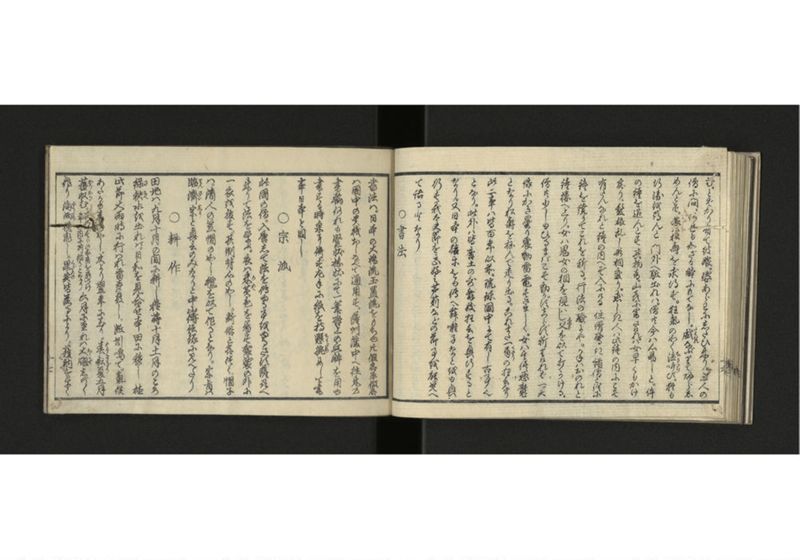
翻刻
【右丁】
む。とばかり有て彼娘。姿あらわにしたひ来り。三人の
僧に問。何れも知ざる体にもてなし。戯(たはむれ)なぶりて帰らし
めんとす。娘は松寿を求得ず。狂気の如く泣叫(なきさけ)び。猶も
行衛を尋んと門外へ駈出れは。僧共今は心易しと。件
の鐘を退んとす其物音。山彦に響さ【きヵ】ければ女早くもかけ
戻り。髪振乱し形相変り。恋しき人は此鐘の内にこそ
有たんなれと鐘の内へぞ入にける住僧驚き諸僧と倶に
鐘を繞りてこれを祈る。行法の験にや。かねはおのれと
鐘楼へ上り。女は鬼女の相を現はし■(しゆも[く])【注】を以て打かける。
僧共少しもひるまばこそ動かず去らず祈りければ一ッ天
俄にかき曇り震動雷電すさましく。女は其儘悪魔
となり松寿を掴んで走り出る。これまた一 局(くさり)の狂言なり
此二事は皆百年以前。琉球国中にて有し古事也
となり。此外は皆唐土の哥舞妓狂言を興行すると
なり。又日本の猿楽をも伝へ舞囃子なとをも興
行す義太夫節を甚好み芦刈などの節事を能覚へ
て語るとなり
○書法
【左丁】
書法は。日本の大橋流玉置流をもちゆ片仮名平仮名
は国中の貴賤おしなべて通用す。薩州藩中へ往来の
書翰何れも竪状捻状にて一筆啓上の文体を用ゆ
書する時桌に倚ず左手に紙を持 懸腕(ちうだめ)にして書
事日本と同し
○宗派
此国の僧。入唐して法を伝ゆる事をゆるさず薩州へ
来りて法を学ぶ。衣は朱黄(かば)色を着す。袈裟の外に
一衣を服す。其制背心の如し。断俗と名つく。帽子
は。清人の笠帽の如し氈を以て作るとなり。宗旨は
臨済宗(りんさいしう)と真言のみなりと中山伝信録に見へたり
○耕作
田地は。九月十月の間に耕し種蒔十月十一月のころ
緑秧(さなえ)水を出れば。日和を見合せ本田に移し植
此節大雨時に行はれ雷声発し。蚯蚓鳴て。気候
あたかも春の如し。夫より翌年に至り。春(はる)耘(くさぎり)夏五月
穫収(かりおさ)む。《割書:其跡へすぐさま麦を蒔つけ|年の内に苅納るとなり 》六月に至れは大颶(おゝかぜ)しば〳〵
作り海雨(ゆうだち)□【横】飛し。果実(くだもの)皆落るにより。穫納□【を】早く
【「しゆもく(撞木)」は鬼の持ち物。■は「叉」ヵ】
【□は、筑波大学附属図書館蔵本による】
現代語訳
【右丁】
させた。しばらくして、あの娘が姿を現して追いかけてきた。三人の
僧に尋ねたが、皆知らない様子で振る舞い、からかって帰らせ
ようとした。娘は松寿を見つけることができず、狂気のように泣き叫び、なおも
行方を探そうと門外へ駆け出した。僧たちは今や安心したと、あの
鐘を退けようとする。その物音が山彦に響いたので、女は早くも駆け
戻り、髪を振り乱し、形相を変えて、「恋しい人はこの鐘の中に
いるに違いない」と鐘の中に入ってしまった。住職は驚き、諸僧とともに
鐘を囲んでこれを祈った。修行の効験であろうか、鐘はひとりでに
鐘楼へ上がり、女は鬼女の相を現し、撞木で打ちかけた。
僧たちは少しもひるまず動かず去らずに祈ったので、にわかに空が
急にかき曇り、地震と雷電がすさまじく起こった。女はそのまま悪魔
となり、松寿をつかんで走り去った。これもまた一つの段の狂言である。
この二つの話は皆百年以前に琉球国中であった古い話
である。この他は皆中国の歌舞や演劇を興行するという
ことである。また日本の猿楽も伝えて、舞囃子なども興
行する。義太夫節を非常に好み、「芦刈」などの節回しをよく覚えて
語るということである。
○書法
【左丁】
書法は、日本の大橋流・玉置流を用いる。カタカナ・ひらがな
は国中の貴賎を問わず広く通用している。薩摩藩中への往来の
書簡はいずれも竪書きで、「一筆啓上」の文体を用いる。
書くときは机によりかからず、左手に紙を持ち、宙で腕を浮かせて書く
ことは日本と同じである。
○宗派
この国の僧は、入唐して仏法を伝えることを許されず、薩摩へ
来て仏法を学ぶ。衣は樺色を着る。袈裟の外に
一つの衣を着る。その形は背心のようである。断俗と名付ける。帽子
は中国人の笠帽のようで、フェルトで作るということである。宗旨は
臨済宗と真言宗のみであると『中山伝信録』に見える。
○耕作
田地は九月・十月の間に耕して種まきをし、十月・十一月の頃、
青い苗が水面に出ると、天候を見計らって本田に移植する。
この時期は大雨の季節に行われ、雷が鳴り、ミミズが鳴いて、気候は
まさに春のようである。それより翌年に至り、春に草取り、夏五月に
収穫する。《その跡地にすぐに麦を蒔いて、年内に刈り納めるという》六月になると大風がしばしば
起こり、夕立が激しく降って、果物が皆落ちるので、収穫を早く
英語訳
【Right page】
guard it. After a while, that girl appeared and came pursuing him. She questioned the three
monks, but they all acted as if they knew nothing and tried to tease her and send her
away. The girl could not find Matsuju and cried and screamed like a madwoman, still trying
to search for his whereabouts as she rushed outside the gate. The monks now felt relieved and tried to move that
bell away. The sound echoed in the mountain, so the woman quickly ran
back, her hair disheveled and her countenance changed, saying "My beloved must be
inside this bell," and entered the bell. The head priest was alarmed and together with the other monks
surrounded the bell and prayed over it. Perhaps through the efficacy of their religious practice, the bell rose by itself
to the bell tower, and the woman manifested the form of a female demon and struck it with a bell mallet.
The monks did not flinch in the slightest but remained motionless and continued praying, when suddenly the sky
became overcast and earthquakes and lightning occurred tremendously. The woman became a demon
as she was and grabbed Matsuju and ran away. This too is one act of kyōgen.
These two stories are both old tales that occurred in the Ryukyu Kingdom about a hundred years
ago. Besides these, they perform Chinese songs, dances, and theatrical plays.
They also transmit Japanese sarugaku and perform
mai-bayashi and such. They greatly favor gidayū-bushi and well memorize
the musical passages of pieces like "Ashikari" and recite them.
○Calligraphy
【Left page】
For calligraphy, they use the Japanese Ōhashi and Tamaoki schools. Katakana and hiragana
are commonly used throughout the country by all classes of people. Correspondence
to Satsuma domain is all written vertically using the "Ippitsu keijō" epistolary style.
When writing, they do not lean on a desk but hold the paper in the left hand and write with suspended wrist,
the same as in Japan.
○Religious Sects
The monks of this country are not permitted to enter Tang China to transmit the Buddhist teachings, but
come to Satsuma to study the teachings. They wear robes of reddish-brown color. In addition to the kesa,
they wear one garment whose design is like a vest, called "danzoku." Their hats
are like Chinese bamboo hats, made of felt. The religious sects are
only Rinzai Zen and Shingon, as recorded in the "Chūzan Denshinroku."
○Cultivation
Rice fields are plowed and seeded between September and October, and around October and November, when
green seedlings emerge from the water, they watch for good weather to transplant them to the main fields.
This season coincides with the heavy rains, when thunder sounds and earthworms sing, and the climate
is exactly like spring. From then until the following year, they weed in spring and in summer (May)
harvest the crop. 《Immediately after, they sow wheat in the same fields and harvest it within the year.》 When June comes, great winds frequently
arise and sudden showers fall violently, causing all fruits to fall, so the harvest must be completed quickly.