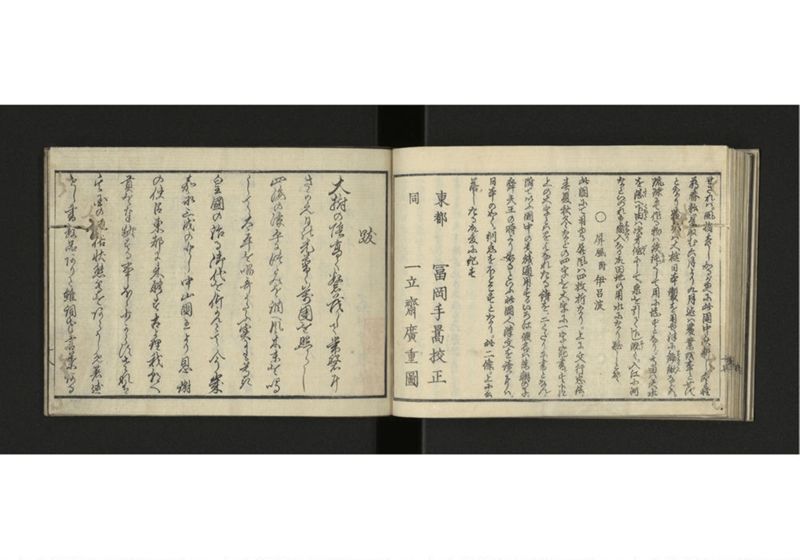
翻刻
【右丁】
せされば。風損多しかるがゆへに此国中秋耕し冬種
蒔春耘夏収む六月より九月迄は農業を事とせず
となり農具は大抵日本製を用ゆ殊に鋤鍬(すきくは)などは。
琉球にて作る物は鉄 鈍(にぶ)くして用に堪ずとなり。高田は天水
を湛(たゝ)へ下田(くぼた)は次第 低(びく)にして。泉を引て下し漑(そゝ)ぐ。入江小河
などいづれも鹵入(しほいり)なる故田地の用水になり難しとぞ
○屏風《割書:附》伊呂波
此国にて用ゆる屏風は四枚折なり。上に文行忠信。
春夏秋冬などの四字を大字に一字宛書。其下に
上の大字とは懸はなれたる詩を。二くだりに書となん。
附ていふ国中の貴賤通用するいろは仮名は為朝の子。
舜天王の時より始るといふ此国人漢文を読には。
日本の如く。訓点をほどこすとなり。此二条。上に言
落したる故爰に紀す
東都 冨岡手暠挍正
同 一立齋広重図
【左丁】
跋
大樹の陰高く繁茂して常磐に
さかえ日の光普く万国を照らし
四海の浪平につゝみを調へ風木末を鳴
して太平を唱哥うたふ実にも尊き
皇国の治る御代を仰かんとて今歳
嘉永三戌のとし中山国王より恩謝
の使臣東都に来聘す古より我朝へ
貢を奉献する事ほゝ少からすされは
其国の□【風】俗状態等をあらかしめ著述
せし書数品ありと雖詞花言葉ある
【□は、筑波大学附属図書館蔵本による】
現代語訳
【右丁】
させなければならない。風害が多いので、この国中では秋に耕し、冬に種を
まき、春に草取りし、夏に収穫する。六月から九月までは農業を行わない
ということである。農具は大体日本製を用いる。特に鋤・鍬などは、
琉球で作る物は鉄が鈍くて使用に耐えないということである。高田は天水
を溜め、低田は次第に低くなって、泉を引いて流し灌漑する。入江・小川
などはいずれも塩水が入るため、田地の用水にすることが難しいということである。
○屏風《付録》いろは
この国で用いる屏風は四枚折りである。上に「文行忠信」、
「春夏秋冬」などの四字を大きな字で一字ずつ書く。その下に
上の大字とは関係のない詩を二行に書くということである。
付け加えて言うと、国中の貴賤が通用するいろは仮名は、為朝の子、
舜天王の時より始まるという。この国の人が漢文を読むには、
日本のように訓点を施すということである。この二条は上で言い
落としたので、ここに記す。
東都 富岡手暠校正
同 一立斎広重図
【左丁】
跋
大樹の陰高く繁茂して常盤に
栄え、日の光があまねく万国を照らし、
四海の波が平らかに調い、風が木の梢を鳴らして
太平を歌う、実に尊い
皇国の治まる御代を仰ぎ見ようと、今年
嘉永三年戌の年、中山国王より恩謝
の使臣が東都に来聘した。古より我が朝へ
貢を奉献することはほぼ少なからず。それゆえ
その国の風俗・状態等をあらかじめ著述
した書物が数品あるといえども、美辞麗句ある
英語訳
【Right page】
must be done. Because of the frequent wind damage, throughout this country they plow in autumn, sow seeds in winter,
weed in spring, and harvest in summer. From June to September, they do not engage in agriculture.
Farm tools are mostly of Japanese manufacture. Particularly for spades and hoes,
those made in Ryukyu have dull iron that cannot withstand use. The high fields collect
rainwater, while the low fields gradually slope downward, drawing spring water to flow down for irrigation. Inlets and small rivers
all have salt water entering them, making it difficult to use them as irrigation water for rice fields.
○Folding Screens 《Appendix》 Iroha
The folding screens used in this country have four panels. At the top, four characters such as "bun-gyō-chū-shin" (literary accomplishment, conduct, loyalty, trustworthiness) or
"spring-summer-autumn-winter" are written in large characters, one character each. Below that,
poetry unrelated to the large characters above is written in two lines.
Additionally, the iroha syllabary commonly used by all classes throughout the country is said to have begun during the time of King Shunten, son of Tametomo.
When people of this country read Chinese texts, they
apply kunten (reading marks) just like in Japan. These two points were
omitted above, so I record them here.
Eastern Capital Tomioka Tetsukō, proofreader
Same Ichiryūsai Hiroshige, illustrations
【Left page】
Postscript
The shade of great trees grows high and luxuriant, prospering eternally,
the light of the sun universally illuminates all nations,
the waves of the four seas lie calm and harmonious, and the wind sounds through the treetops
singing of great peace—truly honoring
this noble age when the imperial country is well governed, this year
in the third year of Kaei, year of the dog, envoys of gratitude from the King of Chūzan
came to pay tribute to the Eastern Capital. Since ancient times, the presentation
of tribute to our court has been not infrequent. Therefore,
although there are several books that describe in advance
the customs and conditions of that country, those with flowery language