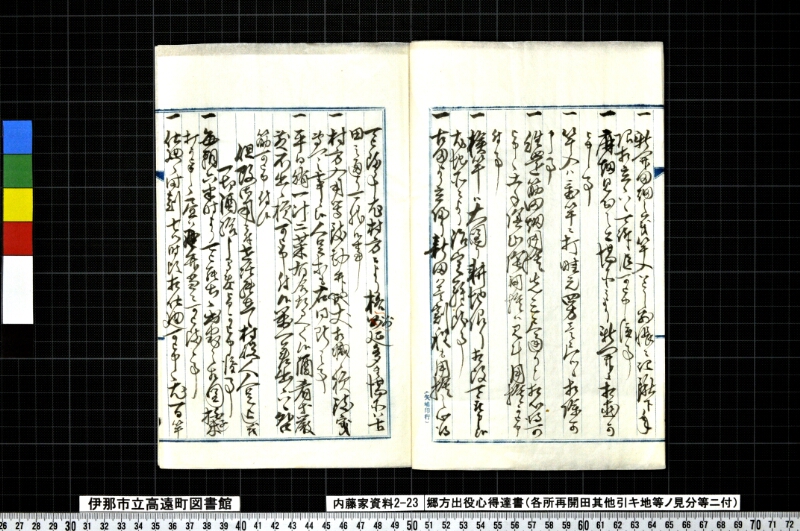
翻刻
一新開田畑之竿入いたし別帳ニ記鍬下年
限相立候ㇵヽ可訴段可ヒ申渡事
一麻畑見分之上場所尓より新開尓相直可
ヒ申事
一竿入ハ置竿ニ打畦元四方壱々上ツヽ相除可
申事
一縄置筋田畑用捨先三尺通りと相心得可
ヒ申候土手□□□用捨ㇵ見斗用捨可ヒ申
付候事
一検竿ㇵ大図り耕地限り相改可被申候
尤地所ニより治実難断事
一古田より立帰り新田ㇵ壱割程も用捨之心得
可ヒ致候中尤村方ニより格別延多き場所ㇵ古
田之通り可然候事
一村方入用等致勘弁成丈相減候様致候義
専一之事ニ候人足抔右同断之事
一平日賄一汁二菜有合たるべく候酒肴抔厳
敷不出之様可ヒ申付候萬一差出候ㇵヽ筋
筋可ヒ申付候
但改御用ニ付世話罷在候村役人人足迄茂
一切酒給申間敷旨可ヒ申渡事
一毎朝六つより可ヒ罷候出宅之相図拍子木
打可ヒ申候昼ㇵ弁当ニ可ヒ致候事
一仕廻り時刻七ツ頃相仕廻可ヒ申候尤一日竿
現代語訳
一、新開田畑の竿入れをし、別帳に記載し、鍬下年限を定めるならば、訴え出るべき旨を申し渡すこと。
一、麻畑は見分の上、場所により新開に改めるよう申すこと。
一、竿入れは置竿に打ち、畦元四方をそれぞれ上から除くべきこと。
一、縄置き筋の田畑用捨は、まず三尺通りと心得るべきである。土手の用捨は見計らいの用捨を申し付けること。
一、検竿は大まかに耕地の境界を改めるべきである。もっとも地所により治実は判断し難いこと。
一、古田より立ち戻り、新田は一割程も用捨の心得をするべきである。もっとも村方により格別延長の多い場所は古田の通りが然るべきこと。
一、村方入用等を勘弁し、成るべく相減するよう致すことが専一の事である。人足なども同様のこと。
一、平日の賄いは一汁二菜で有り合わせで足るべきである。酒肴などは厳しく出さぬよう申し付けるべきである。万一差し出すならば、筋々に申し付けること。
但し、改め御用に付き世話をしている村役人・人足まで、一切酒を給すべからざる旨を申し渡すこと。
一、毎朝六つより出かけるべきである。出宅の合図として拍子木を打つべきである。昼は弁当にすること。
一、仕舞いの時刻は七つ頃に仕舞うべきである。もっとも一日竿[入れを続ける場合は]
英語訳
1. Regarding newly developed rice fields and dry fields, conduct surveying (sao-ire), record in separate ledgers, and if cultivation period limits are established, announce that complaints should be filed.
1. Regarding hemp fields, after inspection, depending on the location, order conversion to newly developed land.
1. For surveying, use measuring poles and exclude each of the four sides of ridge bases from above.
1. For field boundary rope placement and land allocation/reduction (yōsha), first understand it as three shaku intervals. For embankment allocation/reduction, order discretionary allocation/reduction.
1. For inspection surveying, roughly examine the boundaries of cultivated land. However, actual conditions are difficult to determine depending on the location.
1. Returning from old rice fields, for new rice fields, maintain an understanding of about 10% allocation/reduction. However, for places with particularly extensive areas in villages, the same treatment as old rice fields would be appropriate.
1. Exercise discretion regarding village expenses and reduce them as much as possible - this is of primary importance. The same applies to laborers.
1. Daily meals should consist of one soup and two side dishes with whatever is available. Strictly order that sake and delicacies not be served. If they are offered, order this through proper channels.
Note: Announce that absolutely no sake shall be given to village officials and laborers who are attending to reform duties.
1. Every morning, depart at the hour of six (mutsu). Strike wooden clappers (hyōshigi) as a signal for departure from residence. Have lunch boxes (bentō) for midday meals.
1. Finishing time should be around the hour of seven (nanatsu). However, for a full day of surveying [the text continues but is cut off]