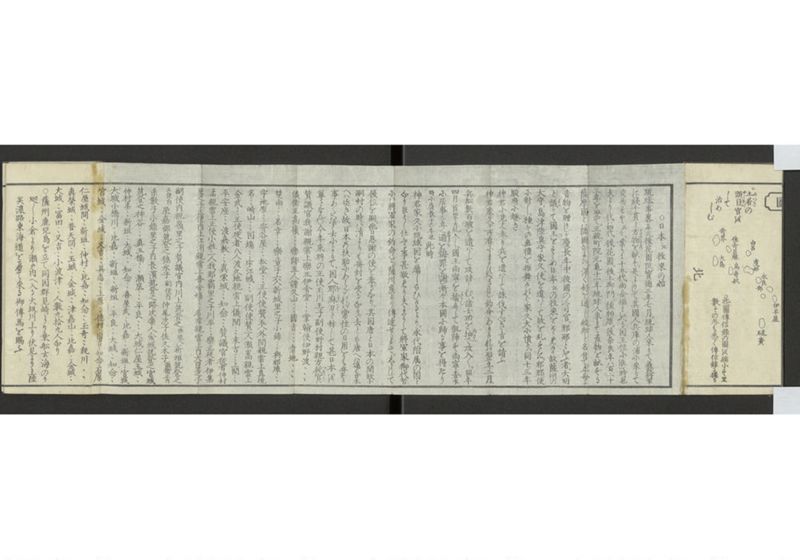
翻刻
○日本江徃来の始
琉球事略に云。後花園院。宝徳三年七月。琉球人来りて義政将軍
に銭千貫と方物(そのくにのもの)を献す。是よりして其国人兵庫の浦に来りて
交易すと云々。案るに十五代尚金福といへる国王位に在し時也
夫より代は四代後花園。後土御門。後柏原。後奈良年は百二十
三年を歴て。正親町院元亀十一年琉球人来りて産物を献ずる
薩摩国とは隣国なれば。深く好を通じ綾船と名付て。年毎に
音物を贈りしが慶長年中。彼国の三司官。邪那といふ者。大明
と議(はか)りて国王をすゝめ日本江の徃来をとゞめける故薩州の
大守。島津陸奥守家久。使を遣はして故を糺すに。邪那。使
に対し。種々の無礼を振舞ければ家久大に憤り。同十三年
駿府に趣き
神君に見え奉り兵を遣はして誅伐すべき旨を請ふ
神君家久が所存にまかすべきよし鈞命ありければ翌年二月。
兵船数百艘を遣はして攻討しむ。諸士功を抽(ぬきん)で攻入し。同年
四月首里に乱入し。国王尚寧を擒(とりこ)にして凱陣す尚寧王。日本
に居事三年也/過(あやまち)を悔罪を謝し漸々本国に帰る事を得たり
時に慶長十六年也此時
神君家久に琉球国を属し給ひけるより。永代附属の国と
なり臣とし仕ふる事甚敬めり夫よりして将軍家御代替
には将軍家の鈞命を。薩州侯より伝達せられて。しかうして
後位を嗣。他日恩謝の使を奉るなり。其国唐と日本の間故に
嗣封の時は清よりも冊封を受るなり。去とも唐へは遠く。日本
へは近き故。日本の扶助にあらざれば常住の日用をも弁ずる
事あたはず去によりて。国人/耶麻刀(をまと)と称して甚日本を
尊となん○今年来聘の正使玉川王子副使野村親方/従官(つれ〴〵)は
賛議官我謝親雲上楽正伊舎堂・・・掌翰使伊野波・・・
儀衛正高嶺・・・楽師五人譜久山・・・国吉・・・幸地・・・
楚南・・・名幸・・・楽童子六人新城里之子小録・・・與那原・・・
宇地原・・・安谷屋・・・松堂・・・正使使賛五人外間親雲上真境
名・・・崎山・・・国場・・・宇江城・・・副使使賛二人瀬嵩親雲上
金武・・・正使従者八人渡久地親雲上儀間・・・末吉・・・上間・・・
平安座・・・渡嘉敷・・・真栄城・・・知念・・・賛議官従者仲村
柔親雲上正使小姓二人我那覇里之子川平・・・楽正従者伊集
里之子正使内上江洲親雲上喜舎場・・・名幸親雲上内大田里之子
副使内祝嶺里之子賛議官内川上筑登之供琉人新垣筑登之
正使内屋嘉部筑登之徳永子副使内仲尾次子佐久本子儀衛正内
糸数子小録里之子内長濱筑登之路次楽人金城筑登之宮城
筑登之神谷・・・真玉橋・・・瀬底・・・平良・・・大城仁屋玉城・・
仲村柔・・新垣・・大城・・知念・・喜屋武・・比嘉・・新垣・・宮城
大城小橋川・・比嘉・・新垣・・新垣・・平良・・大城・・知念・・
宮城・・金城・・又吉・・具志・・上原・・徳村・・国吉・・知念・・石原
仁屋城間・・新垣・・仲村・・比嘉・・知念・・玉奇・・親川・・
真栄城・・普天間・・玉城・・金城・・津嘉山・・比嘉・・金城・・
大城・・冨田・・又吉・・小波津・・人数九拾九人なり
○薩州鹿児島を立て同国群見崎より乗船玄海のり
廻し小倉より瀬戸内へ入る大坂川上り伏見より上陸
美濃路東海道をへて来る御伝馬を賜ふ
現代語訳
○日本への往来の始まり
『琉球事略』によると、後花園院宝徳三年七月、琉球人が来て義政将軍に銭千貫と方物(その国の産物)を献上した。これよりその国人が兵庫の浦に来て交易するようになったという。考えてみると、十五代尚金福という国王が在位していた時である。それより四代後の後花園、後土御門、後柏原、後奈良の時代、百二十三年を経て、正親町院元亀十一年に琉球人が来て産物を献上した。
薩摩国とは隣国なので、深く友好を通じ、綾船と名付けて年毎に贈り物を贈っていたが、慶長年中、彼の国の三司官で邪那という者が、大明と相談して国王を説得し、日本への往来を止めさせた。そのため薩摩の大守島津陸奥守家久が使者を派遣してその理由を問い質したが、邪那が使者に対して種々の無礼を働いたので、家久は大いに憤り、同十三年に駿府に赴いて神君に拝謁し、兵を派遣して討伐すべき旨を請うた。神君から家久の所存に任せるべきとの命があったので、翌年二月、兵船数百艘を派遣して攻撃させた。諸士が功を抜きんでて攻め入り、同年四月に首里に乱入し、国王尚寧を捕虜にして凱旋した。尚寧王が日本にいることは三年で、過ちを悔い罪を謝して、ようやく本国に帰ることができた。時に慶長十六年である。この時神君が家久に琉球国を属させられたことから、永代にわたって附属の国となり、臣として仕えることが非常に敬重されている。それ以来、将軍家の代替わりには将軍家の命令を薩摩侯より伝達され、その後位を継ぎ、後日恩謝の使者を送るのである。その国は唐と日本の間にあるので、王位継承の時は清からも冊封を受けるのである。しかし唐へは遠く、日本へは近いので、日本の扶助がなければ日常生活の費用も賄うことができない。そのため国人はヲマト(大和)と称して非常に日本を尊敬している。
○今年来聘の正使玉川王子、副使野村親方、従官(お供)は賛議官我謝親雲上、楽正伊舎堂、掌翰使伊野波、儀衛正高嶺、楽師五人(譜久山、国吉、幸地、楚南、名幸)、楽童子六人(新城里之子小録、與那原、宇地原、安谷屋、松堂)、正使使賛五人(外間親雲上真境名、崎山、国場、宇江城)、副使使賛二人(瀬嵩親雲上金武)、正使従者八人(渡久地親雲上儀間、末吉、上間、平安座、渡嘉敷、真栄城、知念)、賛議官従者仲村柔親雲上、正使小姓二人(我那覇里之子川平)、楽正従者(伊集里之子)、正使内(上江洲親雲上喜舎場、名幸親雲上内大田里之子)、副使内(祝嶺里之子)、賛議官内(川上筑登之)、供の琉人(新垣筑登之)、正使内(屋嘉部筑登之徳永子)、副使内(仲尾次子佐久本子)、儀衛正内(糸数子小録里之子内長濱筑登之)、路次楽人(金城筑登之宮城筑登之神谷、真玉橋、瀬底、平良、大城仁屋玉城、仲村柔、新垣、大城、知念、喜屋武、比嘉、新垣、宮城、大城小橋川、比嘉、新垣、新垣、平良、大城、知念、宮城、金城、又吉、具志、上原、徳村、国吉、知念、石原仁屋城間、新垣、仲村、比嘉、知念、玉奇、親川、真栄城、普天間、玉城、金城、津嘉山、比嘉、金城、大城、冨田、又吉、小波津)。人数九十九人である。
○薩摩鹿児島を出発し、同国の郡見崎より乗船、玄海を回って小倉より瀬戸内海に入り、大阪で川を上り、伏見より上陸、美濃路・東海道を経て来る。御伝馬を賜う。
英語訳
○The Beginning of Travel to Japan
According to the "Ryukyu Jiryaku," in the seventh month of Hōtoku 3 of Emperor Go-Hanazono's reign, Ryukyuans came and presented 1,000 kan of coins and local products to Shogun Yoshimasa. From this time, people from that country came to Hyōgo-no-ura to trade. Considering the timing, this was when King Shō Kinpuku, the fifteenth [king], was on the throne. After four reigns spanning the eras of Go-Hanazono, Go-Tsuchimikado, Go-Kashiwabara, and Go-Nara—a period of 123 years—in the eleventh year of Genki under Emperor Ōgimachi, Ryukyuans came and presented local products.
Since Satsuma Province was a neighboring domain, they maintained deep friendship, naming their vessels "Aya-bune" and sending gifts annually. However, during the Keichō era, a sanshikan (councilor) of that country named Jana conspired with the Ming Dynasty to persuade the king to cease travel to Japan. Therefore, the lord of Satsuma, Shimazu Mutsu-no-kami Iehisa, sent an envoy to investigate the reason. When Jana behaved with various discourtesies toward the envoy, Iehisa became greatly enraged. In the same thirteenth year, he went to Sunpu, had an audience with the Divine Ruler (Tokugawa Ieyasu), and requested permission to send troops for punitive action. The Divine Ruler commanded that it should be left to Iehisa's discretion, so in February of the following year, he dispatched several hundred warships for attack. The warriors distinguished themselves in battle and stormed into Shuri in April of the same year, capturing King Shō Nei and returning in triumph. King Shō Nei remained in Japan for three years, repenting his errors and apologizing for his crimes, before finally being allowed to return to his homeland. This was in Keichō 16. At this time, the Divine Ruler granted Ryukyu to Iehisa as a tributary domain, making it a permanently attached country, and their service as vassals became highly respected. Since then, when there is a change of shogun, the shogun's commands are transmitted through the lord of Satsuma, after which [the Ryukyu king] succeeds to the throne and later sends envoys of gratitude. Since that country lies between China and Japan, when succeeding to the throne, they also receive investiture from the Qing. However, since China is far and Japan is near, without Japanese assistance they cannot even manage daily expenses. Therefore, the people of that country call [Japan] "Ōmato" (Yamato) and greatly revere Japan.
○This year's visiting mission: Chief envoy Prince Tamagawa, Vice envoy Nomura oyakata, attendant officials including Councillor Gaja oyakata, Music Master Ishadō, Secretary Inoba, Ceremony Master Takamine, five musicians (Fukuyama, Kuniyoshi, Kōchi, Sonan, Meikō), six musical pages (Shinjō satonokoshi Koroku, Yonabaru, Ujihara, Adaniya, Matsudō), five chief envoy assistants (Hokama oyakata Masakina, Sakiyama, Kokuba, Ueshiro), two vice envoy assistants (Sedaka oyakata Kin), eight chief envoy attendants (Tokuchi oyakata Gima, Sueyoshi, Uema, Henza, Tokashiki, Maeshiro, Chinen), councillor attendant Nakamura oyakata, two chief envoy pages (Ganaha satonokoshi Kabira), music master attendant (Ijū satonokoshi), chief envoy staff (Uezu oyakata Kisha, Meikō oyakata-nai Ōta satonokoshi), vice envoy staff (Shukumine satonokoshi), councillor staff (Kawakami chikudunchi), accompanying Ryukyuans (Aragaki chikudunchi), chief envoy staff (Yakabi chikudunchi Tokunaga-shi), vice envoy staff (Nakaoji-shi Sakumoto-shi), ceremony master staff (Itonokazu-shi Koroku satonokoshi-nai Nagahama chikudunchi), traveling musicians (Kinjo chikudunchi Miyagi chikudunchi Kamiya, Madanbashi, Sesoko, Taira, Ōshiro-niya Tamaki, Nakamura-nyū, Aragaki, Ōshiro, Chinen, Kyan, Higa, Aragaki, Miyagi, Ōshiro Kobashikawa, Higa, Aragaki, Aragaki, Taira, Ōshiro, Chinen, Miyagi, Kinjo, Matayoshi, Gushi, Uehara, Tokumura, Kuniyoshi, Chinen, Ishihara-niya Shiroma, Aragaki, Nakamura, Higa, Chinen, Tamaki, Oyakawa, Maeshiro, Futenma, Tamaki, Kinjo, Tsukayama, Higa, Kinjo, Ōshiro, Tomita, Matayoshi, Kohatsu). The total number is ninety-nine people.
○They departed from Kagoshima in Satsuma, boarded ships at Gunmizaki in the same province, sailed around the Genkai Sea, entered the Seto Inland Sea from Kokura, went up the river at Osaka, landed at Fushimi, and came via the Mino Road and Tōkaidō. They were granted official post horses.