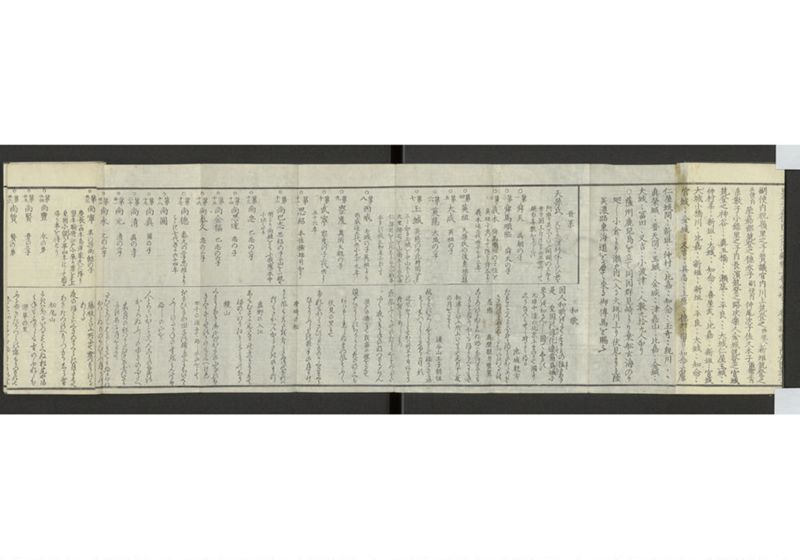
翻刻
【上段】
世系
天孫氏 父を志涅利休といひ母を
阿摩美久といふ開闢の王なり
世々国王たりしが卄五世にして
絶ゆ年数知るべからず
○《割書:第|一》舜天 為朝の子
○《割書:第|二》舜馬順熙 舜天の子
○《割書:第|三》義本 舜馬順熙の子位を
英祖にゆづりて隠る舜天より
義本迠三代共に七十三年
○《割書:第|四》英祖 天孫氏の後恵祖の孫
○《割書:第|五》大成 英祖の子
○《割書:第|六》英慈 大成の二子
○《割書:第|七》玉城 英慈の子此時国分れて
三となる玉城を中山王といひ
大里按司を山南王と云今帰
仁按司を山北王と云三山戦争
止まず我正和年にあたる
○《割書:第|八》西威 玉城の子英祖より
西威迠五代共に九十九年
○《割書:第|九》察度 奥間大親の子
○《割書:第|十》武寧 察度の子二代共に
五十六年
○《割書:第|十一》思紹 本佐舗按司なり
○《割書:第|十二》尚巴志 思紹の子三山を一統す
明より尚姓を給ふ我応永中
にあたる
○《割書:第|十三》尚忠 巴志の二子
○《割書:第|十四》尚思達 忠の子
○《割書:第|十五》尚金福 巴志の六子
○《割書:第|十六》尚泰久 忠の二子
○《割書:第|十七》尚徳 泰久の三子思紹より
こゝに七代共に六十四年
○《割書:第|十八》尚圓
○《割書:第|十九》尚真 圓の子
○《割書:第|二十》尚清 真の五子
○《割書:第|卄一》尚元 清の二子
○《割書:第|卄二》尚永 元の二子
○《割書:第|卄三》尚寧 真の孫尚懿の子
慶長十四年島津家久に降り
翌年駿府江戸に来り罪を乞ふ
皇国に留(とゞま)る事四年にして国に
帰る事を得たり
○《割書:第|卄四》尚豊 永の弟
○《割書:第|卄五》尚賢 豊の三子
○《割書:第|卄六》尚質 賢の弟
【下段】
○和歌
国人和歌をよくすることの径々(まゝ)あり
是 皇国の淳化遠裔島嶼(めぐみとをくしま〴〵)に
至るを知るべし因てしるす
元禄中清の北京にまいりて国に
かへりなんとせし時よみ侍る
池城親方
たれも見よ今そまことのからにしき
きたのみやこをたちいつる袖【?】
忍恋 真壁親方賢寛
こゝろのみかよはぬ時はなけれとも
よそ目にかゝる月とそくるしき
松浦といふ所にいたりて九月十三夜
の月を見て
読谷山王子朝恒
秋ことに見しをともとてふるさとの
そらなつかしく見ゆる月哉
追風なしとてかの所に十日あまり
舟をとゝめしころ
追風ふくかせのたよりをまつらかた【?】
いく夜うきねの数つもるらん
須广【磨】の浦にて敦盛の塚を見て
須广のうらにちりうく花の数とへは
あはれとしらぬまつ風そふく
伏見の里にて
たれもかくさひしきものかくさまくら
ひとりふしみの夜半の月かけ
唐崎の松
うら風もえたをならさぬ御代なれは
猶もさかへんからさきのまつ
真野の入江
しもむすふ尾はなか袖にいきさえて
まのゝいりえになとり鳴なり
鏡山
くもりなき御代のかゝ見の山なれは
きみか千とせのかけも見へけれ
田子の浦にてふしの山をみて
おもひきや田子の浦辺にうちいてゝ
ふしのたかねの雲をみんとは
ふしの山を
人とはゝいかゝこたへんことの葉の
およはぬふしのゆきの国たへ
霜月の初つかたむきしの国のいたり
かの所に月を見て
たひころもはる〳〵きてもふる■に
かはらぬものはむかふ月かけ
藤枝といふ所にて雪つもりける
あした
夜の月とはくさのまくらに月さえて
あさたつのへにつもるしら雪
松尾山
ときはなるいろこそみへぬ松尾やま
みねもふもとも雪のふれゝは
現代語訳
【上段】
世系
天孫氏 父を志涅利休といい、母を阿摩美久という。開闢の王である。代々国王であったが、二十五世で絶えた。年数は知ることができない。
第一 舜天 為朝の子
第二 舜馬順熙 舜天の子
第三 義本 舜馬順熙の子。位を英祖に譲って隠居した。舜天から義本まで三代で合わせて七十三年
第四 英祖 天孫氏の後、恵祖の孫
第五 大成 英祖の子
第六 英慈 大成の次子
第七 玉城 英慈の子。この時国が分かれて三つとなる。玉城を中山王といい、大里按司を山南王という。今帰仁按司を山北王という。三山の戦争が止まない。我が国の正和年間にあたる。
第八 西威 玉城の子。英祖から西威まで五代で合わせて九十九年
第九 察度 奥間大親の子
第十 武寧 察度の子。二代で合わせて五十六年
第十一 思紹 本来は佐敷按司である
第十二 尚巴志 思紹の子。三山を統一した。明より尚姓を賜る。我が国の応永年間にあたる。
第十三 尚忠 巴志の次子
第十四 尚思達 忠の子
第十五 尚金福 巴志の六男
第十六 尚泰久 忠の次子
第十七 尚徳 泰久の三男。思紹からここまで七代で合わせて六十四年
第十八 尚圓
第十九 尚真 圓の子
第二十 尚清 真の五男
第二十一 尚元 清の次子
第二十二 尚永 元の次子
第二十三 尚寧 真の孫で尚懿の子。慶長十四年に島津家久に降り、翌年駿府・江戸に来て罪を請うた。日本国に留まること四年にして国に帰ることを得た。
第二十四 尚豊 永の弟
第二十五 尚賢 豊の三男
第二十六 尚質 賢の弟
【下段】
○和歌
国人が和歌をよくすることがしばしばある。これは日本国の淳化が遠く島嶼にまで至ることを知るべきである。よって記す。
元禄年間、清の北京に参って国に帰ろうとした時に詠んだ
池城親方
誰も見よ今ぞまことの唐錦 北の都を立ち出づる袖
忍恋 真壁親方賢寛
心のみ通わぬ時はなけれども よそ目にかかる月とぞ苦しき
松浦という所に至って九月十三夜の月を見て
読谷山王子朝恒
秋ごとに見しをともとて故郷の 空なつかしく見ゆる月かな
追い風なしとてその所に十日あまり船を止めた頃
追い風吹く風の便りを待つ浦方 幾夜浮き寝の数積もるらん
須磨の浦にて敦盛の塚を見て
須磨の浦に散り積もる花の数問えば 哀れと知らぬ松風ぞ吹く
伏見の里にて
誰もかく寂しきものか草枕 一人伏見の夜半の月影
唐崎の松
浦風も枝撓わらさぬ御世なれば なおも栄えん唐崎の松
真野の入江
霜結ぶ尾花が袖に息冴えて 真野の入江に名鳥鳴くなり
鏡山
曇りなき御世の鏡の山なれば 君が千歳の影も見えけれ
田子の浦にて富士の山を見て
思いきや田子の浦辺に打ち出でて 富士の高嶺の雲を見んとは
富士の山を
人問わば如何が答えん言の葉の 及ばぬ富士の雪の白妙
霜月の初めつ方、武蔵国に至り、その所にて月を見て
旅衣はるばる来ても故郷に 変わらぬものは向かう月影
藤枝という所にて雪積もりける朝
夜の月問わく草の枕に月冴えて 朝立つ野辺に積もる白雪
松尾山
常盤なる色こそ見えぬ松尾山 峰も麓も雪の降れれば
英語訳
【Upper Section】
Genealogy
Tensō-shi: His father was called Shineiri-kyū and his mother Amamiku. He was the founding king. Generations of kings ruled, but the line ended with the twenty-fifth generation. The number of years cannot be known.
1st Shunten: Son of Tametomo
2nd Shunbajunki: Son of Shunten
3rd Yoshimoto: Son of Shunbajunki. He abdicated the throne to Eiso and went into retirement. From Shunten to Yoshimoto, three generations totaling seventy-three years.
4th Eiso: Descendant of the Tensō line, grandson of Keiso
5th Taiseī: Son of Eiso
6th Eiji: Second son of Taiseī
7th Tamaki: Son of Eiji. At this time the country was divided into three. Tamaki was called the Chūzan King, the Ōzato Anji was called the Sannan King, and the Nakijin Anji was called the Sanhoku King. The wars among the three kingdoms did not cease. This corresponds to Japan's Shōwa era.
8th Seiī: Son of Tamaki. From Eiso to Seiī, five generations totaling ninety-nine years.
9th Satto: Son of Okuma Ōoya
10th Bunei: Son of Satto. Two generations totaling fifty-six years.
11th Shishō: Originally the Sashiki Anji
12th Shō Hashi: Son of Shishō. He unified the three kingdoms. Received the surname Shō from Ming China. This corresponds to Japan's Ōei era.
13th Shō Chū: Second son of Hashi
14th Shō Shitatsu: Son of Chū
15th Shō Kinpuku: Sixth son of Hashi
16th Shō Taikyū: Second son of Chū
17th Shō Toku: Third son of Taikyū. From Shishō to here, seven generations totaling sixty-four years.
18th Shō En
19th Shō Shin: Son of En
20th Shō Sei: Fifth son of Shin
21st Shō Gen: Second son of Sei
22nd Shō Ei: Second son of Gen
23rd Shō Nei: Grandson of Shin, son of Shō I. In Keichō 14 he surrendered to Shimazu Iehisa, and the following year came to Sunpu and Edo to beg forgiveness. He was detained in Japan for four years before being allowed to return to his country.
24th Shō Hō: Younger brother of Ei
25th Shō Ken: Third son of Hō
26th Shō Shitsu: Younger brother of Ken
【Lower Section】
○Waka Poetry
The people of this country are often skilled at waka poetry. This shows that Japan's civilizing influence reaches far to distant islands. Therefore I record this.
During the Genroku era, when returning to the country after going to Beijing in Qing China:
Ikeshiro Oyakata:
"Everyone look, now truly Chinese brocade - the sleeves departing from the northern capital"
Secret Love - Makabe Oyakata Kenkan:
"Though there are no times when hearts do not communicate, how painful is the moon that catches others' eyes"
Upon reaching a place called Matsuura and seeing the moon on the thirteenth night of the ninth month:
Yomitanzan Prince Chōkō:
"Remembering what I saw each autumn, how nostalgic appears this moon in my homeland's sky"
When there was no following wind and the ship was stopped at that place for more than ten days:
"Waiting at the bay for favorable winds to blow, how many nights of restless sleep have accumulated?"
Upon seeing Atsumori's grave mound at Suma Bay:
"If you ask the number of flowers scattered and piled at Suma Bay, the pine wind that knows no sorrow blows"
At Fushimi village:
"Does everyone find grass pillows so lonely? Alone in Fushimi, the moon's shadow at midnight"
The Pine of Karasaki:
"Since the bay winds do not bend the branches in this reign, may the pine of Karasaki flourish even more"
Mano Bay:
"With frost-bound pampas grass sleeves chilled with breath, famous birds cry at Mano Bay"
Mount Kagami:
"Since this is the mirror mountain of an unclouded reign, even the reflection of the lord's thousand years can be seen"
Seeing Mount Fuji from Tago Bay:
"Who would have thought that coming out to Tago Bay, I would see the clouds of Fuji's high peak"
On Mount Fuji:
"If people ask, how shall I answer? Words cannot reach Fuji's snow-white beauty"
In early November, reaching Musashi Province and seeing the moon there:
"Though traveling clothes have come so far, what remains unchanged from my homeland is that moon facing me"
On a morning when snow had accumulated at a place called Fujieda:
"Asking about the night moon, with moon shining cold on my grass pillow, white snow piles on the fields at dawn"
Mount Matsuo:
"The evergreen color cannot be seen at Mount Matsuo when snow falls on both peaks and foothills"