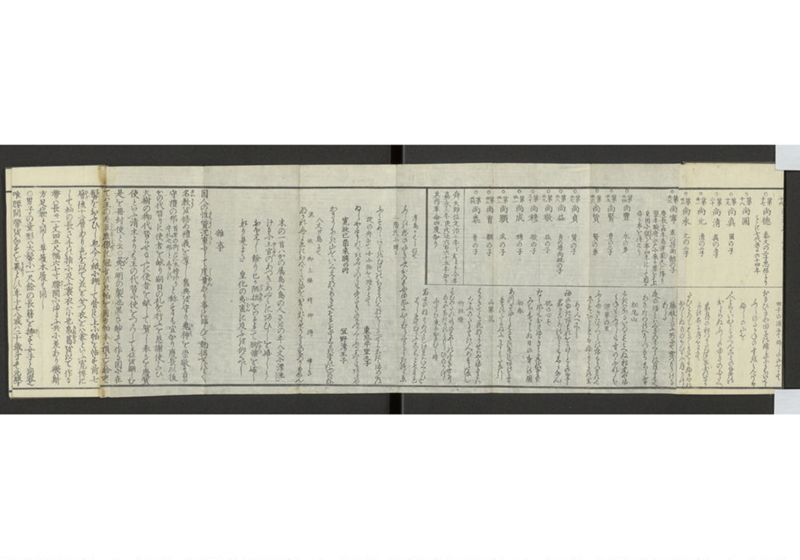
翻刻
【上段・前頁の続き】
○《割書:第|卄七》尚貞 質の子
○《割書:第|卄八》尚益 貞の孫尚純の子
○《割書:第|卄九》尚敬 益の子
○《割書:第|三十》尚穆 敬の子
○《割書:第|卅一》尚成 穆の子
○《割書:第|卅二》尚顥 成の子
○《割書:第|卅三》尚育 顥の子
○《割書:第|卅四》尚泰 育の子
舜天即位文治三年丁亥より今年
嘉永三年庚戌迠六百六十五年なり
其内革命四度なり
【下段・前頁の続き】
深草の里
ふるゆきにうつみの床もうつもれて
冬そあわれはふかくさの里
ある人へかへし
袖のゆきあはれをかけしことの葉々
君かこゝるのほともしらなん
祝の心を
なみ風もおさまるきみか御代なれは
みち遠からぬ日の本の国
初春
あつさゆみはるきにけらしあけみたる
遠のたかねにかすみたな引
山家花
はるきても花なかりせはやまさとは
なにのたよりに人めまたまし
竹林燈
すむやたれ竹のはやしのふかき世に
あるやなきかのともしひのかけ
ふたゝひ東におもむく時
冨士のねはめつらしけれはいくたひも
はしめてむかふこゝちこそすれ
浮島かはらにて
ふしの根のゆき吹おろすやま風にふとむらくもるうき嶋か原
二階氏に贈る
ふみそめしあとをむかしのちきりにてなをしるへせよしきしまの道
淀の舟にて女に物を贈るとて 東風平里之子
ぬしやたれうき名たつとも空たきのけふりくゝふることもあらはや
寛政己酉来聘の時 宜野湾王子
かきりなき山をいくえかなかめきてそれそとしるき雪のふしのね
八丈が島にて
流 故 御 上 様 拝 仰 得 嬉しき
なかれ舟よゑにおんかみさまをかておよせうるをのなつかしゆ■ん
末の一首はかの属島大島の人さきの年八丈に漂流し
けるに土官(やくにん)のあつきめぐみにあひしを嬉しう
おほえし余り巳【己】の陋拙(つたなき)をわすれて胸懐(おもひ)を述し
なり是また 皇化の夷蛮(いばん)に及ふを仰くべし
雑事
国人の性質(もちまへ)沈重(しつか)にして度量(しあん)あり事に臨んて動揺せずよく
名教(めいかう)を修め礼儀を厚し旧典を守り鬼神(かみ)を崇敬す自ら
守礼の邦《割書:首里の街口に木榜あり|守礼之邦としるす》を称するも宣【宜】なり慶長以後
かの代替りに使者を献り嗣目の礼を行ふを恩謝使といひ
大樹の御代替らせ給ふに使者を献して賀し奉るを慶賀
使といふ清主よりも王の代替に使をつかはして王位を嗣しむ
是を冊封使と云○冕(べん)は明の製也黒き紗にて作る国に在
ては王の外/臣(しん)鹿(しゝ)【?】猥(みだり)に冠せず只帕を用ゆ帕本は頂上を給ふて
髻をおふひし也今は紙に糊して骨とし上に帕を帖す前七
層(ひだ)後十二層あり色を以て差を分つ衣をは衾といふ寛博に
して袖の長さ手の指に及ふ裏衣は小也/帛葛(きぬあさ)を以て作る
帯は長サ一丈四五尺幅六七寸/腰(こし)間にまとふ共に差あり襪は斯
方足袋と同し草履木履も同し
現代語訳
【上段・前頁の続き】
第二十七 尚貞 質の子
第二十八 尚益 貞の孫で尚純の子
第二十九 尚敬 益の子
第三十 尚穆 敬の子
第三十一 尚成 穆の子
第三十二 尚灝 成の子
第三十三 尚育 灝の子
第三十四 尚泰 育の子
舜天が即位した文治三年丁亥(1187年)から今年嘉永三年庚戌(1850年)まで六百六十五年である。その間に王朝交代が四度あった。
【下段・前頁の続き】
深草の里
降る雪に卯津美の床も埋もれて 冬ぞ哀れは深草の里
ある人への返歌
袖の雪哀れをかけし言の葉を 君が心のほども知らなん
祝いの心を込めて
波風も治まる君が御代なれば 道遠からぬ日の本の国
初春
梓弓春来にけらし明け見たる 遠の高嶺に霞たな引く
山家花
春来ても花なかりせば山里は 何の便りに人目待たまし
竹林燈
住むやたれ竹の林の深き夜に あるやなきかの燈火の影
再び東に向かう時
富士の嶺は珍しければ幾度も 初めて向かう心地こそすれ
浮島が原にて
富士の嶺の雪吹き下ろす山風に 俄に曇る浮島が原
二階氏に贈る
踏み染めし跡を昔の契りにて なお導けよ敷島の道
淀の舟にて女に物を贈るとて 東風平里之子
主やたれ浮名立つとも空滝の 煙薫ぶることもあらばや
寛政己酉来聘の時 宜野湾王子
限りなき山をいく重か眺めきて それぞと知るき雪の富士の嶺
八丈島にて
嬉しき
流れ舟よ恵にお上様を駕てお寄せうるを懐かしゆん
末の一首はかの属島大島の人が先の年八丈島に漂流したが、土官の厚い恵みに遇ったのを嬉しく思うあまり、自分の稚拙さを忘れて胸中の思いを述べたものである。これもまた皇化が夷蛮に及ぶことを仰ぐべきである。
雑事
国人の性質は沈着重厚で度量があり、事に臨んで動揺せず、よく名教を修め礼儀を重んじる。旧典を守り鬼神を崇敬する。自ら守礼の邦を称するのももっともである。慶長以後、その代替わりに使者を献上して嗣目の礼を行うのを恩謝使といい、将軍の御代替わりに使者を献上して祝賀申し上げるのを慶賀使という。清朝皇帝からも王の代替わりに使者を遣わして王位を継がせる。これを冊封使という。冕は明の制である。黒い紗で作る。国にあっては王以外の臣下は濫用せず、ただ帕を用いる。帕は本来頂上を覆って髷を覆うものである。今は紙に糊して骨とし、上に帕を貼る。前に七層、後ろに十二層がある。色によって身分の差を分ける。衣は衾という。寛博で袖の長さが手の指に及ぶ。裏衣は小さい。絹麻で作る。帯は長さ一丈四、五尺、幅六、七寸。腰間に纏う。共に身分差がある。襪は日本の足袋と同じ。草履、木履も同じ。
英語訳
【Upper Section - Continuation from Previous Page】
27th Shō Tei: Son of Shitsu
28th Shō Eki: Grandson of Tei, son of Shō Jun
29th Shō Kei: Son of Eki
30th Shō Boku: Son of Kei
31st Shō Sei: Son of Boku
32nd Shō Kō: Son of Sei
33rd Shō Iku: Son of Kō
34th Shō Tai: Son of Iku
From Shunten's accession in Bunji 3, year of the Fire Boar (1187), to this year Kaei 3, year of the Metal Dog (1850), it has been 665 years. During this period, there have been four dynastic changes.
【Lower Section - Continuation from Previous Page】
Fukakusa Village:
"With falling snow, even Utsumi's bed is buried - winter brings sorrow to Fukakusa village"
In reply to someone:
"The snow on sleeves, words that conveyed sorrow - may you know the depth of your heart too"
With celebratory feelings:
"Since waves and winds are calmed in your reign, the path is not far to the Land of the Rising Sun"
Early Spring:
"The catalpa bow - spring must have come, as I see at dawn mist trailing across distant peaks"
Mountain Village Flowers:
"If spring came but brought no flowers, by what sign would the mountain village await visitors?"
Bamboo Grove Lantern:
"Who lives there? In the deep night of bamboo groves, does the shadow of that lamp exist or not?"
When heading east again:
"Mount Fuji is so wondrous that however many times I face it, it feels like the first time"
At Ukishima Plain:
"In the mountain wind that blows down snow from Fuji's peak, Ukishima Plain suddenly grows cloudy"
Presented to Mr. Nikai:
"With the traces we first trod as bonds from long ago, please continue to guide us on the path of poetry"
Giving something to a woman on a boat at Yodo - Kochinda Satonoko:
"Who is the master? Even if gossip spreads, may there be times when we are enveloped in the smoke of empty waterfalls"
During the diplomatic mission of Kansei Tsuchinoto-tori - Prince Ginowan:
"Gazing at countless mountain ranges layer upon layer, I clearly recognize that snowy peak of Fuji"
At Hachijō Island:
Joyful:
"Drifting boat, how nostalgic that you carry and bring His Lordship by grace"
The last poem was composed by a person from the tributary island of Ōshima who was shipwrecked on Hachijō the previous year. Being so overjoyed by the generous kindness of the local officials, he forgot his own poor skills and expressed his innermost feelings. This also shows how imperial civilization extends even to barbarian lands.
Miscellaneous Matters:
The people's character is calm and steady with broad-mindedness. When facing situations, they do not waver, and they well cultivate moral teachings and emphasize etiquette. They preserve old traditions and revere gods and spirits. Their self-designation as the "Land of Propriety" is fitting. Since Keichō, when there is a succession, they send envoys to perform succession rites, called "gratitude envoys," and when the Shogun's reign changes, they send envoys to offer congratulations, called "celebration envoys." The Qing emperor also sends envoys when the king succeeds to investiture the royal position. This is called the "investiture envoy." The crown is of Ming design, made of black gauze. In the country, except for the king, retainers do not wear it carelessly, using only the cap. The cap originally covered the topknot on the head. Now paper is pasted with glue as the frame, with the cap attached on top. There are seven layers in front and twelve behind. Colors distinguish rank differences. The robe is called "kin," loose-fitting with sleeves reaching to the fingertips. The undergarment is small, made of silk and hemp. The sash is one jō four to five shaku long and six to seven sun wide, worn around the waist. All have rank distinctions. Socks are the same as Japanese tabi. Straw sandals and wooden clogs are also the same.