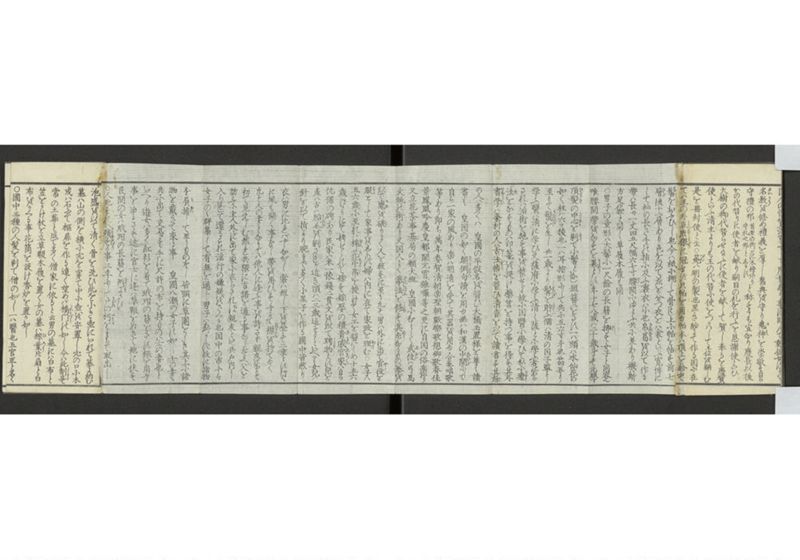
翻刻
【前頁の続き】
○男子の童形は大髻に一尺余の長簪を挿(さ)す女子と同容也
唯腰間帯をなすを異(ことなり)とす年十七八或は二十歳斗にて元服す
頂髪(いたゞき)の中心(たゝなか)を剃(そり)て小髻となし短簪二をさす一は頭は水仙花の
如く柱は六ツ稜也一は耳控形にして共に五六寸斗也卄四五に
至りて鬚(うへひげ)を生し卅一歳より髯(したひげ)を貯(たくは)ふ儒は清の国子監に
学ふ医は清に学ひ又薩府に学ふ清と薩とに学ふ者にあら
されは治術を施す事を禁せらる故に国医に学ひて私に療(りやう)
法(ち)をなすものは印篭を提け薬筥を持つ事を得ず其外
書学(てならひ)は粂村の人は古法帖(いしずり)を習ひ清音を以て読書す其余
の人は多くは 皇国の平仮名を習ひ大橋玉置様を尊み読
書も 皇国の如く顛倒(かへりてん)句読を用ゆ画は和漢の中間(あいだ)にして
自ら一家の風あり楽は明清を受て其器を用ゆ合奏唱歌
等あり即ち万年春賀清朝楽聖朝歓楽歌想郷歌春佳
景鳳凰吟慶皇都、閙元霄、雑囉等之更に自国の俗楽あり
又立花茶事棊局の類大概 皇国にひとしく武伎(ぶけい)は弓馬
火炮の術あり又国人よく拳法(けんほふ)を修(しゆ)す其/左(めう)なるものは拳を
以て甕(かめ)を破(わ)りよく人を殺すに至る凡そ男は外に出て官役(やく)を
服(こと)として家事をしらず婦は内に在て家政を理(おさ)む○女子は
五六歳に至れは棉花苧帛(めんくはちよはく)を授けて女工を習はしめ十五六
歳ばかりにて娉せられて嫁す嫁娶の礼/貴戚官家(きにんれき〳〵)は自ら
伉儷の聘あり民家は米一俵銭二貫文を以て聘物(しるし)とす児を
産は古は胎毛(うぶげ)を剃さりしが近き頃は二三歳迠そるといへり女児は
針を以て指より腕まで多く小黒子を作る国中皆然り
衣は男に比ればやゝながし裳は短し下を畳みて二重とす行く
に風も開く事なし帯を用ひす手にて襟(ゑりさき)を持てゆく
凡そ人の妻となりては他人に逢ふ事を許さず親友になりて
初て見えしむ然れ共猥に言語を通る事なしたとへば人を
訪ふに主人外に出て家に在らされば親友といへ共戸内に
入らずして還るこれ淫行の嫌疑をさくる也国中の市には
女子のみ群集して有無を通じ男子はあづからず故に諸物
を負担(になは)して至るものなし皆頭に草圏をしき其上に諸
物を戴きて来る事 皇国八瀬の女子の如し士の妻も
共に出て交易す手に尺許の布を持ものは士の妻也と
いへり遊女は多く紅衫を着て玳瑁の簪をさす銀を用ふる
事をゆるさず途に官士に逢は草靸をぬきて地に伏す
民間の女は玳瑁の長簪を倒(さかしま)にさす
○人死すれは殯(**ほふむり)【フリガナ一部不詳】する事三年にして尸(かばね)の朽(くちる)をまちて取出し
泡盛を以て清く骨を洗ひ此を小き壺にいれて墓に納む
墓は山の側を横に穴を穿て中に壺を安置し穴の口に木
或は石にて枢扉を作る遠く望めば橋門(たいこばし)の如し今は此/制(しかた)止て
常の土葬と成て多く僧家に依ると云男の墓には白布と
笠をかけ杖を立草靸木履を置く女の墓は棕葉(ひろう)片扇と白
布をかくる事花筒を設け香炉を置か如し
現代語訳
【前頁の続き】
○男子の幼児の髪形は大きな髻に一尺余りの長い簪を挿す。女子と同じ容貌である。ただ腰間に帯を締めるのが異なる点である。年十七、八歳または二十歳頃で元服する。頭頂の中心を剃って小さな髻とし、短い簪二本を挿す。一つは頭部が水仙花のようで柱は六つの稜があり、一つは耳掻き形をしており、共に五、六寸ほどである。二十四、五歳に至って上髭を生やし、三十一歳より下髭を蓄える。儒学者は清国の国子監で学ぶ。医者は清国で学び、また薩摩藩でも学ぶ。清国と薩摩で学んだ者でなければ治術を施すことを禁じられる。そのため国内の医者に学んで私的に療治を行う者は印籠を下げ薬箱を持つことができない。その他、書学については久米村の人は古法帖を習い清音で読書する。その他の人は多く日本の平仮名を習い、大橋玉置様を尊び、読書も日本のように返り点や句読を用いる。絵画は和漢の中間で、自ら一家の風がある。音楽は明・清を受けてその楽器を用いる。合奏・唱歌等があり、すなわち万年春・賀清朝・楽聖朝・歓楽歌・想郷歌・春佳景・鳳凰吟・慶皇都・鬧元宵・雑囉等がある。さらに自国の俗楽がある。また立花・茶事・碁局の類は大概日本と等しい。武芸は弓馬・火砲の術がある。また国人はよく拳法を修める。その妙なる者は拳で甕を破り、よく人を殺すに至る。凡そ男は外に出て官役を務めて家事を知らず、婦は内にあって家政を治める。○女子は五、六歳に至れば棉花・苧・帛を授けて女工を習わせ、十五、六歳ばかりで婚約されて嫁ぐ。嫁娶の礼について、貴戚・官家は自ら夫婦の聘礼がある。民家は米一俵・銭二貫文を聘物とする。子を産むには、古くは胎毛を剃らなかったが、近頃は二、三歳まで剃るという。女児は針で指から腕まで多く小さな黒子を作る。国中皆そうである。衣は男に比べてやや長く、裳は短い。下を畳んで二重とする。歩いても風で開くことはない。帯を用いず、手で襟先を持って歩く。凡そ人の妻となっては他人に会うことを許されず、親友になって初めて会わせる。しかし、みだりに言語を交わすことはない。例えば人を訪問するのに主人が外出して家にいなければ、親友といえども戸内に入らずして帰る。これは淫行の嫌疑を避けるためである。国中の市場には女子のみが群集して物の売買を行い、男子は関与しない。そのため諸物を担いで来る者はなく、皆頭に草の輪を敷き、その上に諸物を載せて来る。これは日本の八瀬の女子のようである。士の妻も共に出て交易する。手に一尺ほどの布を持つ者は士の妻であるという。遊女は多く紅い衫を着て玳瑁の簪を挿す。銀を用いることは許されない。途中で官士に会えば草履を脱いで地に伏す。民間の女は玳瑁の長い簪を逆さまに挿す。
○人が死すれば殯することは三年にして、屍の朽ちるのを待って取り出し、泡盛で清く骨を洗い、これを小さな壺に入れて墓に納める。墓は山の側面を横に穴を穿ち、中に壺を安置し、穴の口に木または石で扉を作る。遠く望めば太鼓橋のようである。今はこの制度をやめて、通常の土葬となって多く僧家に依るという。男の墓には白布と笠をかけ、杖を立て草履・木履を置く。女の墓は棕櫚の葉・扇と白布をかける。花筒を設け香炉を置くようである。
英語訳
【Continuation from Previous Page】
○The hairstyle of young boys consists of a large topknot with a hairpin over one shaku long inserted. Their appearance is the same as girls, with only the difference being that they wear a sash around the waist. They come of age at seventeen or eighteen, or around twenty years old. The center of the crown is shaved to make a small topknot, and two short hairpins are inserted. One has a head like a narcissus flower with a six-ridged shaft, and one is shaped like an ear pick, both about five to six sun long. At twenty-four or twenty-five they grow mustaches, and from thirty-one years old they grow beards. Confucian scholars study at the Imperial Academy (Guozijian) in Qing China. Doctors study in Qing China and also in Satsuma domain. Those who have not studied in Qing China or Satsuma are forbidden from practicing medicine. Therefore, those who study under domestic doctors and practice medicine privately cannot carry medicine cases or medicine boxes. For other studies, people from Kumemura practice ancient calligraphy and read using Chinese pronunciation. Other people mostly learn Japanese hiragana, revere Master Ōhashi Tamaki, and use Japanese-style reading marks and punctuation when reading. Painting is between Japanese and Chinese styles, with its own distinctive school. Music derives from Ming and Qing traditions using their instruments. There are ensemble performances, singing, etc., namely "Eternal Spring," "Congratulating the Qing Dynasty," "Music of the Sacred Dynasty," "Songs of Joy," "Songs of Longing for Home," "Beautiful Spring Scenery," "Phoenix Song," "Celebrating the Imperial Capital," "Lantern Festival Excitement," "Miscellaneous Music," etc. Additionally, there is native folk music. Arts like flower arrangement, tea ceremony, and go are generally the same as in Japan. Military arts include archery, horsemanship, and gunnery. The people also well practice martial arts. The skilled ones can break jars with their fists and even kill people. Generally, men go out to serve in official positions and do not know household affairs, while women stay inside and manage household administration. ○Girls at five or six years old are given cotton, ramie, and silk to learn women's work, and marry around fifteen or sixteen after betrothal. Regarding marriage ceremonies, noble families and official households have their own spousal betrothal gifts. Commoner households use one bale of rice and two kan of money as betrothal gifts. For childbirth, in the past natal hair was not shaved, but recently it is said to be shaved until two or three years old. Female children use needles to make many small beauty spots from fingers to arms. This is done throughout the country. Women's clothing is somewhat longer compared to men's, with short skirts. The bottom is folded to make it double-layered. Even when walking, it does not open in the wind. They do not use sashes but hold the collar with their hands when walking. Generally, once a woman becomes someone's wife, she is not permitted to meet other people, only meeting them after becoming close friends. However, they do not carelessly exchange words. For example, when visiting someone, if the master is out and not at home, even close friends do not enter the house but return home. This avoids suspicion of adultery. In markets throughout the country, only women gather to conduct trade, and men do not participate. Therefore, no one carries goods on their shoulders; everyone places a grass ring on their head and carries various goods on top. This is like the women of Yase in Japan. Wives of samurai also go out to trade. Those holding cloth about one shaku long in their hands are said to be samurai wives. Courtesans mostly wear red jackets and insert tortoiseshell hairpins. They are not permitted to use silver. When meeting officials on the road, they remove their straw sandals and prostrate on the ground. Common women insert long tortoiseshell hairpins upside down.
○When people die, the temporary burial lasts three years, waiting for the corpse to decay before taking it out, washing the bones clean with awamori, placing them in a small jar, and storing it in a tomb. Tombs are made by digging horizontal holes in mountainsides, placing jars inside, and making doors with wood or stone at the entrance. Viewed from afar, they look like arched bridges. Now this system has been abandoned, becoming ordinary earth burial, mostly relying on temples. Male graves have white cloth and hats placed on them, with staffs erected and straw sandals and wooden clogs placed there. Female graves are covered with palm leaves, fans, and white cloth. Flower vases are set up and incense burners are placed as well.