翻刻
【前頁の続き】
○国中三種の人髪を剃て僧の如し一は医也五官正と名く
一は王宮/埶茶(さどう)役也/宗叟(そう〳〵)と名く一は灌園(にはかた)司也共に黒き片帽(へんほう)
を冠す今頭を剃るものなし○僧は真言臨済の二宗のみ
なり天界寺を前王の塋地とす凡僧唐山に入て学ぶ事
を清より禁止す故に二宗共に薩府に来て学ぶとぞ享保
以前は琉僧 皇国諸州を行脚する事ありしが今は国禁と
なりて薩の封内のみ経過す
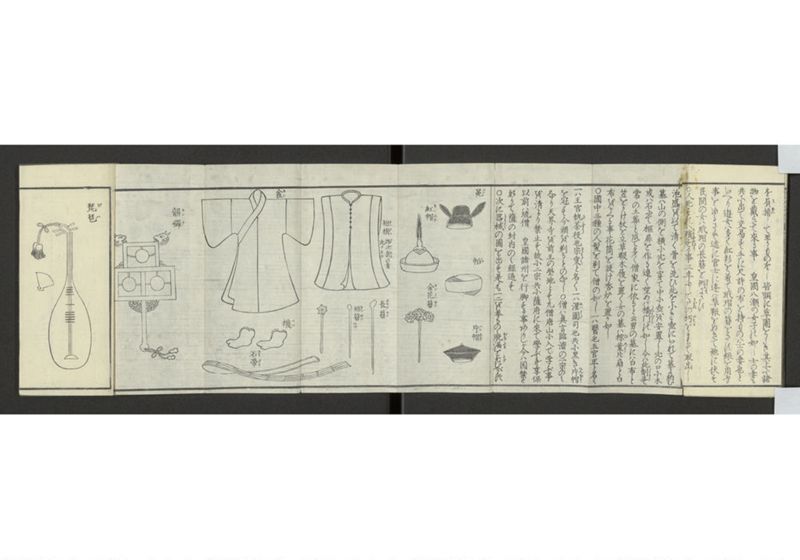
○次に器械(とうぐ)の図を出す是も一二を挙るのみ脱漏(おちたる)を尤(とが)むべからず
冕(ベン) 帕(ハク) 片帽(ヘンホウ)
紅帽(カウホウ) 金花簪(キンクハサン)
短褂(タンクハ) 《割書:路次楽(ロシカク)の者|此ヲカク》 長簪(チヤウサン)
短簪(タンサン)二ツ
衾(キン) 襪(ベツ) 石帯(セキタイ)
韻鑼(ウンラ)
琵琶(ビハ)
現代語訳
【前頁の続き】
○国中に三種類の人が髪を剃って僧のようにしている者がいる。一つは医者で「五官正」と名付けられている。一つは王宮の茶道役で「宗叟」と名付けられている。一つは庭園管理司である。共に黒い片帽を被っている。今は頭を剃る者はいない。○僧は真言宗と臨済宗の二宗のみである。天界寺を前王の墓所とする。凡そ僧が中国本土に入って学ぶことを清朝により禁止されているため、二宗共に薩摩藩に来て学んでいるとのことである。享保以前は琉球の僧が日本諸国を行脚することがあったが、今は国禁となって薩摩の領内のみを経過している。
○次に器械(道具)の図を示す。これも一、二を挙げるのみで、漏れがあっても咎めるべきではない。
冕(ベン) 帕(ハク) 片帽(ヘンホウ)
紅帽(コウボウ) 金花簪(キンカサン)
短褂(タンカ) 《注記:路次楽の者がこれを着る》 長簪(チョウサン)
短簪(タンサン)二つ
衾(キン) 襪(ベツ) 石帯(セキタイ)
韻鑼(ウンラ)
琵琶(ビワ)
英語訳
【Continuation from Previous Page】
○In the country, there are three types of people who shave their hair like monks. One type is doctors, called "Gokanshō" (Five Officials Chief). One type serves as tea ceremony officials in the royal palace, called "Sōsō" (Tea Masters). One type is garden supervisors. All wear black half-hats. Now there are no people who shave their heads. ○There are only two Buddhist sects: Shingon and Rinzai. Tenkaiji Temple serves as the burial ground of the former king. Generally, monks are prohibited by the Qing from entering mainland China to study, so both sects come to Satsuma domain to study. Before the Kyōhō era, Ryukyu monks would travel throughout the provinces of Japan, but now it has become a national prohibition and they only pass through Satsuma territory.
○Next, illustrations of implements (tools) are presented. These are only one or two examples, and omissions should not be criticized.
Crown (Ben) Kerchief (Haku) Half-hat (Henbō)
Red Hat (Kōbō) Golden Flower Hairpin (Kinkasan)
Short Jacket (Tanka) 《Note: Worn by street musicians》 Long Hairpin (Chōsan)
Two Short Hairpins (Tansan)
Coverlet (Kin) Socks (Betsu) Stone Belt (Sekitai)
Gong (Unra)
Biwa (Lute)