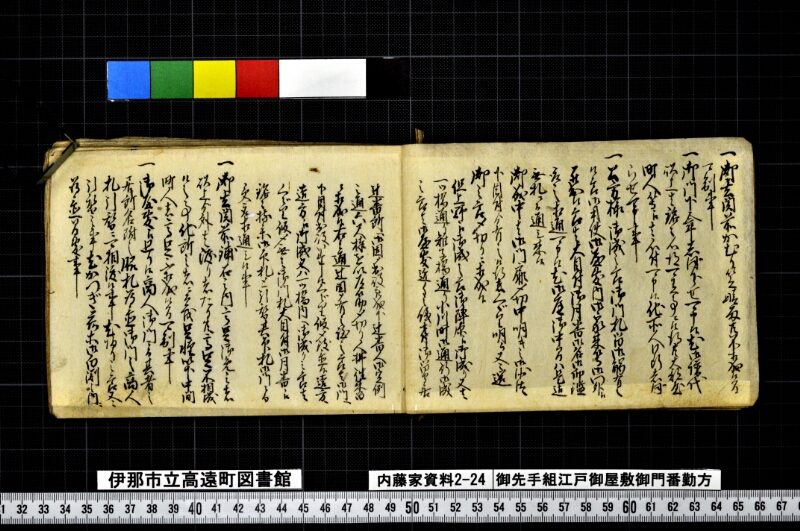
翻刻
御玄関前かむり候立晴雨共不相成候間
可別事
一 御門下傘しぼらせ可申候尤御譜代
以上者銘々心得可有事ニ候得共大部屋
町人等江者心付可申候他所人同断しぼ
らせ可申事
一 公方様御也之節御門札留御觸有之
候節御用使御屋敷内御家来等御門外江
罷出候節者大目付御月番御名御印鑑
取之相通可申候尤御座御中間ハ是迄
無札ニ而通シ来候
御成中者御門扉〆切中明キ之御沙汰
下目付ゟ有之候得者くぐり明ケ又々還
御之節〆切りニ相成候
但上野江御成之節御陣原江御成り又者
一ツ橋通り雉子橋通り小川町御通行御成
之節者御屋敷近く之儀先付御留守居
辻番所ハ御固メ出役被成下辻番人御定例
之通六尺棒を以道筋〆切り人払往来留
ニ相成候右之通辻固メ有之程之節者御門へ
下目付出役いたし候くぐり仮〆致置候遠方へ
遠方江御成又ハ一ツ橋内へ御成り之節者
くぐり仮〆無之御門札大目付御月番江
銘々持参御印札と引替其印札御門ニ而
受取相通し候事
一 御玄関前鋪石之内高足御免之者
以上ゟ外者渡りしたり共高足不相成
候之事他所之者ニ而茂足軽以下中間
町人者高足不相成候間可別事
一 御屋敷江廻り候商人御門ニ而其者之
居所名附之脇札為置御門之商人
札引替ニ可相渡候事尤帰り之節又々
引替之事尤かつぎ荷等御白渕之内ニ
為置間処事
現代語訳
御玄関前で笠をかぶって立つことは晴雨問わず相成らないので
別のところで行うこと
一、御門下で傘を絞らせること。もちろん御譜代
以上の者は銘々心得があることであるが、大部屋や
町人等には注意すること。他所の人も同断で絞らせること
一、公方様御成りの節に御門札留めの御触れがある
節、御用使や御屋敷内御家来等が御門外に
出る節は大目付御月番の御名と御印鑑を
取って通行させること。もちろん御座の御中間はこれまで
札なしで通してきた
御成中は御門扉を締切り、中開きの御沙汰が
下目付からあれば潜り戸を開け、また還御の
節は締切りになる
ただし上野へ御成りの節、御陣原へ御成りまたは
一ツ橋通り、雉子橋通り、小川町御通行御成りの
節は御屋敷近くのことゆえ先付として御留守居、
辻番所は御固めに出役され、辻番人は御定例の
通り六尺棒をもって道筋を締切り、人払いして往来留めに
なる。右の通り辻固めがあるほどの節は御門へ
下目付が出役し、潜り戸を仮締めしておく。遠方へ
遠方へ御成りまたは一ツ橋内へ御成りの節は
潜り戸の仮締めはなく、御門札を大目付御月番に
銘々持参して御印札と引き替え、その印札を御門で
受け取って通行させること
一、御玄関前の敷石の内で高足御免の者
以上以外は渡ったとしても高足は相成らない
こと。他所の者でも足軽以下、中間、
町人は高足は相成らないので別のところで行うこと
一、御屋敷へ回る商人は御門でその者の
居所と名前を付けた脇札を置かせ、御門の商人
札と引き替えに渡すこと。もちろん帰りの節にまた
引き替えること。もちろん担ぎ荷等は御白渕の内に
置かせてはならないこと
英語訳
Wearing hats and standing in front of the main entrance is not permitted regardless of weather conditions, so this should be done elsewhere.
1. Umbrellas should be wrung out under the gate. Of course, those of hereditary retainer status and above understand this on their own, but attention should be paid to those in the large quarters and townspeople. The same applies to outsiders - they should wring out their umbrellas.
1. When the Shogun makes a formal visit and there is an official notice for gate pass restrictions, when official messengers or retainers from within the mansion need to go outside the gate, they must obtain the name and official seal of the monthly duty magistrate (ōmetsuke) to pass through. Of course, the Shogun's attendants have been allowed to pass without passes until now.
During the formal visit, the gate doors are kept closed, but when there is an order from the lower magistrate to open them halfway, the small side gate is opened, and it is closed again when the Shogun returns.
However, when there is a formal visit to Ueno, to the camp grounds, or when passing through Hitotsubashi-dōri, Kiji-bashi-dōri, or Ogawa-machi, since these are near the mansion, the caretaker and checkpoint guards are deployed for security as advance guards. The checkpoint guards use six-foot poles according to established custom to block off the streets, clear people away, and stop traffic. When there is such street security, a lower magistrate is dispatched to the gate and the side gate is temporarily closed. When there are distant formal visits or visits within Hitotsubashi, there is no temporary closing of the side gate, and gate passes are brought individually to the monthly duty magistrate to be exchanged for official seal passes, which are then received at the gate for passage.
1. Within the stone pavement in front of the main entrance, except for those of elevated status who are permitted to wear high geta, even if others pass through, high geta are not permitted. Even outsiders - foot soldiers and below, attendants, and townspeople - are not permitted to wear high geta, so this should be done elsewhere.
1. For merchants visiting the mansion, a side tag with their residence and name should be placed at the gate, to be exchanged for the gate merchant tag. Of course, it should be exchanged again when they return. Of course, carried goods and such must not be placed within the white edge area.